Dravid G et al. (APR 2011)
Molecular therapy : the journal of the American Society of Gene Therapy 19 4 768--81
Dysregulated gene expression during hematopoietic differentiation from human embryonic stem cells.
The generation of hematopoietic cells from human embryonic stem cells (hESC) has raised the possibility of using hESC as an alternative donor source for transplantation. However,functional defects identified in hESC-derived cells limit their use for full lymphohematopoietic reconstitution. The purpose of the present study was to define and quantitate key functional and molecular differences between CD34(+) hematopoietic progenitor subsets derived from hESC and CD34(+) subsets from umbilical cord blood (UCB) representing definitive hematopoiesis. Two distinct sub-populations were generated following mesodermal differentiation from hESC,a CD34(bright) (hematoendothelial) and CD34(dim) (hematopoietic-restricted) subset. Limiting dilution analysis revealed profound defects in clonal proliferation relative to UCB particularly in B lymphoid conditions. Transcription factors normally expressed at specific commitment stages during B lymphoid development from UCB-CD34(+) cells were aberrantly expressed in hESC-derived CD34(+) cells. Moreover,strong negative regulators of lymphopoiesis such as the adaptor protein LNK and CCAAT/enhancer-binding protein-α (CEBPα),were exclusively expressed in hESC-CD34(+) subsets. Knockdown of LNK lead to an increase in hematopoietic progenitors generated from hESCs. The aberrant molecular profile seen in hESC-CD34(+) cells represents persistence of transcripts first expressed in undifferentiated hESC and/or CD326-CD56(+) mesoderm progenitors,and may contribute to the block in definitive hematopoiesis from hESC.
View Publication
产品号#:
05850
05857
05870
05875
85850
85857
85870
85875
产品名:
mTeSR™1
mTeSR™1
Spence JR et al. (FEB 2010)
Nature 470 7332 105--109
Directed differentiation of human pluripotent stem cells into intestinal tissue in vitro
Studies in embryonic development have guided successful efforts to direct the differentiation of human embryonic and induced pluripotent stem cells (PSCs) into specific organ cell types in vitro. For example,human PSCs have been differentiated into monolayer cultures of liver hepatocytes and pancreatic endocrine cells that have therapeutic efficacy in animal models of liver disease and diabetes,respectively. However,the generation of complex three-dimensional organ tissues in vitro remains a major challenge for translational studies. Here we establish a robust and efficient process to direct the differentiation of human PSCs into intestinal tissue in vitro using a temporal series of growth factor manipulations to mimic embryonic intestinal development. This involved activin-induced definitive endoderm formation,FGF/Wnt-induced posterior endoderm pattering,hindgut specification and morphogenesis,and a pro-intestinal culture system to promote intestinal growth,morphogenesis and cytodifferentiation. The resulting three-dimensional intestinal 'organoids' consisted of a polarized,columnar epithelium that was patterned into villus-like structures and crypt-like proliferative zones that expressed intestinal stem cell markers. The epithelium contained functional enterocytes,as well as goblet,Paneth and enteroendocrine cells. Using this culture system as a model to study human intestinal development,we identified that the combined activity of WNT3A and FGF4 is required for hindgut specification whereas FGF4 alone is sufficient to promote hindgut morphogenesis. Our data indicate that human intestinal stem cells form de novo during development. We also determined that NEUROG3,a pro-endocrine transcription factor that is mutated in enteric anendocrinosis,is both necessary and sufficient for human enteroendocrine cell development in vitro. PSC-derived human intestinal tissue should allow for unprecedented studies of human intestinal development and disease.
View Publication
产品号#:
05850
05857
05870
05875
85850
85857
85870
85875
产品名:
mTeSR™1
mTeSR™1
Nishimura K et al. (FEB 2011)
The Journal of biological chemistry 286 6 4760--71
Development of defective and persistent Sendai virus vector: a unique gene delivery/expression system ideal for cell reprogramming.
The ectopic expression of transcription factors can reprogram differentiated tissue cells into induced pluripotent stem cells. However,this is a slow and inefficient process,depending on the simultaneous delivery of multiple genes encoding essential reprogramming factors and on their sustained expression in target cells. Moreover,once cell reprogramming is accomplished,these exogenous reprogramming factors should be replaced with their endogenous counterparts for establishing autoregulated pluripotency. Complete and designed removal of the exogenous genes from the reprogrammed cells would be an ideal option for satisfying this latter requisite as well as for minimizing the risk of malignant cell transformation. However,no single gene delivery/expression system has ever been equipped with these contradictory characteristics. Here we report the development of a novel replication-defective and persistent Sendai virus (SeVdp) vector based on a noncytopathic variant virus,which fulfills all of these requirements for cell reprogramming. The SeVdp vector could accommodate up to four exogenous genes,deliver them efficiently into various mammalian cells (including primary tissue cells and human hematopoietic stem cells) and express them stably in the cytoplasm at a prefixed balance. Furthermore,interfering with viral transcription/replication using siRNA could erase the genomic RNA of SeVdp vector from the target cells quickly and thoroughly. A SeVdp vector installed with Oct4/Sox2/Klf4/c-Myc could reprogram mouse primary fibroblasts quite efficiently; ∼1% of the cells were reprogrammed to Nanog-positive induced pluripotent stem cells without chromosomal gene integration. Thus,this SeVdp vector has potential as a tool for advanced cell reprogramming and for stem cell research.
View Publication
产品号#:
产品名:
Ohlemacher SK et al. (MAR 2016)
Stem Cells 34 6 1553--1562
Stepwise Differentiation of Retinal Ganglion Cells from Human Pluripotent Stem Cells Enables Analysis of Glaucomatous Neurodegeneration
Human pluripotent stem cells (hPSCs),including both embryonic and induced pluripotent stem cells,possess the unique ability to readily differentiate into any cell type of the body,including cells of the retina. Although previous studies have demonstrated the ability to differentiate hPSCs to a retinal lineage,the ability to derive retinal ganglion cells (RGCs) from hPSCs has been complicated by the lack of specific markers with which to identify these cells from a pluripotent source. In the current study,the definitive identification of hPSC-derived RGCs was accomplished by their directed,stepwise differentiation through an enriched retinal progenitor intermediary,with resultant RGCs expressing a full complement of associated features and proper functional characteristics. These results served as the basis for the establishment of induced pluripotent stem cells (iPSCs) from a patient with a genetically inherited form of glaucoma,which results in damage and loss of RGCs. Patient-derived RGCs specifically exhibited a dramatic increase in apoptosis,similar to the targeted loss of RGCs in glaucoma,which was significantly rescued by the addition of candidate neuroprotective factors. Thus,the current study serves to establish a method by which to definitively acquire and identify RGCs from hPSCs and demonstrates the ability of hPSCs to serve as an effective in vitro model of disease progression. Moreover,iPSC-derived RGCs can be utilized for future drug screening approaches to identify targets for the treatment of glaucoma and other optic neuropathies. Stem Cells 2016.
View Publication
产品号#:
05850
05857
05870
05875
85850
85857
85870
85875
产品名:
mTeSR™1
mTeSR™1
Flynn RA et al. (MAR 2016)
Nature structural & molecular biology 23 3 231--238
7SK-BAF axis controls pervasive transcription at enhancers.
RNA functions at enhancers remain mysterious. Here we show that the 7SK small nuclear RNA (snRNA) inhibits enhancer transcription by modulating nucleosome position. 7SK occupies enhancers and super enhancers genome wide in mouse and human cells,and it is required to limit enhancer-RNA initiation and synthesis in a manner distinct from promoter pausing. Clustered elements at super enhancers uniquely require 7SK to prevent convergent transcription and DNA-damage signaling. 7SK physically interacts with the BAF chromatin-remodeling complex,recruits BAF to enhancers and inhibits enhancer transcription by modulating chromatin structure. In turn,7SK occupancy at enhancers coincides with that of Brd4 and is exquisitely sensitive to the bromodomain inhibitor JQ1. Thus,7SK uses distinct mechanisms to counteract the diverse consequences of pervasive transcription that distinguish super enhancers,enhancers and promoters.
View Publication
产品号#:
05850
05857
05870
05875
85850
85857
85870
85875
产品名:
mTeSR™1
mTeSR™1
Sancho-Martinez I et al. (FEB 2016)
Nature communications 7 10743
Establishment of human iPSC-based models for the study and targeting of glioma initiating cells.
Glioma tumour-initiating cells (GTICs) can originate upon the transformation of neural progenitor cells (NPCs). Studies on GTICs have focused on primary tumours from which GTICs could be isolated and the use of human embryonic material. Recently,the somatic genomic landscape of human gliomas has been reported. RTK (receptor tyrosine kinase) and p53 signalling were found dysregulated in ∼90% and 86% of all primary tumours analysed,respectively. Here we report on the use of human-induced pluripotent stem cells (hiPSCs) for modelling gliomagenesis. Dysregulation of RTK and p53 signalling in hiPSC-derived NPCs (iNPCs) recapitulates GTIC properties in vitro. In vivo transplantation of transformed iNPCs leads to highly aggressive tumours containing undifferentiated stem cells and their differentiated derivatives. Metabolic modulation compromises GTIC viability. Last,screening of 101 anti-cancer compounds identifies three molecules specifically targeting transformed iNPCs and primary GTICs. Together,our results highlight the potential of hiPSCs for studying human tumourigenesis.
View Publication
产品号#:
05850
05857
05870
05875
85850
85857
85870
85875
产品名:
mTeSR™1
mTeSR™1
Chin CJ et al. (MAR 2016)
Stem Cells 34 5 1239--1250
Genetic Tagging During Human Mesoderm Differentiation Reveals Tripotent Lateral Plate Mesodermal Progenitors
Although clonal studies of lineage potential have been extensively applied to organ specific stem and progenitor cells,much less is known about the clonal origins of lineages formed from the germ layers in early embryogenesis. We applied lentiviral tagging followed by vector integration site analysis (VISA) with high-throughput sequencing to investigate the ontogeny of the hematopoietic,endothelial and mesenchymal lineages as they emerge from human embryonic mesoderm. In contrast to studies that have used VISA to track differentiation of self-renewing stem cell clones that amplify significantly over time,we focused on a population of progenitor clones with limited self-renewal capability. Our analyses uncovered the critical influence of sampling on the interpretation of lentiviral tag sharing,particularly among complex populations with minimal clonal duplication. By applying a quantitative framework to estimate the degree of undersampling we revealed the existence of tripotent mesodermal progenitors derived from pluripotent stem cells,and the subsequent bifurcation of their differentiation into bipotent endothelial/hematopoietic or endothelial/mesenchymal progenitors. This article is protected by copyright. All rights reserved.
View Publication
产品号#:
05850
05857
05870
05875
85850
85857
85870
85875
产品名:
mTeSR™1
mTeSR™1
Wang L et al. (MAR 2016)
Scientific reports 6 February 22484
TGF$$ signaling regulates the choice between pluripotent and neural fates during reprogramming of human urine derived cells.
Human urine cells (HUCs) can be reprogrammed into neural progenitor cells (NPCs) or induced pluripotent stem cells (iPSCs) with defined factors and a small molecule cocktail,but the underlying fate choice remains unresolved. Here,through sequential removal of individual compound from small molecule cocktail,we showed that A8301,a TGF$$ signaling inhibitor,is sufficient to switch the cell fate from iPSCs into NPCs in OSKM-mediated HUCs reprogramming. However,TGF$$ exposure at early stage inhibits HUCs reprogramming by promoting EMT. Base on these data,we developed an optimized approach for generation of NPCs or iPSCs from HUCs with significantly improved efficiency by regulating TGF$$ activity at different reprogramming stages. This approach provides a simplified and improved way for HUCs reprogramming,thus would be valuable for banking human iPSCs or NPCs from people with different genetic background.
View Publication
产品号#:
05850
05857
05870
05875
05910
05940
85850
85857
85870
85875
产品名:
mTeSR™1
mTeSR™1
Lu J et al. (MAR 2016)
Stem cells and development 25 9 740--747
Influence of ATM-mediated DNA damage response on genomic variation in human induced pluripotent stem cells.
Genome instability is a potential limitation to the research and therapeutic application of induced pluripotent stem cells (iPSCs). Observed genomic variations reflect the combined activities of DNA damage,cellular DNA damage response (DDR),and selection pressure in culture. To understand the contribution of DDR on the distribution of copy number variations (CNVs) in iPSCs,we mapped CNVs of iPSCs with mutations in the central DDR gene ATM onto genome organization landscapes defined by genome-wide replication timing profiles. We show that following reprogramming the early and late replicating genome is differentially affected by CNVs in ATM deficient iPSCs relative to wild type iPSCs. Specifically,the early replicating regions had increased CNV losses during retroviral reprogramming. This differential CNV distribution was not present after later passage or after episomal reprogramming. Comparison of different reprogramming methods in the setting of defective DNA damage response reveals unique vulnerability of early replicating open chromatin to retroviral vectors.
View Publication
产品号#:
05850
05857
05870
05875
85850
85857
85870
85875
产品名:
mTeSR™1
mTeSR™1
Umebayashi D et al. (MAY 2016)
Stem cells and development 25 9 712--728
Enrichment of Oligodendrocyte Progenitors from Differentiated Neural Precursors by Clonal Sphere Preparations.
Remyelination is the goal of potential cell transplantation therapies for demyelinating diseases and other central nervous system injuries. Transplantation of oligodendrocyte precursor cells (OPCs) can result in remyelination in the central nervous system,and induced pluripotent stem cells (iPSCs) are envisioned to be an autograft cell source of transplantation therapy for many cell types. However,it remains time-consuming and difficult to generate OPCs from iPSCs. Clonal sphere preparations are reliable cell culture methods for purifying select populations of proliferating cells. To make clonal neurospheres from human embryonic stem cell (ESC)/iPSC colonies,we have found that a monolayer differentiation phase helps to increase the numbers of neural precursor cells. Indeed,we have compared a direct isolation of neural stem cells from human ESC/iPSC colonies (protocol 1) with monolayer neural differentiation,followed by clonal neural stem cell sphere preparations (protocol 2). The two-step method combining monolayer neuralization,followed by clonal sphere preparations,is more useful than direct sphere preparations in generating mature human oligodendrocytes. The initial monolayer culture stage appears to bias cells toward the oligodendrocyte lineage. This method of deriving oligodendrocyte lineage spheres from iPSCs represents a novel strategy for generating OPCs.
View Publication
产品号#:
05850
05857
05870
05875
85850
85857
85870
85875
产品名:
mTeSR™1
mTeSR™1
Sagi I et al. (APR 2016)
Nature 532 7597 107--11
Derivation and differentiation of haploid human embryonic stem cells.
Diploidy is a fundamental genetic feature in mammals,in which haploid cells normally arise only as post-meiotic germ cells that serve to ensure a diploid genome upon fertilization. Gamete manipulation has yielded haploid embryonic stem (ES) cells from several mammalian species,but haploid human ES cells have yet to be reported. Here we generated and analysed a collection of human parthenogenetic ES cell lines originating from haploid oocytes,leading to the successful isolation and maintenance of human ES cell lines with a normal haploid karyotype. Haploid human ES cells exhibited typical pluripotent stem cell characteristics,such as self-renewal capacity and a pluripotency-specific molecular signature. Moreover,we demonstrated the utility of these cells as a platform for loss-of-function genetic screening. Although haploid human ES cells resembled their diploid counterparts,they also displayed distinct properties including differential regulation of X chromosome inactivation and of genes involved in oxidative phosphorylation,alongside reduction in absolute gene expression levels and cell size. Surprisingly,we found that a haploid human genome is compatible not only with the undifferentiated pluripotent state,but also with differentiated somatic fates representing all three embryonic germ layers both in vitro and in vivo,despite a persistent dosage imbalance between the autosomes and X chromosome. We expect that haploid human ES cells will provide novel means for studying human functional genomics and development.
View Publication


 EasySep™小鼠TIL(CD45)正选试剂盒




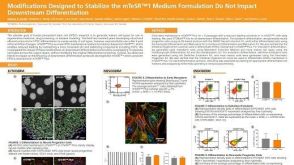 科学海报Modifications Designed to Stabilize the mTeSR1™ Formulation Do Not Impact Downstream Differentiation
 沪公网安备31010102008431号