Intrinsic Immunity Shapes Viral Resistance of Stem Cells.
Stem cells are highly resistant to viral infection compared to their differentiated progeny; however,the mechanism is mysterious. Here,we analyzed gene expression in mammalian stem cells and cells at various stages of differentiation. We find that,conserved across species,stem cells express a subset of genes previously classified as interferon (IFN) stimulated genes (ISGs) but that expression is intrinsic,as stem cells are refractory to interferon. This intrinsic ISG expression varies in a cell-type-specific manner,and many ISGs decrease upon differentiation,at which time cells become IFN responsive,allowing induction of a broad spectrum of ISGs by IFN signaling. Importantly,we show that intrinsically expressed ISGs protect stem cells against viral infection. We demonstrate the in vivo importance of intrinsic ISG expression for protecting stem cells and their differentiation potential during viral infection. These findings have intriguing implications for understanding stem cell biology and the evolution of pathogen resistance.
View Publication
产品号#:
02691
04434
04444
05110
05711
05712
05872
05873
18056
18056RF
72052
72054
72302
72304
72307
72308
70039
70039.1
70039.2
70039.3
70039.4
70039.5
70039.6
60062
60062BT
60062FI
60062FI.1
60062PE
60062PE.1
60045
60045AZ
60045AZ.1
60045BT
60045FI
60045FI.1
600
产品名:
StemSpan™ CD34+扩增添加物 (10X)
MethoCult™ H4434 Classic
MethoCult™ H4434 Classic
STEMdiff™定型内胚层检测试剂盒
NeuroCult™ SM1 神经添加物
CHIR99021
CHIR99021
Y-27632(二盐酸盐)
Y-27632(二盐酸盐)
Y-27632(二盐酸盐)
Y-27632(二盐酸盐)
抗人SSEA-4抗体,克隆号MC-813-70,生物素
抗人SSEA-4抗体,克隆号MC-813-70,FITC
抗人SSEA-4抗体, 克隆号MC-813-70,FITC
抗人SSEA-4抗体,克隆号MC-813-70,PE
抗人SSEA-4抗体,克隆号MC-813-70,PE
抗人CD90抗体,克隆5E10
抗人CD90抗体,克隆5E10,APC
抗人CD90抗体,克隆5E10,APC
抗人CD90抗体,克隆5E10,Biotin
抗人CD90抗体,克隆5E10,FITC
抗人CD90抗体,克隆5E10,FITC
Mariotti J et al. (JAN 2008)
Journal of immunology (Baltimore,Md. : 1950) 180 1 89--105
Ex vivo rapamycin generates apoptosis-resistant donor Th2 cells that persist in vivo and prevent hemopoietic stem cell graft rejection.
Because ex vivo rapamycin generates murine Th2 cells that prevent Graft-versus-host disease more potently than control Th2 cells,we hypothesized that rapamycin would generate Th2/Tc2 cells (Th2/Tc2.R cells) that abrogate fully MHC-disparate hemopoietic stem cell rejection more effectively than control Th2/Tc2 cells. In a B6-into-BALB/c graft rejection model,donor Th2/Tc2.R cells were indeed enriched in their capacity to prevent rejection; importantly,highly purified CD4+ Th2.R cells were also highly efficacious for preventing rejection. Rapamycin-generated Th2/Tc2 cells were less likely to die after adoptive transfer,accumulated in vivo at advanced proliferative cycles,and were present in 10-fold higher numbers than control Th2/Tc2 cells. Th2.R cells had a multifaceted,apoptosis-resistant phenotype,including: 1) reduced apoptosis after staurosporine addition,serum starvation,or CD3/CD28 costimulation; 2) reduced activation of caspases 3 and 9; and 3) increased anti-apoptotic Bcl-xL expression and reduced proapoptotic Bim and Bid expression. Using host-versus-graft reactivity as an immune correlate of graft rejection,we found that the in vivo efficacy of Th2/Tc2.R cells 1) did not require Th2/Tc2.R cell expression of IL-4,IL-10,perforin,or Fas ligand; 2) could not be reversed by IL-2,IL-7,or IL-15 posttransplant therapy; and 3) was intact after therapy with Th2.R cells relatively devoid of Foxp3 expression. We conclude that ex vivo rapamycin generates Th2 cells that are resistant to apoptosis,persist in vivo,and effectively prevent rejection by a mechanism that may be distinct from previously described graft-facilitating T cells.
View Publication
产品号#:
09600
09650
产品名:
StemSpan™ SFEM
StemSpan™ SFEM
Crist SA et al. (APR 2008)
Blood 111 7 3553--61
Nuclear factor of activated T cells (NFAT) mediates CD154 expression in megakaryocytes.
Platelets are an abundant source of CD40 ligand (CD154),an immunomodulatory and proinflammatory molecule implicated in the onset and progression of several inflammatory diseases,including systemic lupus erythematosus (SLE),diabetes,and cardiovascular disease. Heretofore considered largely restricted to activated T cells,we initiated studies to investigate the source and regulation of platelet-associated CD154. We found that CD154 is abundantly expressed in platelet precursor cells,megakaryocytes. We show that CD154 is expressed in primary human CD34+ and murine hematopoietic precursor cells only after cytokine-driven megakaryocyte differentiation. Furthermore,using several established megakaryocyte-like cells lines,we performed promoter analysis of the CD154 gene and found that NFAT,a calcium-dependent transcriptional regulator associated with activated T cells,mediated both differentiation-dependent and inducible megakaryocyte-specific CD154 expression. Overall,these data represent the first investigation of the regulation of a novel source of CD154 and suggests that platelet-associated CD154 can be biochemically modulated.
View Publication


 EasySep™小鼠TIL(CD45)正选试剂盒






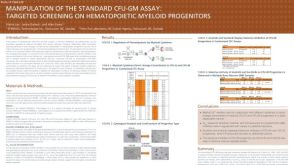 科学海报Manipulation of the Standard CFU-GM Assay Targeted Screening of Hematopoietic Myeloid Progenitors
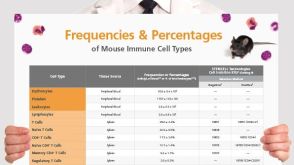 挂图Frequencies and Percentages of Mouse Immune Cell Types List of the frequencies of over 25 immune cell types in C57BL/6 mice
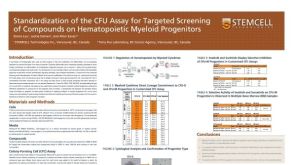


 沪公网安备31010102008431号