Chin JY et al. (SEP 2008)
Proceedings of the National Academy of Sciences of the United States of America 105 36 13514--9
Correction of a splice-site mutation in the beta-globin gene stimulated by triplex-forming peptide nucleic acids.
Splice-site mutations in the beta-globin gene can lead to aberrant transcripts and decreased functional beta-globin,causing beta-thalassemia. Triplex-forming DNA oligonucleotides (TFOs) and peptide nucleic acids (PNAs) have been shown to stimulate recombination in reporter gene loci in mammalian cells via site-specific binding and creation of altered helical structures that provoke DNA repair. We have designed a series of triplex-forming PNAs that can specifically bind to sequences in the human beta-globin gene. We demonstrate here that these PNAs,when cotransfected with recombinatory donor DNA fragments,can promote single base-pair modification at the start of the second intron of the beta-globin gene,the site of a common thalassemia-associated mutation. This single base pair change was detected by the restoration of proper splicing of transcripts produced from a green fluorescent protein-beta-globin fusion gene. The ability of these PNAs to induce recombination was dependent on dose,sequence,cell-cycle stage,and the presence of a homologous donor DNA molecule. Enhanced recombination,with frequencies up to 0.4%,was observed with use of the lysomotropic agent chloroquine. Finally,we demonstrate that these PNAs were effective in stimulating the modification of the endogenous beta-globin locus in human cells,including primary hematopoietic progenitor cells. This work suggests that PNAs can be effective tools to induce heritable,site-specific modification of disease-related genes in human cells.
View Publication
产品号#:
02690
09600
09650
产品名:
StemSpan™ CC100
StemSpan™ SFEM
StemSpan™ SFEM
Karp JE et al. (MAY 2009)
Blood 113 20 4841--52
Active oral regimen for elderly adults with newly diagnosed acute myelogenous leukemia: a preclinical and phase 1 trial of the farnesyltransferase inhibitor tipifarnib (R115777, Zarnestra) combined with etoposide.
The farnesyltransferase inhibitor tipifarnib exhibits modest activity against acute myelogenous leukemia. To build on these results,we examined the effect of combining tipifarnib with other agents. Tipifarnib inhibited signaling downstream of the farnesylated small G protein Rheb and synergistically enhanced etoposide-induced antiproliferative effects in lymphohematopoietic cell lines and acute myelogenous leukemia isolates. We subsequently conducted a phase 1 trial of tipifarnib plus etoposide in adults over 70 years of age who were not candidates for conventional therapy. A total of 84 patients (median age,77 years) received 224 cycles of oral tipifarnib (300-600 mg twice daily for 14 or 21 days) plus oral etoposide (100-200 mg daily on days 1-3 and 8-10). Dose-limiting toxicities occurred with 21-day tipifarnib. Complete remissions were achieved in 16 of 54 (30%) receiving 14-day tipifarnib versus 5 of 30 (17%) receiving 21-day tipifarnib. Complete remissions occurred in 50% of two 14-day tipifarnib cohorts: 3A (tipifarnib 600,etoposide 100) and 8A (tipifarnib 400,etoposide 200). In vivo,tipifarnib plus etoposide decreased ribosomal S6 protein phosphorylation and increased histone H2AX phosphorylation and apoptosis. Tipifarnib plus etoposide is a promising orally bioavailable regimen that warrants further evaluation in elderly adults who are not candidates for conventional induction chemotherapy. These clinical studies are registered at www.clinicaltrials.gov as NCT00112853.
View Publication
产品号#:
04434
04444
产品名:
MethoCult™ H4434 Classic
MethoCult™ H4434 Classic
Safi R et al. (FEB 2009)
Molecular endocrinology (Baltimore,Md.) 23 2 188--201
Pharmacological manipulation of the RAR/RXR signaling pathway maintains the repopulating capacity of hematopoietic stem cells in culture.
The retinoid X receptor (RXR) contributes to the regulation of diverse biological pathways via its role as a heterodimeric partner of several nuclear receptors. However,RXR has no established role in the regulation of hematopoietic stem cell (HSC) fate. In this study,we sought to determine whether direct modulation of RXR signaling could impact human HSC self-renewal or differentiation. Treatment of human CD34(+)CD38(-)lin(-) cells with LG1506,a selective RXR modulator,inhibited the differentiation of HSCs in culture and maintained long-term repopulating HSCs in culture that were otherwise lost in response to cytokine treatment. Further studies revealed that LG1506 had a distinct mechanism of action in that it facilitated the recruitment of corepressors to the retinoic acid receptor (RAR)/RXR complex at target gene promoters,suggesting that this molecule was functioning as an inverse agonist in the context of this heterodimer. Interestingly,using combinatorial peptide phage display,we identified unique surfaces presented on RXR when occupied by LG1506 and demonstrated that other modulators that exhibited these properties functioned similarly at both a mechanistic and biological level. These data indicate that the RAR/RXR heterodimer is a critical regulator of human HSC differentiation,and pharmacological modulation of RXR signaling prevents the loss of human HSCs that otherwise occurs in short-term culture.
View Publication
产品号#:
04434
04444
产品名:
MethoCult™ H4434 Classic
MethoCult™ H4434 Classic
Pessina A et al. (FEB 2009)
Toxicology in vitro : an international journal published in association with BIBRA 23 1 194--200
Application of human CFU-Mk assay to predict potential thrombocytotoxicity of drugs.
Megakaryocytopoiesis gives rise to platelets by proliferation and differentiation of lineage-specific progenitors,identified in vitro as Colony Forming Unit-Megakaryocytes (CFU-Mk). The aim of this study was to refine and optimize the in vitro Standard Operating Procedure (SOP) of the CFU-Mk assay for detecting drug-induced thrombocytopenia and to prevalidate a model for predicting the acute exposure levels that cause maximum tolerated decreases in the platelets count,based on the correlation with the maximal plasma concentrations (C max) in vivo. The assay was linear under the SOP conditions,and the in vitro endpoints (percentage of colonies growing) were reproducible within and across laboratories. The protocol performance phase was carried out testing 10 drugs (selected on the base of their recognised or potential in vivo haematotoxicity,according to the literature). Results showed that a relationship can be established between the maximal concentration in plasma (C max) and the in vitro concentrations that inhibited the 10-50-90 percent of colonies growth (ICs). When C max is lower than IC10,it is possible to predict that the chemicals have no direct toxicity effect on CFU-Mk and could not induce thrombocytopenia due to bone marrow damage. When the C max is higher than IC90 and/or IC50,thrombocytopenia can occur due to direct toxicity of chemicals on CFU-Mk progenitors.
View Publication
产品号#:
04960
04902
04900
04963
04962
04970
产品名:
MegaCult™-C胶原和无细胞因子培养基
胶原蛋白溶液
MegaCult™-C无细胞因子培养基
双室载玻片套件
MegaCult™-C CFU-Mk染色试剂盒
MegaCult™-C无细胞因子全套试剂盒
Vormer TL et al. (DEC 2008)
Molecular and cellular biology 28 24 7263--73
Anchorage-independent growth of pocket protein-deficient murine fibroblasts requires bypass of G2 arrest and can be accomplished by expression of TBX2.
Mouse embryonic fibroblasts (MEFs) deficient for pocket proteins (i.e.,pRB/p107-,pRB/p130-,or pRB/p107/p130-deficient MEFs) have lost proper G(1) control and are refractory to Ras(V12)-induced senescence. However,pocket protein-deficient MEFs expressing Ras(V12) were unable to exhibit anchorage-independent growth or to form tumors in nude mice. We show that depending on the level of pocket proteins,loss of adhesion induces G(1) and G(2) arrest,which could be alleviated by overexpression of the TBX2 oncogene. TBX2-induced transformation occurred only in the absence of pocket proteins and could be attributed to downregulation of the p53/p21(CIP1) pathway. Our results show that a balance between the pocket protein and p53 pathways determines the level of transformation of MEFs by regulating cyclin-dependent kinase activities. Since transformation of human fibroblasts also requires ablation of both pathways,our results imply that the mechanisms underlying transformation of human and mouse cells are not as different as previously claimed.
View Publication
产品号#:
04100
产品名:
MethoCult™ H4100
Wang Y et al. (MAR 2007)
Blood 109 5 2147--55
Adaptive secretion of granulocyte-macrophage colony-stimulating factor (GM-CSF) mediates imatinib and nilotinib resistance in BCR/ABL+ progenitors via JAK-2/STAT-5 pathway activation.
Overcoming imatinib mesylate (IM) resistance and disease persistence in patients with chronic myeloid leukemia (CML) is of considerable importance to the issue of potential cure. Here we asked whether autocrine signaling contributes to survival of BCR/ABL+ cells in the presence of IM and nilotinib (NI; AMN107),a novel,more selective Abl inhibitor. Conditioned media (CM) of IM-resistant LAMA84 cell clones (R-CM) was found to substantially protect IM-naive LAMA cells and primary CML progenitors from IM- or NI-induced cell death. This was due to an increased secretion of the granulocyte-macrophage colony-stimulating factor (GM-CSF),which was identified as the causative factor mediating IM resistance in R-CM. GM-CSF elicited IM and NI drug resistance via a BCR/ABL-independent activation of the janus kinases 2 (JAK-2)/signal transducer and activator of transcription 5 (STAT-5) signaling pathway in GM-CSF receptor alpha receptor (CD116)-expressing cells,including primary CD34+/CD116+ GM progenitors (GMPs). Elevated mRNA and protein levels of GM-CSF were detected in IM-resistant patient samples,suggesting a contribution of GM-CSF secretion for IM and NI resistance in vivo. Importantly,inhibition of JAK-2 with AG490 abrogated GM-CSF-mediated STAT-5 phosphorylation and NI resistance in vitro. Together,adaptive autocrine secretion of GM-CSF mediates BCR/ABL-independent IM and NI resistance via activation of the antiapoptotic JAK-2/STAT-5 pathway. Inhibition of JAK-2 overcomes GM-CSF-induced IM and NI progenitor cell resistance,providing a rationale for the application of JAK-2 inhibitors to eradicate residual disease in CML.
View Publication
产品号#:
04230
产品名:
MethoCult™ H4230
Thomson AW and Horne CH (NOV 1975)
Transplantation 20 5 435--7
Failure of carrageenan to affect graft-versus-host reactivity in the rat.
Fanconi anemia (FA) is an inherited recessive DNA repair disorder mainly characterized by bone marrow failure and cancer predisposition. Studies in mosaic FA patients have shown that reversion of one inherited germ-line mutation resulting in a functional allele in one or a few hematopoietic stem cells (HSCs) can lead to the proliferation advantage of corrected cells,thus over time normalizing the hematologic status of the patient. In contrast to these observations,it is still unclear whether ex vivo genetic correction of FA HSCs also provides a similar proliferation advantage to FA HSCs. Using an FA mouse model with a marked hematopoietic phenotype,the FA-D1 (Brca2(Delta27/Delta27)) mice,we demonstrate that the lentivirus-mediated gene therapy of FA HSCs results in the progressive expansion of genetically corrected clones in mild-conditioned FA-D1 recipients. Consistent with these data,hematopoietic progenitors from FA recipients progressively became mitomycin C resistant and their chromosomal instability was reverted. No evidence of myelodysplasia,leukemias,or abnormal clonal repopulation was observed at multiple time points in primary or secondary recipients. Our results demonstrate that ectopic expression of BRCA2 confers a beneficial in vivo proliferation advantage to FA-D1 HSCs that enables the full hematopoietic repopulation of FA recipients with genetically corrected cells.
View Publication
产品号#:
03534
产品名:
MethoCult™ GF M3534
Thein SL et al. (JUL 2007)
Proceedings of the National Academy of Sciences of the United States of America 104 27 11346--51
Intergenic variants of HBS1L-MYB are responsible for a major quantitative trait locus on chromosome 6q23 influencing fetal hemoglobin levels in adults.
Individual variation in fetal hemoglobin (HbF,alpha(2)gamma(2)) response underlies the remarkable diversity in phenotypic severity of sickle cell disease and beta thalassemia. HbF levels and HbF-associated quantitative traits (e.g.,F cell levels) are highly heritable. We have previously mapped a major quantitative trait locus (QTL) controlling F cell levels in an extended Asian-Indian kindred with beta thalassemia to a 1.5-Mb interval on chromosome 6q23,but the causative gene(s) are not known. The QTL encompasses several genes including HBS1L,a member of the GTP-binding protein family that is expressed in erythroid progenitor cells. In this high-resolution association study,we have identified multiple genetic variants within and 5' to HBS1L at 6q23 that are strongly associated with F cell levels in families of Northern European ancestry (P = 10(-75)). The region accounts for 17.6% of the F cell variance in northern Europeans. Although mRNA levels of HBS1L and MYB in erythroid precursors grown in vitro are positively correlated,only HBS1L expression correlates with high F cell alleles. The results support a key role for the HBS1L-related genetic variants in HbF control and illustrate the biological complexity of the mechanism of 6q QTL as a modifier of fetal hemoglobin levels in the beta hemoglobinopathies.
View Publication
产品号#:
09600
09650
产品名:
StemSpan™ SFEM
StemSpan™ SFEM
Kang YK et al. (MAR 2016)
Blood research 51 1 31--6
Humanizing NOD/SCID/IL-2Rγnull (NSG) mice using busulfan and retro-orbital injection of umbilical cord blood-derived CD34(+) cells.
BACKGROUND Humanized mouse models are still under development,and various protocols exist to improve human cell engraftment and function. METHODS Fourteen NOD/SCID/IL-2Rγnull (NSG) mice (4‒5 wk old) were conditioned with busulfan and injected with human umbilical cord blood (hUCB)-derived CD34(+) hematopoietic stem cells (HSC) via retro-orbital sinuses. The bone marrow (BM),spleen,and peripheral blood (PB) were analyzed 8 and 12 weeks after HSC transplantation. RESULTS Most of the NSG mice tolerated the regimen well. The percentage of hCD45(+) and CD19(+) cells rose significantly in a time-dependent manner. The median percentage of hCD45(+)cells in the BM was 55.5% at week 8,and 67.2% at week 12. The median percentage of hCD45(+) cells in the spleen at weeks 8 and 12 was 42% and 51%,respectively. The median percentage of hCD19(+) cells in BM at weeks 8 and 12 was 21.5% and 39%,respectively (P=0.04). Similarly,the median percentage of hCD19(+) cells in the spleen at weeks 8 and 12 was 10% and 24%,respectively (P=0.04). The percentage of hCD19(+) B cells in PB was 23% at week 12. At week 8,hCD3(+) T cells were barely detectable,while hCD7(+) was detected in the BM and spleen. The percentage of hCD3(+) T cells was 2‒3% at week 12 in the BM,spleen,and PB of humanized NSG mice. CONCLUSION We adopted a simplified protocol for establishing humanized NSG mice. We observed a higher engraftment rate of human CD45(+) cells than earlier studies without any significant toxicity. And human CD45(+) cell engraftment at week 8 was comparable to that of week 12.
View Publication


 EasySep™小鼠TIL(CD45)正选试剂盒




 技术公告Identification of ALDH-Expressing Cancer Stem Cells Using ALDEFLUOR™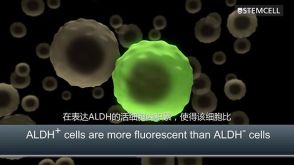

 沪公网安备31010102008431号