Hornick EE et al. (FEB 2018)
Journal of immunology (Baltimore,Md. : 1950) 200 3 1188--1197
Nlrp12 Mediates Adverse Neutrophil Recruitment during Influenza Virus Infection.
Exaggerated inflammatory responses during influenza A virus (IAV) infection are typically associated with severe disease. Neutrophils are among the immune cells that can drive this excessive and detrimental inflammation. In moderation,however,neutrophils are necessary for optimal viral control. In this study,we explore the role of the nucleotide-binding domain leucine-rich repeat containing receptor family member Nlrp12 in modulating neutrophilic responses during lethal IAV infection. Nlrp12-/- mice are protected from lethality during IAV infection and show decreased vascular permeability,fewer pulmonary neutrophils,and a reduction in levels of neutrophil chemoattractant CXCL1 in their lungs compared with wild-type mice. Nlrp12-/- neutrophils and dendritic cells within the IAV-infected lungs produce less CXCL1 than their wild-type counterparts. Decreased CXCL1 production by Nlrp12-/- dendritic cells was not due to a difference in CXCL1 protein stability,but instead to a decrease in Cxcl1 mRNA stability. Together,these data demonstrate a previously unappreciated role for Nlrp12 in exacerbating the pathogenesis of IAV infection through the regulation of CXCL1-mediated neutrophilic responses.
View Publication
产品号#:
19762
19762RF
产品名:
EasySep™小鼠中性粒细胞富集试剂盒
RoboSep™ 小鼠中性粒细胞富集试剂盒含滤芯吸头
C. R. Seehus et al. (DEC 2017)
Nature communications 8 1 1900
Alternative activation generates IL-10 producing type 2 innate lymphoid cells.
Type 2 innate lymphoid cells (ILC2) share cytokine and transcription factor expression with CD4+ Th2 cells,but functional diversity of the ILC2 lineage has yet to be fully explored. Here,we show induction of a molecularly distinct subset of activated lung ILC2,termed ILC210. These cells produce IL-10 and downregulate some pro-inflammatory genes. Signals that generate ILC210 are distinct from those that induce IL-13 production,and gene expression data indicate that an alternative activation pathway leads to the generation of ILC210. In vivo,IL-2 enhances ILC210 generation and is associated with decreased eosinophil recruitment to the lung. Unlike most activated ILC2,the ILC210 population contracts after cessation of stimulation in vivo,with maintenance of a subset that can be recalled by restimulation,analogous to T-cell effector cell and memory cell generation. These data demonstrate the generation of a previously unappreciated IL-10 producing ILC2 effector cell population.
View Publication
产品号#:
19860
19860RF
85415
85420
85450
85460
86415
86420
86450
86460
产品名:
EasySep™小鼠Streptavidin RapidSpheres™分选试剂盒
RoboSep™ 小鼠Streptavidin RapidSpheres™分选试剂盒
SepMate™-15 (IVD)
SepMate™-15 (IVD)
SepMate™-50 (IVD)
SepMate™-50 (IVD)
SepMate™-15 (RUO)
SepMate™-15 (RUO)
SepMate™-50 (RUO)
SepMate™-50 (RUO)
Ode Y et al. (JAN 2018)
Journal of leukocyte biology
CIRP increases ICAM-1+ phenotype of neutrophils exhibiting elevated iNOS and NETs in sepsis.
Sepsis represents uncontrolled inflammation due to an infection. Cold-inducible RNA-binding protein (CIRP) is a stress-induced damage-associated molecular pattern (DAMP). A subset of neutrophils expressing ICAM-1+ neutrophils was previously shown to produce high levels of reactive oxygen species. The role of CIRP for the development and function of ICAM-1+ neutrophils during sepsis is unknown. We hypothesize that CIRP induces ICAM-1 expression in neutrophils causing injury to the lungs during sepsis. Using a mouse model of cecal ligation and puncture (CLP)-induced sepsis,we found increased expression of CIRP and higher frequencies and numbers of ICAM-1+ neutrophils in the lungs. Conversely,the CIRP-/- mice showed significant inhibition in the frequencies and numbers of ICAM-1+ neutrophils in the lungs compared to wild-type (WT) mice in sepsis. In vitro treatment of bone marrow-derived neutrophils (BMDN) with recombinant murine CIRP (rmCIRP) significantly increased ICAM-1+ phenotype in a time- and dose-dependent manner. The effect of rmCIRP on increasing frequencies of ICAM-1+ neutrophils was significantly attenuated in BMDN treated with anti-TLR4 Ab or NF-κB inhibitor compared,respectively,with BMDN treated with isotype IgG or DMSO. The frequencies of iNOS producing and neutrophil extracellular traps (NETs) forming phenotypes in rmCIRP-treated ICAM-1+ BMDN were significantly higher than those in ICAM-1- BMDN. Following sepsis the ICAM-1+ neutrophils in the lungs showed significantly higher levels of iNOS and NETs compared to ICAM-1- neutrophils. We further revealed that ICAM-1 and NETs were co-localized in the neutrophils treated with rmCIRP. CIRP-/- mice showed significant improvement in their survival outcome (78% survival) over that of WT mice (48% survival) in sepsis. Thus,CIRP could be a novel therapeutic target for regulating iNOS producing and NETs forming ICAM-1+ neutrophils in the lungs during sepsis.
View Publication
产品号#:
19762
19762RF
产品名:
EasySep™小鼠中性粒细胞富集试剂盒
RoboSep™ 小鼠中性粒细胞富集试剂盒含滤芯吸头
Meenhuis A et al. (JUL 2011)
Blood 118 4 916--25
MiR-17/20/93/106 promote hematopoietic cell expansion by targeting sequestosome 1-regulated pathways in mice.
MicroRNAs (miRNAs) are pivotal for regulation of hematopoiesis but their critical targets remain largely unknown. Here,we show that ectopic expression of miR-17,-20,-93 and -106,all AAAGUGC seed-containing miRNAs,increases proliferation,colony outgrowth and replating capacity of myeloid progenitors and results in enhanced P-ERK levels. We found that these miRNAs are endogenously and abundantly expressed in myeloid progenitors and down-regulated in mature neutrophils. Quantitative proteomics identified sequestosome 1 (SQSTM1),an ubiquitin-binding protein and regulator of autophagy-mediated protein degradation,as a major target for these miRNAs in myeloid progenitors. In addition,we found increased expression of Sqstm1 transcripts during CSF3-induced neutrophil differentiation of 32D-CSF3R cells and an inverse correlation of SQSTM1 protein levels and miR-106 expression in AML samples. ShRNA-mediated silencing of Sqstm1 phenocopied the effects of ectopic miR-17/20/93/106 expression in hematopoietic progenitors in vitro and in mice. Further,SQSTM1 binds to the ligand-activated colony-stimulating factor 3 receptor (CSF3R) mainly in the late endosomal compartment,but not in LC3 positive autophagosomes. SQSTM1 regulates CSF3R stability and ligand-induced mitogen-activated protein kinase signaling. We demonstrate that AAAGUGC seed-containing miRNAs promote cell expansion,replating capacity and signaling in hematopoietic cells by interference with SQSTM1-regulated pathways.
View Publication
产品号#:
03231
产品名:
MethoCult™ M3231
Yang Q et al. (MAR 2011)
Blood 117 13 3529--38
E47 regulates hematopoietic stem cell proliferation and energetics but not myeloid lineage restriction.
The immune system is replenished by self-renewing hematopoietic stem cells (HSCs) that produce multipotent progenitors (MPPs) with little renewal capacity. E-proteins,the widely expressed basic helix-loop-helix transcription factors,contribute to HSC and MPP activity,but their specific functions remain undefined. Using quantitative in vivo and in vitro approaches,we show that E47 is dispensable for the short-term myeloid differentiation of HSCs but regulates their long-term capabilities. E47-deficient progenitors show competent myeloid production in short-term assays in vitro and in vivo. However,long-term myeloid and lymphoid differentiation is compromised because of a progressive loss of HSC self-renewal that is associated with diminished p21 expression and hyperproliferation. The activity of E47 is shown to be cell-intrinsic. Moreover,E47-deficient HSCs and MPPs have altered expression of genes associated with cellular energy metabolism,and the size of the MPP pool but not downstream lymphoid precursors in bone marrow or thymus is rescued in vivo by antioxidant. Together,these observations suggest a role for E47 in the tight control of HSC proliferation and energy metabolism,and demonstrate that E47 is not required for short-term myeloid differentiation.
View Publication
产品号#:
03434
03444
产品名:
MethoCult™ GF M3434
MethoCult™ GF M3434
Brode S et al. (DEC 2010)
Thorax 65 12 1116--7
Interleukin-5 inhibits glucocorticoid-mediated apoptosis in human eosinophils.
Imprime PGG (Imprime),an intravenously-administered,soluble $\beta$-glucan,has shown compelling efficacy in multiple phase 2 clinical trials with tumor targeting or anti-angiogenic antibodies. Mechanistically,Imprime acts as pathogen-associated molecular pattern (PAMP) directly activating innate immune effector cells,triggering a coordinated anti-cancer immune response. Herein,using whole blood from healthy human subjects,we show that Imprime-induced anti-cancer functionality is dependent on immune complex formation with naturally-occurring,anti-$\beta$ glucan antibodies (ABA). The formation of Imprime-ABA complexes activates complement,primarily via the classical complement pathway,and is opsonized by iC3b. Immune complex binding depends upon Complement Receptor 3 and Fcg Receptor IIa,eliciting phenotypic activation of,and enhanced chemokine production by,neutrophils and monocytes,enabling these effector cells to kill antibody-opsonized tumor cells via the generation of reactive oxygen species and antibody-dependent cellular phagocytosis. Importantly,these innate immune cell changes were not evident in subjects with low ABA levels but could be rescued with exogenous ABA supplementation. Together,these data indicate that pre-existing ABA are essential for Imprime-mediated anti-cancer immune activation and suggest that pre-treatment ABA levels may provide a plausible patient selection biomarker to delineate patients most likely to benefit from Imprime-based therapy.
View Publication
产品号#:
19666
100-0404
产品名:
EasySep™ Direct人中性粒细胞分选试剂盒
RoboSep™ 人中性粒细胞分选试剂盒
Stadtmann A et al. (OCT 2013)
The Journal of Experimental Medicine 210 11 2171--80
The PSGL-1-L-selectin signaling complex regulates neutrophil adhesion under flow
Neutrophils are recruited from the blood to sites of inflammation,where they contribute to immune defense but may also cause tissue damage. During inflammation,neutrophils roll along the microvascular endothelium before arresting and transmigrating. Arrest requires conformational activation of the integrin lymphocyte function-associated antigen 1 (LFA-1),which can be induced by selectin engagement. Here,we demonstrate that a subset of P-selectin glycoprotein ligand-1 (PSGL-1) molecules is constitutively associated with L-selectin. Although this association does not require the known lectin-like interaction between L-selectin and PSGL-1,the signaling output is dependent on this interaction and the cytoplasmic tail of L-selectin. The PSGL-1-L-selectin complex signals through Src family kinases,ITAM domain-containing adaptor proteins,and other kinases to ultimately result in LFA-1 activation. The PSGL-1-L-selectin complex-induced signaling effects on neutrophil slow rolling and recruitment in vivo demonstrate the functional importance of this pathway. We conclude that this is a signaling complex specialized for sensing adhesion under flow.
View Publication
产品号#:
19257
19257RF
19762
19762RF
产品名:
EasySep™小鼠中性粒细胞富集试剂盒
RoboSep™ 小鼠中性粒细胞富集试剂盒含滤芯吸头
Pecci A et al. (NOV 2005)
Human molecular genetics 14 21 3169--78
Pathogenetic mechanisms of hematological abnormalities of patients with MYH9 mutations.
Mutations of MYH9,the gene for non-muscle myosin heavy chain IIA (NMMHC-IIA),cause a complex clinical phenotype characterized by macrothrombocytopenia and granulocyte inclusion bodies,often associated with deafness,cataracts and/or glomerulonephritis. The pathogenetic mechanisms of these defects are either completely unknown or controversial. In particular,it is a matter of debate whether haploinsufficiency or a dominant-negative effect of mutant allele is responsible for hematological abnormalities. We investigated 11 patients from six pedigrees with different MYH9 mutations. We evaluated NMMHC-IIA levels in platelets and granulocytes isolated from peripheral blood and in megakaryocytes (Mks) cultured from circulating progenitors. NMMHC-IIA distribution in Mks and granulocytes was also assessed. We demonstrated that all the investigated patients had a 50% reduction of NMMHC-IIA expression in platelets and that a similar defect was present also in Mks. In subjects with R1933X and E1945X mutations,the whole NMMHC-IIA of platelets and Mks was wild-type. No NMMHC-IIA inclusions were observed at any time of Mk maturation. In granulocytes,the extent of NMMHC-IIA reduction in patients with respect to control cells was significantly greater than that measured in platelets and Mks,and we found that wild-type protein was sequestered within most of the NMMHC-IIA inclusions. Altogether these results indicate that haploinsufficiency of NMMHC-IIA in megakaryocytic lineage is the mechanism of macrothrombocytopenia consequent to MYH9 mutations,whereas in granulocytes a dominant-negative effect of mutant allele is involved in the formation of inclusion bodies. The finding that the same mutations act through different mechanisms in different cells is surprising and requires further investigation.
View Publication
Enforced expression of CUL-4A interferes with granulocytic differentiation and exit from the cell cycle.
The cullin family of proteins is involved in the ubiquitin-mediated degradation of cell cycle regulators. Relatively little is known about the function of the CUL-4A cullin,but its overexpression in breast cancer suggests CUL-4A might also regulate the cell cycle. In addition,since other cullins are required for normal development,we hypothesized that CUL-4A is involved in regulating cell cycle progression during differentiation. We observed that CUL-4A mRNA and protein levels decline 2.5-fold during the differentiation of PLB-985 myeloid cells into granulocytes. To examine the significance of this observation,we overexpressed CUL-4A in these cells and found that modest (textless 2-fold),enforced expression of CUL-4A attenuates terminal granulocytic differentiation and instead promotes proliferation. This overexpression similarly affects the differentiation of these cells into macrophages. We recently reported that nearly one half of CUL-4A+/- mice are nonviable,and in this report,we show that the viable heterozygous mice,which have reduced CUL-4A expression,have dramatically fewer erythroid and multipotential progenitors than normal controls. Together these results indicate that appropriate CUL-4A expression is essential for embryonic development and for cell cycle regulation during granulocytic differentiation and suggest this gene plays a broader role in hematopoiesis. Since enforced CUL-4A expression does not alter the cell cycle distribution of uninduced cells but dramatically increases the proportion of induced cells that remains in S-phase and reduces the proportion that accumulates in G0/G1,our results show that this CUL-4A regulatory function is interconnected with differentiation,a novel finding for mammalian cullins.
View Publication
产品号#:
03134
产品名:
MethoCult™ M3134
Kubala SA et al. ( 2014)
Prostaglandins and Other Lipid Mediators 108 1--8
Pathogen induced chemo-attractant hepoxilin A3 drives neutrophils, but not eosinophils across epithelial barriers
Pathogen induced migration of neutrophils across mucosal epithelial barriers requires epithelial production of the chemotactic lipid mediator,hepoxilin A3 (HXA3). HXA3 is an eicosanoid derived from arachidonic acid. Although eosinophils are also capable of penetrating mucosal surfaces,eosinophilic infiltration occurs mainly during allergic processes whereas neutrophils dominate mucosal infection. Both neutrophils and eosinophils can respond to chemotactic gradients of certain eicosanoids,however,it is not known whether eosinophils respond to pathogen induced lipid mediators such as HXA3. In this study,neutrophils and eosinophils were isolated from human blood and placed on the basolateral side of polarized epithelial monolayers grown on permeable Transwell filters and challenged by various chemotactic gradients of distinct lipid mediators. We observed that both cell populations migrated across epithelial monolayers in response to a leukotriene B4 (LTB4) gradient,whereas only eosinophils migrated toward a prostaglandin D2 (PGD2) gradient. Interestingly,while pathogen induced neutrophil trans-epithelial migration was substantial,pathogen induced eosinophil trans-epithelial migration was not observed. Further,gradients of chemotactic lipids derived from pathogen infected epithelial cells known to be enriched for HXA3 as well as purified HXA3 drove significant numbers of neutrophils across epithelial barriers,whereas eosinophils failed to respond to these gradients. These data suggest that although the eicosanoid HXA3 serves as an important neutrophil chemo-attractant at mucosal surfaces during pathogenic infection,HXA3 does not appear to exhibit chemotactic activity toward eosinophils. ?? 2013 Elsevier Ltd. All rights reserved.
View Publication


 EasySep™小鼠TIL(CD45)正选试剂盒




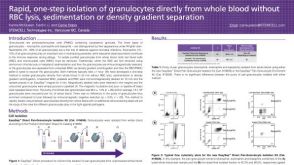 科学海报Rapid, one-step isolation of granulocytes directly from whole blood without RBC lysis, sedimentation or density spearation
 沪公网安备31010102008431号