Chen Y et al. (JUL 2009)
Journal of immunology (Baltimore,Md. : 1950) 183 2 1346--59
Regulation of dendritic cells and macrophages by an anti-apoptotic cell natural antibody that suppresses TLR responses and inhibits inflammatory arthritis.
Although natural Abs (NAbs) are present from birth,little is known about what drives their selection and whether they have housekeeping functions. The prototypic T15-NAb,first identified because of its protective role in infection,is representative of a special type of NAb response that specifically recognizes and forms complexes with apoptotic cells and which promotes cell-corpse engulfment by phagocytes. We now show that this T15-NAb IgM-mediated clearance process is dependent on the recruitment of C1q and mannose-binding lectin,which have known immune modulatory activities that also provide eat me" signals for enhancing phagocytosis. Further investigation revealed that the addition of T15-NAb significantly suppressed in vitro LPS-induced TNF-alpha and IL-6 secretion by the macrophage-like cell line�
View Publication
Gleeson LE et al. (MAR 2016)
Journal of Immunology 196 6 2444--9
Cutting Edge: Mycobacterium tuberculosis Induces Aerobic Glycolysis in Human Alveolar Macrophages That Is Required for Control of Intracellular Bacillary Replication.
Recent advances in immunometabolism link metabolic changes in stimulated macrophages to production of IL-1β,a crucial cytokine in the innate immune response to Mycobacterium tuberculosis. To investigate this pathway in the host response to M. tuberculosis,we performed metabolic and functional studies on human alveolar macrophages,human monocyte-derived macrophages,and murine bone marrow-derived macrophages following infection with the bacillus in vitro. M. tuberculosis infection induced a shift from oxidative phosphorylation to aerobic glycolysis in macrophages. Inhibition of this shift resulted in decreased levels of proinflammatory IL-1β and decreased transcription of PTGS2,increased levels of anti-inflammatory IL-10,and increased intracellular bacillary survival. Blockade or absence of IL-1R negated the impact of aerobic glycolysis on intracellular bacillary survival,demonstrating that infection-induced glycolysis limits M. tuberculosis survival in macrophages through induction of IL-1β. Drugs that manipulate host metabolism may be exploited as adjuvants for future therapeutic and vaccination strategies.
View Publication
产品号#:
19359
19359RF
100-0697
产品名:
EasySep™人单核细胞分选试剂盒
RoboSep™ 人单核细胞分选试剂盒
EasySep™人单核细胞分选试剂盒
Fuerstenau-Sharp M et al. (MAY 2015)
PloS one 10 5 e0126596
Generation of highly purified human cardiomyocytes from peripheral blood mononuclear cell-derived induced pluripotent stem cells.
Induced pluripotent stem (iPS) cells have an enormous potential for physiological studies. A novel protocol was developed combining the derivation of iPS from peripheral blood with an optimized directed differentiation to cardiomyocytes and a subsequent metabolic selection. The human iPS cells were retrovirally dedifferentiated from activated T cells. The subsequent optimized directed differentiation protocol yielded 30-45% cardiomyocytes at day 16 of differentiation. The derived cardiomyocytes expressed appropriate structural markers like cardiac troponin T,$\$-actinin and myosin light chain 2 (MLC2V). In a subsequent metabolic selection with lactate,the cardiomyocytes content could be increased to more than 90%. Loss of cardiomyocytes during metabolic selection were less than 50%,whereas alternative surface antibody-based selection procedures resulted in loss of up to 80% of cardiomyocytes. Electrophysiological characterization confirmed the typical cardiac features and the presence of ventricular,atrial and nodal-like action potentials within the derived cardiomyocyte population. Our combined and optimized protocol is highly robust and applicable for scalable cardiac differentiation. It provides a simple and cost-efficient method without expensive equipment for generating large numbers of highly purified,functional cardiomyocytes. It will further enhance the applicability of iPS cell-derived cardiomyocytes for disease modeling,drug discovery,and regenerative medicine.
View Publication
Human CD68 promoter GFP transgenic mice allow analysis of monocyte to macrophage differentiation in vivo.
The recruitment of monocytes and their differentiation into macrophages at sites of inflammation are key events in determining the outcome of the inflammatory response and initiating the return to tissue homeostasis. To study monocyte trafficking and macrophage differentiation in vivo,we have generated a novel transgenic reporter mouse expressing a green fluorescent protein (GFP) under the control of the human CD68 promoter. CD68-GFP mice express high levels of GFP in both monocyte and embryo-derived tissue resident macrophages in adult animals. The human CD68 promoter drives GFP expression in all CD115(+) monocytes of adult blood,spleen,and bone marrow; we took advantage of this to directly compare the trafficking of bone marrow-derived CD68-GFP monocytes to that of CX3CR1(GFP) monocytes in vivo using a sterile zymosan peritonitis model. Unlike CX3CR1(GFP) monocytes,which downregulate GFP expression on differentiation into macrophages in this model,CD68-GFP monocytes retain high-level GFP expression for 72 hours after differentiation into macrophages,allowing continued cell tracking during resolution of inflammation. In summary,this novel CD68-GFP transgenic reporter mouse line represents a powerful resource for analyzing monocyte mobilization and monocyte trafficking as well as studying the fate of recruited monocytes in models of acute and chronic inflammation.
View Publication
产品号#:
18102
19761
19761RF
产品名:
EasyPlate™ EasySep™磁极
Megjugorac NJ et al. (MAY 2010)
Blood 115 21 4185--90
IL-4 enhances IFN-lambda1 (IL-29) production by plasmacytoid DCs via monocyte secretion of IL-1Ra.
The type-III interferon (IFN) family is composed of 3 molecules in humans: IFN-lambda1 (interleukin-29 [IL-29]),IFN-lambda2 (IL-28A),and IFN-lambda3 (IL-28B),each of which signals through the same receptor complex. Plasmacytoid dendritic cells (pDCs) are major IFN-lambda producers among peripheral lymphocytes. Recently,it has been shown that IFN-lambda1 exerts a powerful inhibitory effect over the T-helper 2 (Th2) response by antagonizing the effect of IL-4 on CD4(+) T cells and inhibiting the production of Th2-associated cytokines. Here,we asked whether Th2 cytokines exert reciprocal control over IFN-lambda production. IL-4 treatment during stimulation of human peripheral lymphocytes significantly elevated IFN-lambda1 transcription and secretion. However,pDCs were not directly responsive to IL-4. Using depletion and reconstitution experiments,we showed that IL-4-responsive monocytes are an intermediary cell,responding to IL-4 by elevating their secretion of IL-1 receptor antagonist (IL-Ra); this IL-1Ra acts on pDCs to elevate their IFN-lambda1 output. Thus,our experiments revealed a novel mechanism for regulation of both IFN-lambda1 production and pDC function,and suggests an expanded immunomodulatory role for Th2-associated cytokines.
View Publication
产品号#:
18051
18051RF
18054
18054RF
18055
18055RF
18058
18058RF
19062
19062RF
19058
19058RF
18551
18551RF
18561
100-1525
产品名:
EasySep™人浆细胞样DC富集试剂盒
RoboSep™ 人浆细胞样DC富集试剂盒含滤芯吸头
EasySep™人单核细胞富集试剂盒(不去除CD16)
RoboSep™ 人单核细胞富集试剂盒(不去除CD16)含滤芯吸头
EasySep™人单核细胞富集试剂盒(不去除CD16)
Heinig M et al. (SEP 2010)
Nature 467 7314 460--4
A trans-acting locus regulates an anti-viral expression network and type 1 diabetes risk.
Combined analyses of gene networks and DNA sequence variation can provide new insights into the aetiology of common diseases that may not be apparent from genome-wide association studies alone. Recent advances in rat genomics are facilitating systems-genetics approaches. Here we report the use of integrated genome-wide approaches across seven rat tissues to identify gene networks and the loci underlying their regulation. We defined an interferon regulatory factor 7 (IRF7)-driven inflammatory network (IDIN) enriched for viral response genes,which represents a molecular biomarker for macrophages and which was regulated in multiple tissues by a locus on rat chromosome 15q25. We show that Epstein-Barr virus induced gene 2 (Ebi2,also known as Gpr183),which lies at this locus and controls B lymphocyte migration,is expressed in macrophages and regulates the IDIN. The human orthologous locus on chromosome 13q32 controlled the human equivalent of the IDIN,which was conserved in monocytes. IDIN genes were more likely to associate with susceptibility to type 1 diabetes (T1D)-a macrophage-associated autoimmune disease-than randomly selected immune response genes (P = 8.85 × 10(-6)). The human locus controlling the IDIN was associated with the risk of T1D at single nucleotide polymorphism rs9585056 (P = 7.0 × 10(-10); odds ratio,1.15),which was one of five single nucleotide polymorphisms in this region associated with EBI2 (GPR183) expression. These data implicate IRF7 network genes and their regulatory locus in the pathogenesis of T1D.
View Publication
产品号#:
15028
15068
产品名:
RosetteSep™人单核细胞富集抗体混合物
RosetteSep™人单核细胞富集抗体混合物
M. Riopel et al. ( 2019)
Molecular metabolism 20 89--101
CX3CL1-Fc treatment prevents atherosclerosis in Ldlr KO mice.
OBJECTIVE Atherosclerosis is a major cause of cardiovascular disease. Monocyte-endothelial cell interactions are partly mediated by expression of monocyte CX3CR1 and endothelial cell fractalkine (CX3CL1). Interrupting the interaction between this ligand-receptor pair should reduce monocyte binding to the endothelial wall and reduce atherosclerosis. We sought to reduce atherosclerosis by preventing monocyte-endothelial cell interactions through use of a long-acting CX3CR1 agonist. METHODS In this study,the chemokine domain of CX3CL1 was fused to the mouse Fc region to generate a long-acting soluble form of CX3CL1 suitable for chronic studies. CX3CL1-Fc or saline was injected twice a week (30 mg/kg) for 4 months into Ldlr knockout (KO) mice on an atherogenic western diet. RESULTS CX3CL1-Fc-treated Ldlr KO mice showed decreased en face aortic lesion surface area and reduced aortic root lesion size with decreased necrotic core area. Flow cytometry analyses of CX3CL1-Fc-treated aortic wall cell digests revealed a decrease in M1-like polarized macrophages and T cells. Moreover,CX3CL1-Fc administration reduced diet-induced atherosclerosis after switching from an atherogenic to a normal chow diet. In vitro monocyte adhesion studies revealed that CX3CL1-Fc treatment caused fewer monocytes to adhere to a human umbilical vein endothelial cell monolayer. Furthermore,a dorsal window chamber model demonstrated that CX3CL1-Fc treatment decreased in vivo leukocyte adhesion and rolling in live capillaries after short-term ischemia-reperfusion. CONCLUSION These results indicate that CX3CL1-Fc can inhibit monocyte/endothelial cell adhesion as well as reduce atherosclerosis.
View Publication
产品号#:
19861
19861RF
产品名:
EasySep™小鼠单核细胞分选试剂盒
RoboSep™ 小鼠单核细胞分选试剂盒
Gilbert C et al. (JUL 2007)
Journal of virology 81 14 7672--82
Human immunodeficiency virus type 1 replication in dendritic cell-T-cell cocultures is increased upon incorporation of host LFA-1 due to higher levels of virus production in immature dendritic cells.
Dendritic cells (DCs) act as a portal for invasion by human immunodeficiency virus type-1 (HIV-1). Here,we investigated whether virion-incorporated host cell membrane proteins can affect virus replication in DC-T-cell cocultures. Using isogenic viruses either devoid of or bearing host-derived leukocyte function-associated antigen 1 (LFA-1),we showed that HIV-1 production is augmented when LFA-1-bearing virions are used compared to that for viral entities lacking this adhesion molecule. This phenomenon was observed in immature monocyte-derived DCs (IM-MDDCs) only and not in DCs displaying a mature phenotype. The increase is not due to higher virus production in responder CD4(+) T cells but rather is linked with a more important productive infection of IM-MDDCs. We provided evidence that virus-associated host LFA-1 molecules do not affect a late event in the HIV-1 life cycle but rather exert an effect on an early step in virus replication. We demonstrated that the enhancement of productive infection of IM-MDDCs that is conferred by virus-anchored host LFA-1 involves the protein kinase A (PKA) and PKC signal transduction pathways. The biological significance of this phenomenon was established by performing experiments with virus stocks produced in primary human cells and anti-LFA-1 antibodies. Together,our results indicate that the association between some virus-bound host proteins and their natural cognate ligands can modulate de novo HIV-1 production by IM-MDDCs. Therefore,the additional interactions between virus-bound host cell membrane constituents and counter receptors on the surfaces of DCs can influence HIV-1 replication in IM-MDDC-T-cell cocultures.
View Publication


 EasySep™小鼠TIL(CD45)正选试剂盒




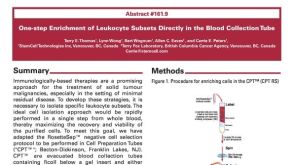 科学海报One-Step Enrichment of Leukocyte Subsets Directly in the Blood Collection Tube

 沪公网安备31010102008431号