Smedman C et al. (SEP 2011)
Scandinavian journal of immunology
FluoroSpot analysis of TLR-activated monocytes reveals several distinct cytokine secreting subpopulations.
Monocytes have long been considered a heterogeneous group of cells both in terms of morphology and function. In humans,three distinct subsets have been described based on their differential expression of the cell surface markers CD14 and CD16. However,the relationship between these subsets and the production of cytokines has for the most part been based on ELISA measurements,making it difficult to draw conclusions as to their functional profile on the cellular level. In the present study,we have investigated lipoteichoic acid (LTA) and lipopolysaccharide (LPS) induced cytokine secretion by monocytes using the FluoroSpot technique. This method measures the number of cytokine secreting cells on the single cell level and uses fluorescent detection,allowing for the simultaneous analysis of two cytokines from the same population of isolated cells. By this approach,human monocytes from healthy volunteers could be divided into several subgroups as IL-1β,IL-6,TNF-α and MIP-1β were secreted by larger populations of responding cells (25.9-39.2%) compared to the smaller populations of GM-CSF (9.1%),IL-10 (1.3%) and IL-12p40 (1.2%). Furthermore,when studying co-secretion in FluoroSpot,an intricate relationship between the monocytes secreting IL-1β and/or IL-6 and those secreting TNF-α,MIP-1β,GM-CSF,IL-10 and IL-12p40 was revealed. In this way,dissecting the secretion pattern of the monocytes in response to TLR-2 or TLR-4 stimulation,several subpopulations with distinct cytokine secreting profiles could be identified.
View Publication
产品号#:
15028
15068
产品名:
RosetteSep™人单核细胞富集抗体混合物
RosetteSep™人单核细胞富集抗体混合物
Guzzo C et al. ( 2012)
The Journal of Immunology 188 2 864--873
IL-27 Enhances LPS-Induced Proinflammatory Cytokine Production via Upregulation of TLR4 Expression and Signaling in Human Monocytes
IL-27,which is produced by activated APCs,bridges innate and adaptive immunity by regulating the development of Th cells. Recent evidence supports a role for IL-27 in the activation of monocytic cells in terms of inflammatory responses. Indeed,proinflammatory and anti-inflammatory activities are attributed to IL-27,and IL-27 production itself is modulated by inflammatory agents such as LPS. IL-27 primes LPS responses in monocytes; however,the molecular mechanism behind this phenomenon is not understood. In this study,we demonstrate that IL-27 priming results in enhanced LPS-induced IL-6,TNF-α,MIP-1α,and MIP-1β expression in human primary monocytes. To elucidate the molecular mechanisms responsible for IL-27 priming,we measured levels of CD14 and TLR4 required for LPS binding. We determined that IL-27 upregulates TLR4 in a STAT3- and NF-κB-dependent manner. Immunofluorescence microscopy revealed enhanced membrane expression of TLR4 and more distinct colocalization of CD14 and TLR4 upon IL-27 priming. Furthermore,IL-27 priming enhanced LPS-induced activation of NF-κB family members. To our knowledge,this study is the first to show a role for IL-27 in regulating TLR4 expression and function. This work is significant as it reveals new mechanisms by which IL-27 can enhance proinflammatory responses that can occur during bacterial infections.
View Publication
Phetfong J et al. (JUL 2016)
Cell and Tissue Research 365 1 101--112
Cell type of origin influences iPSC generation and differentiation to cells of the hematoendothelial lineage
The use of induced pluripotent stem cells (iPSCs) as a source of cells for cell-based therapy in regenerative medicine is hampered by the limited efficiency and safety of the reprogramming procedure and the low efficiency of iPSC differentiation to specialized cell types. Evidence suggests that iPSCs retain an epigenetic memory of their parental cells with a possible influence on their differentiation capacity in vitro. We reprogramme three cell types,namely human umbilical cord vein endothelial cells (HUVECs),endothelial progenitor cells (EPCs) and human dermal fibroblasts (HDFs),to iPSCs and compare their hematoendothelial differentiation capacity. HUVECs and EPCs were at least two-fold more efficient in iPSC reprogramming than HDFs. Both HUVEC- and EPC-derived iPSCs exhibited high potentiality toward endothelial cell differentiation compared with HDF-derived iPSCs. However,only HUVEC-derived iPSCs showed efficient differentiation to hematopoietic stem/progenitor cells. Examination of DNA methylation at promoters of hematopoietic and endothelial genes revealed evidence for the existence of epigenetic memory at the endothelial genes but not the hematopoietic genes in iPSCs derived from HUVECs and EPCs indicating that epigenetic memory involves an endothelial differentiation bias. Our findings suggest that endothelial cells and EPCs are better sources for iPSC derivation regarding their reprogramming efficiency and that the somatic cell type used for iPSC generation toward specific cell lineage differentiation is of importance.
View Publication
产品号#:
05850
05857
05870
05875
07923
04435
04445
85850
85857
85870
85875
18551
18551RF
18561
产品名:
Dispase (1 U/mL)
MethoCult™ H4435 Enriched
MethoCult™ H4435 Enriched
mTeSR™1
mTeSR™1
Shirai T et al. (MAR 2016)
The Journal of Experimental Medicine 213 3 337--54
The glycolytic enzyme PKM2 bridges metabolic and inflammatory dysfunction in coronary artery disease.
Abnormal glucose metabolism and enhanced oxidative stress accelerate cardiovascular disease,a chronic inflammatory condition causing high morbidity and mortality. Here,we report that in monocytes and macrophages of patients with atherosclerotic coronary artery disease (CAD),overutilization of glucose promotes excessive and prolonged production of the cytokines IL-6 and IL-1β,driving systemic and tissue inflammation. In patient-derived monocytes and macrophages,increased glucose uptake and glycolytic flux fuel the generation of mitochondrial reactive oxygen species,which in turn promote dimerization of the glycolytic enzyme pyruvate kinase M2 (PKM2) and enable its nuclear translocation. Nuclear PKM2 functions as a protein kinase that phosphorylates the transcription factor STAT3,thus boosting IL-6 and IL-1β production. Reducing glycolysis,scavenging superoxide and enforcing PKM2 tetramerization correct the proinflammatory phenotype of CAD macrophages. In essence,PKM2 serves a previously unidentified role as a molecular integrator of metabolic dysfunction,oxidative stress and tissue inflammation and represents a novel therapeutic target in cardiovascular disease.
View Publication
产品号#:
07801
07811
07851
07861
19058
19058RF
18060
18061
100-1525
产品名:
Lymphoprep™
Lymphoprep™
EasySep™人单核细胞富集试剂盒(不去除CD16)
RoboSep™ 人单核细胞富集试剂盒(不去除CD16)含滤芯吸头
Lymphoprep™
Lymphoprep™
EasySep™人单核细胞富集试剂盒(不去除CD16)
Lu LL et al. (SEP 2016)
Cell
A Functional Role for Antibodies in Tuberculosis.
While a third of the world carries the burden of tuberculosis,disease control has been hindered by a lack of tools,including a rapid,point-of-care diagnostic and a protective vaccine. In many infectious diseases,antibodies (Abs) are powerful biomarkers and important immune mediators. However,in Mycobacterium tuberculosis (Mtb) infection,a discriminatory or protective role for humoral immunity remains unclear. Using an unbiased antibody profiling approach,we show that individuals with latent tuberculosis infection (Ltb) and active tuberculosis disease (Atb) have distinct Mtb-specific humoral responses,such that Ltb infection is associated with unique Ab Fc functional profiles,selective binding to FcγRIII,and distinct Ab glycosylation patterns. Moreover,compared to Abs from Atb,Abs from Ltb drove enhanced phagolysosomal maturation,inflammasome activation,and,most importantly,macrophage killing of intracellular Mtb. Combined,these data point to a potential role for Fc-mediated Ab effector functions,tuned via differential glycosylation,in Mtb control.
View Publication
产品号#:
18085
18085RF
18058
18058RF
15025
15065
产品名:
RosetteSep™人NK细胞富集抗体混合物
RosetteSep™人NK细胞富集抗体混合物
Figueroa G et al. (OCT 2016)
Journal of visualized experiments : JoVE 116
Characterization of Human Monocyte-derived Dendritic Cells by Imaging Flow Cytometry: A Comparison between Two Monocyte Isolation Protocols.
Dendritic cells (DCs) are antigen presenting cells of the immune system that play a crucial role in lymphocyte responses,host defense mechanisms,and pathogenesis of inflammation. Isolation and study of DCs have been important in biological research because of their distinctive features. Although they are essential key mediators of the immune system,DCs are very rare in blood,accounting for approximately 0.1 - 1% of total blood mononuclear cells. Therefore,alternatives for isolation methods rely on the differentiation of DCs from monocytes isolated from peripheral blood mononuclear cells (PBMCs). The utilization of proper isolation techniques that combine simplicity,affordability,high purity,and high yield of cells is imperative to consider. In the current study,two distinct methods for the generation of DCs will be compared. Monocytes were selected by adherence or negatively enriched using magnetic separation procedure followed by differentiation into DCs with IL-4 and GM-CSF. Monocyte and MDDC viability,proliferation,and phenotype were assessed using viability dyes,MTT assay,and CD11c/ CD14 surface marker analysis by imaging flow cytometry. Although the magnetic separation method yielded a significant higher percentage of monocytes with higher proliferative capacity when compared to the adhesion method,the findings have demonstrated the ability of both techniques to simultaneously generate monocytes that are capable of proliferating and differentiating into viable CD11c+ MDDCs after seven days in culture. Both methods yielded textgreater 70% CD11c+ MDDCs. Therefore,our results provide insights that contribute to the development of reliable methods for isolation and characterization of human DCs.
View Publication
产品号#:
19059
19059RF
产品名:
EasySep™人单核细胞富集试剂盒
RoboSep™ 人单核细胞富集试剂盒含滤芯吸头
Li R et al. (NOV 2016)
Cancer research
Macrophage-secreted TNFα and TGFβ1 Influence Migration Speed and Persistence of Cancer Cells in 3D Tissue Culture via Independent Pathways.
The ability of a cancer cell to migrate through the dense extracellular matrix (ECM) within and surrounding the solid tumor is a critical determinant of metastasis. Macrophages enhance invasion and metastasis in the tumor microenvironment but the basis for their effects are not fully understood. Using a microfluidic 3D cell migration assay,we found that the presence of macrophages enhanced the speed and persistence of cancer cell migration through a 3D extracellular matrix in a matrix metalloproteinases (MMP)-dependent fashion. Mechanistic investigations revealed that macrophage-released TNFα and TGFβ1 mediated the observed behaviors by two distinct pathways. These factors synergistically enhanced migration persistence through a synergistic induction of NF-κB-dependent MMP1 expression in cancer cells. In contrast,macrophage-released TGFβ1 enhanced migration speed primarily by inducing MT1-MMP expression. Taken together,our results reveal new insights into how macrophages enhance cancer cell metastasis,and they identify TNFα and TGFβ1 dual blockade as an anti-metastatic strategy in solid tumors.
View Publication
产品号#:
19059
19059RF
产品名:
EasySep™人单核细胞富集试剂盒
RoboSep™ 人单核细胞富集试剂盒含滤芯吸头
Tyagi RK et al. (FEB 2017)
Scientific reports 7 41083
Human IDO-competent, long-lived immunoregulatory dendritic cells induced by intracellular pathogen, and their fate in humanized mice.
Targeting of myeloid-dendritic cell receptor DC-SIGN by numerous chronic infectious agents,including Porphyromonas gingivalis,is shown to drive-differentiation of monocytes into dysfunctional mDCs. These mDCs exhibit alterations of their fine-tuned homeostatic function and contribute to dysregulated immune-responses. Here,we utilize P. gingivalis mutant strains to show that pathogen-differentiated mDCs from primary human-monocytes display anti-apoptotic profile,exhibited by elevated phosphorylated-Foxo1,phosphorylated-Akt1,and decreased Bim-expression. This results in an overall inhibition of DC-apoptosis. Direct stimulation of complex component CD40 on DCs leads to activation of Akt1,suggesting CD40 involvement in anti-apoptotic effects observed. Further,these DCs drove dampened CD8(+) T-cell and Th1/Th17 effector-responses while inducing CD25(+)Foxp3(+)CD127(-) Tregs. In vitro Treg induction was mediated by DC expression of indoleamine 2,3-dioxygenase,and was confirmed in IDO-KO mouse model. Pathogen-infected &CMFDA-labeled MoDCs long-lasting survival was confirmed in a huMoDC reconstituted humanized mice. In conclusion,our data implicate PDDCs as an important target for resolution of chronic infection.
View Publication
产品号#:
17858
17858RF
18058
18058RF
15028
15068
15628
15668
100-0694
产品名:
EasySep™人CD14正选试剂盒II
RoboSep™ 人CD14正选试剂盒II
RosetteSep™人单核细胞富集抗体混合物
RosetteSep™人单核细胞富集抗体混合物
RosetteSep™人单核细胞去除抗体混合物
RosetteSep™人单核细胞去除抗体混合物
EasySep™人CD14正选试剂盒II
Dewhurst JA et al. (AUG 2017)
Scientific reports 7 1 7143
Characterisation of lung macrophage subpopulations in COPD patients and controls.
Lung macrophage subpopulations have been identified based on size. We investigated characteristics of small and large macrophages in the alveolar spaces and lung interstitium of COPD patients and controls. Alveolar and interstitial cells were isolated from lung resection tissue from 88 patients. Macrophage subpopulation cell-surface expression of immunological markers and phagocytic ability were assessed by flow cytometry. Inflammatory related gene expression was measured. Alveolar and interstitial macrophages had subpopulations of small and large macrophages based on size and granularity. Alveolar macrophages had similar numbers of small and large cells; interstitial macrophages were mainly small. Small macrophages expressed significantly higher cell surface HLA-DR,CD14,CD38 and CD36 and lower CD206 compared to large macrophages. Large alveolar macrophages showed lower marker expression in COPD current compared to ex-smokers. Small interstitial macrophages had the highest pro-inflammatory gene expression levels,while large alveolar macrophages had the lowest. Small alveolar macrophages had the highest phagocytic ability. Small alveolar macrophage CD206 expression was lower in COPD patients compared to smokers. COPD lung macrophages include distinct subpopulations; Small interstitial and small alveolar macrophages with more pro-inflammatory and phagocytic function respectively,and large alveolar macrophages with low pro-inflammatory and phagocytic ability.
View Publication


 EasySep™小鼠TIL(CD45)正选试剂盒




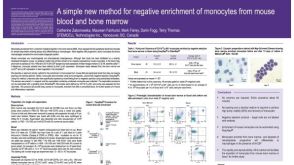 科学海报Method for Negative Enrichment of Monocytes from Mouse Blood and Bone Marrow
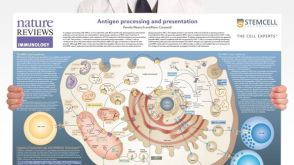 挂图Antigen Processing and Presentation Overview of the mechanisms by which antigens are processed and presented to T cells

 沪公网安备31010102008431号