Pourcet B et al. (MAY 2016)
Scientific Reports 6 25481
The nuclear receptor LXR modulates interleukin-18 levels in macrophages through multiple mechanisms.
IL-18 is a member of the IL-1 family involved in innate immunity and inflammation. Deregulated levels of IL-18 are involved in the pathogenesis of multiple disorders including inflammatory and metabolic diseases,yet relatively little is known regarding its regulation. Liver X receptors or LXRs are key modulators of macrophage cholesterol homeostasis and immune responses. Here we show that LXR ligands negatively regulate LPS-induced mRNA and protein expression of IL-18 in bone marrow-derived macrophages. Consistent with this being an LXR-mediated process,inhibition is abolished in the presence of a specific LXR antagonist and in LXR-deficient macrophages. Additionally,IL-18 processing of its precursor inactive form to its bioactive state is inhibited by LXR through negative regulation of both pro-caspase 1 expression and activation. Finally,LXR ligands further modulate IL-18 levels by inducing the expression of IL-18BP,a potent endogenous inhibitor of IL-18. This regulation occurs via the transcription factor IRF8,thus identifying IL-18BP as a novel LXR and IRF8 target gene. In conclusion,LXR activation inhibits IL-18 production through regulation of its transcription and maturation into an active pro-inflammatory cytokine. This novel regulation of IL-18 by LXR could be applied to modulate the severity of IL-18 driven metabolic and inflammatory disorders.
View Publication
产品号#:
17858
17858RF
100-0694
产品名:
EasySep™人CD14正选试剂盒II
RoboSep™ 人CD14正选试剂盒II
EasySep™人CD14正选试剂盒II
Gonzalez-Velasquez FJ and Moss MA (JAN 2008)
Journal of neurochemistry 104 2 500--13
Soluble aggregates of the amyloid-beta protein activate endothelial monolayers for adhesion and subsequent transmigration of monocyte cells.
Increasing evidence suggests that the deposition of amyloid plaques,composed primarily of the amyloid-beta protein (Abeta),within the cerebrovasculature is a frequent occurrence in Alzheimer's disease and may play a significant role in disease progression. Accordingly,the pathogenic mechanisms by which Abeta can alter vascular function may have therapeutic implications. Despite observations that Abeta elicits a number of physiological responses in endothelial cells,ranging from alteration of protein expression to cell death,the Abeta species accountable for these responses remains unexplored. In the current study,we show that isolated soluble Abeta aggregation intermediates activate human brain microvascular endothelial cells for both adhesion and subsequent transmigration of monocyte cells in the absence of endothelial cell death and monolayer disruption. In contrast,unaggregated Abeta monomer and mature Abeta fibril fail to induce any change in endothelial adhesion or transmigration. Correlations between average Abeta aggregate size and observed increases in adhesion illustrate that smaller soluble aggregates are more potent activators of endothelium. These results support previous studies demonstrating heightened neuronal activity of soluble Abeta aggregates,including Abeta-derived diffusible ligands,oligomers,and protofibrils,and further show that soluble aggregates also selectively exhibit activity in a vascular cell model.
View Publication
产品号#:
70034
200-0167
200-0166
产品名:
冻存的人外周血单核细胞
人外周血单核细胞,冷冻
人外周血单核细胞,冷冻
Li Q et al. (AUG 2005)
Proceedings of the National Academy of Sciences of the United States of America 102 35 12425--30
Enhanced NF-kappaB activation and cellular function in macrophages lacking IkappaB kinase 1 (IKK1).
IkappaB kinase (IKK) complex plays a key regulatory role in macrophages for NF-kappaB activation during both innate and adaptive immune responses. Because IKK1-/- mice died at birth,we differentiated functional macrophages from embryonic day 15.5 IKK1 mutant embryonic liver. The embryonic liver-derived macrophage (ELDM) showed enhanced phagocytotic clearance of bacteria,more efficient antigen-presenting capacity,elevated secretion of several key proinflammatory cytokines and chemokines,and known NFkappaB target genes. Increased NFkappaB activity in IKK1 mutant ELDM was the result of prolonged degradation of IkappaBalpha in response to infectious pathogens. The delayed restoration of IkappaBalpha in pathogen-activated IKK1-/- ELDM was a direct consequence of uncontrolled IKK2 kinase activity. We hypothesize that IKK1 plays a checkpoint role in the proper control of IkappaBalpha kinase activity in innate and adaptive immunity.
View Publication
Y. Zhang et al. ( 2015)
The Journal of Immunology 194 5937-5947
Genetic Vaccines To Potentiate the Effective CD103+ Dendritic Cell-Mediated Cross-Priming of Antitumor Immunity
The development of effective cancer vaccines remains an urgent,but as yet unmet,clinical need. This deficiency is in part due to an incomplete understanding of how to best invoke dendritic cells (DC) that are crucial for the induction of tumor-specific CD8(+) T cells capable of mediating durable protective immunity. In this regard,elevated expression of the transcription factor X box-binding protein 1 (XBP1) in DC appears to play a decisive role in promoting the ability of DC to cross-present Ags to CD8(+) T cells in the therapeutic setting. Delivery of DNA vaccines encoding XBP1 and tumor Ag to skin DC resulted in increased IFN-? production by plasmacytoid DC (pDC) from skin/tumor draining lymph nodes and the cross-priming of Ag-specific CD8(+) T cell responses associated with therapeutic benefit. Antitumor protection was dependent on cross-presenting Batf3(+) DC,pDC,and CD8(+) T cells. CD103(+) DC from the skin/tumor draining lymph nodes of the immunized mice appeared responsible for activation of Ag-specific naive CD8(+) T cells,but were dependent on pDC for optimal effectiveness. Similarly,human XBP1 improved the capacity of human blood- and skin-derived DC to activate human T cells. These data support an important intrinsic role for XBP1 in DC for effective cross-priming and orchestration of Batf3(+) DC-pDC interactions,thereby enabling effective vaccine induction of protective antitumor immunity.
View Publication
Newman SL et al. (FEB 2006)
Journal of immunology (Baltimore,Md. : 1950) 176 3 1806--13
Human macrophages do not require phagosome acidification to mediate fungistatic/fungicidal activity against Histoplasma capsulatum.
Histoplasma capsulatum (Hc) is a facultative intracellular fungus that modulates the intraphagosomal environment to survive within macrophages (Mphi). In the present study,we sought to quantify the intraphagosomal pH under conditions in which Hc yeasts replicated or were killed. Human Mphi that had ingested both viable and heat-killed or fixed yeasts maintained an intraphagosomal pH of approximately 6.4-6.5 over a period of several hours. These results were obtained using a fluorescent ratio technique and by electron microscopy using the 3-(2,4-dinitroanilo)-3'-amino-N-methyldipropylamine reagent. Mphi that had ingested Saccharomyces cerevisae,a nonpathogenic yeast that is rapidly killed and degraded by Mphi,also maintained an intraphagosomal pH of approximately 6.5 over a period of several hours. Stimulation of human Mphi fungicidal activity by coculture with chloroquine or by adherence to type 1 collagen matrices was not reversed by bafilomycin,an inhibitor of the vacuolar ATPase. Human Mphi cultured in the presence of bafilomycin also completely degraded heat-killed Hc yeasts,whereas mouse peritoneal Mphi digestion of yeasts was completely reversed in the presence of bafilomycin. However,bafilomycin did not inhibit mouse Mphi fungistatic activity induced by IFN-gamma. Thus,human Mphi do not require phagosomal acidification to kill and degrade Hc yeasts,whereas mouse Mphi do require acidification for fungicidal but not fungistatic activity.
View Publication
产品号#:
18058
18058RF
产品名:
挂图
Human Immune Cytokines
Infographic of key cytokines for expansion, differentiation and characterization of major immune cell types
Lambrianides A et al. (JUN 2010)
Journal of immunology (Baltimore,Md. : 1950) 184 12 6622--8
Effects of polyclonal IgG derived from patients with different clinical types of the antiphospholipid syndrome on monocyte signaling pathways.
A major mechanism of hypercoagulability in the antiphospholipid syndrome (APS) is antiphospholipid Ab-mediated upregulation of tissue factor (TF) on monocytes via activation of TLRs,p38 MAPK,and NF-kappaB pathways. We examined whether monocyte signaling pathways are differentially activated by IgG from patients with vascular thrombosis (VT) alone compared with IgG from patients with pregnancy morbidity (PM) alone. We purified IgG from 49 subjects. A human monocyte cell line and ex vivo healthy monocytes were treated with 100 microg/ml IgG for 6 h,and cell extracts were examined by immunoblot using Abs to p38 MAPK and NF-kappaB. To further investigate intracellular signaling pathways induced by these IgGs,specific inhibitors of p38 MAPK,NF-kappaB,TLR4,and TLR2 were used to determine their effect on TF activity. Only IgG from patients with VT but no PM (VT+/PM-) caused phosphorylation of NF-kappaBand p38 MAPK and upregulation of TF activity in monocytes. These effects were not seen with IgG from patients with PM alone (VT-/PM+),anti-phospholipid Ab-positive patients without APS,or healthy controls. TF upregulation caused by the VT+/PM- samples was reduced by inhibitors of p38 MAPK,NF-kappaB,and TLR4. The effects of VT+/PM- IgG on signaling and TF upregulation were concentrated in the fraction that bound beta-2-glycoprotein I. Our findings demonstrate that IgGs from patients with diverse clinical manifestations of APS have differential effects upon phosphorylation of NF-kappaB and p38 MAPK and TF activity that may be mediated by differential activation of TLR4.
View Publication


 EasySep™小鼠TIL(CD45)正选试剂盒




 实验方案How to Collect Plasma from Whole Blood Before Cell Isolation
 实验方案Optimizing Delivery Efficiency with Fluorescent Dextran Using the CellPore™ Transfection System
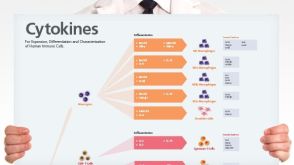 挂图Human Immune Cytokines Infographic of key cytokines for expansion, differentiation and characterization of major immune cell types

 沪公网安备31010102008431号