H. Cao et al. (JUN 2018)
Human gene therapy 29 6 643--652
Transducing Airway Basal Cells with a Helper-Dependent Adenoviral Vector for Lung Gene Therapy.
A major challenge in developing gene-based therapies for airway diseases such as cystic fibrosis (CF) is sustaining therapeutic levels of transgene expression over time. This is largely due to airway epithelial cell turnover and the host immunogenicity to gene delivery vectors. Modern gene editing tools and delivery vehicles hold great potential for overcoming this challenge. There is currently not much known about how to deliver genes into airway stem cells,of which basal cells are the major type in human airways. In this study,helper-dependent adenoviral (HD-Ad) vectors were delivered to mouse and pig airways via intranasal delivery,and direct bronchoscopic instillation,respectively. Vector transduction was assessed by immunostaining of lung tissue sections,which revealed that airway basal cells of mice and pigs can be targeted in vivo. In addition,efficient transduction of primary human airway basal cells was verified with an HD-Ad vector expressing green fluorescent protein. Furthermore,we successfully delivered the human CFTR gene to airway basal cells from CF patients,and demonstrated restoration of CFTR channel activity following cell differentiation in air-liquid interface culture. Our results provide a strong rationale for utilizing HD-Ad vectors to target airway basal cells for permanent gene correction of genetic airway diseases.
View Publication
Maestre-Batlle D et al. (FEB 2017)
Scientific reports 7 42214
Novel flow cytometry approach to identify bronchial epithelial cells from healthy human airways.
Sampling various compartments within the lower airways to examine human bronchial epithelial cells (HBEC) is essential for understanding numerous lung diseases. Conventional methods to identify HBEC in bronchoalveolar lavage (BAL) and wash (BW) have throughput limitations in terms of efficiency and ensuring adequate cell numbers for quantification. Flow cytometry can provide high-throughput quantification of cell number and function in BAL and BW samples,while requiring low cell numbers. To date,a flow cytometric method to identify HBEC recovered from lower human airway samples is unavailable. In this study we present a flow cytometric method identifying HBEC as CD45 negative,EpCAM/pan-cytokeratin (pan-CK) double-positive population after excluding debris,doublets and dead cells from the analysis. For validation,the HBEC panel was applied to primary HBEC resulting in 98.6% of live cells. In healthy volunteers,HBEC recovered from BAL (2.3% of live cells),BW (32.5%) and bronchial brushing samples (88.9%) correlated significantly (p = 0.0001) with the manual microscopy counts with an overall Pearson correlation of 0.96 across the three sample types. We therefore have developed,validated,and applied a flow cytometric method that will be useful to interrogate the role of the respiratory epithelium in multiple lung diseases.
View Publication
产品号#:
05001
05021
05022
05008
产品名:
PneumaCult™-ALI 培养基
PneumaCult™-ALI 培养基含12 mm Transwell®插件
PneumaCult™-ALI 培养基含6.5 mm Transwell®插件
PneumaCult™-Ex 培养基
Prince OA et al. (MAR 2018)
Cellular microbiology 20 3 e12810
Modelling persistent Mycoplasma pneumoniae infection of human airway epithelium.
Mycoplasma pneumoniae is a human respiratory tract pathogen causing acute and chronic airway disease states that can include long-term carriage and extrapulmonary spread. The mechanisms of persistence and migration beyond the conducting airways,however,remain poorly understood. We previously described an acute exposure model using normal human bronchial epithelium (NHBE) in air-liquid interface culture,showing that M. pneumoniae gliding motility is essential for initial colonisation and subsequent spread,including localisation to epithelial cell junctions. We extended those observations here,characterizing M. pneumoniae infection of NHBE for up to 4 weeks. Colonisation of the apical surface was followed by pericellular invasion of the basolateral compartment and migration across the underlying transwell membrane. Despite fluctuations in transepithelial electrical resistance and increased NHBE cell desquamation,barrier function remained largely intact. Desquamation was accompanied by epithelial remodelling that included cytoskeletal reorganisation and development of deep furrows in the epithelium. Finally,M. pneumoniae strains S1 and M129 differed with respect to invasion and histopathology,consistent with contrasting virulence in experimentally infected mice. In summary,this study reports pericellular invasion,NHBE cytoskeletal reorganisation,and tissue remodelling with persistent infection in a human airway epithelium model,providing clear insight into the likely route for extrapulmonary spread.
View Publication


 EasySep™小鼠TIL(CD45)正选试剂盒




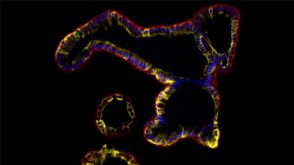
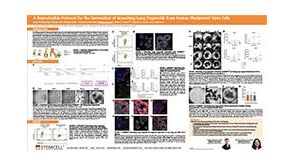 科学海报A Reproducible Protocol for the Generation of Branching Lung Organoids From Human Pluripotent Stem Cells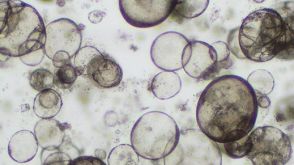




 沪公网安备31010102008431号