Buckley NE et al. (MAR 2011)
Cancer research 71 5 1933--44
The DeltaNp63 proteins are key allies of BRCA1 in the prevention of basal-like breast cancer.
Little is known about the origin of basal-like breast cancers,an aggressive disease that is highly similar to BRCA1-mutant breast cancers. p63 family proteins that are structurally related to the p53 suppressor protein are known to function in stem cell regulation and stratified epithelia development in multiple tissues,and p63 expression may be a marker of basal-like breast cancers. Here we report that ΔNp63 isoforms of p63 are transcriptional targets for positive regulation by BRCA1. Our analyses of breast cancer tissue microarrays and BRCA1-modulated breast cancer cell lines do not support earlier reports that p63 is a marker of basal-like or BRCA1 mutant cancers. Nevertheless,we found that BRCA1 interacts with the specific p63 isoform ΔNp63γ along with transcription factor isoforms AP-2α and AP-2γ. BRCA1 required ΔNp63γ and AP-2γ to localize to an intronic enhancer region within the p63 gene to upregulate transcription of the ΔNp63 isoforms. In mammary stem/progenitor cells,siRNA-mediated knockdown of ΔNp63 expression resulted in genomic instability,increased cell proliferation,loss of DNA damage checkpoint control,and impaired growth control. Together,our findings establish that transcriptional upregulation of ΔNp63 proteins is critical for BRCA1 suppressor function and that defects in BRCA1-ΔNp63 signaling are key events in the pathogenesis of basal-like breast cancer.
View Publication
产品号#:
01700
01705
01702
产品名:
ALDEFLUOR™ 试剂盒
ALDEFLUOR™ DEAB试剂, 1.5 mM, 1 mL
ALDEFLUOR™检测缓冲液
Liu C et al. (MAY 2012)
Molecular biology reports 39 5 5875--81
Co-expression of Oct-4 and Nestin in human breast cancers.
The aim is to investigate the clinical implications of the Oct-4 and Nestin protein in human breast cancers. A total of 346 cases including 26 fresh and 320 paraffin-embedded tumor tissues were selected for characterizing the frequency of CD44(+)CD24(-) tumor cells by flow cytometry and the differential expression of the stem cell-related genes between CD44(+)CD24(-) and non-CD44(+)CD24(-) tumor cells was analyzed by PCR Array and immunofluorescence. In comparison with the non-CD44(+)CD24(-) tumor cells,the CD44(+)CD24(-),particularly for those with high percentage of Oct-4(+) and Nestin(+),tumor cells had higher tumorigenicity by forming mammospheres in vitro. More importantly,42 (13.125%) out of 320 tumor tissues were positive for Oct-4 and Nestin staining. Universal analysis and multivariate analysis revealed that the expression of Oct-4 and Nestin was associated significantly with younger age,pathogenic degrees,lymph node metastasis and triple-negative breast cancer independently (P textless 0.05) as well as shorter survival (P = 0.001). Oct-4 and Nestin were important regulators of the development of breast cancer,and Oct-4 and Nestin may be used as predictors for the prognosis of breast cancers.
View Publication
产品号#:
05620
产品名:
MammoCult™ 人源培养基套装
Petersen OW and Polyak K (MAY 2010)
Cold Spring Harbor perspectives in biology 2 5 a003160
Stem cells in the human breast.
The origins of the epithelial cells participating in the development,tissue homeostasis,and cancer of the human breast are poorly understood. However,emerging evidence suggests a role for adult tissue-specific stem cells in these processes. In a hierarchical manner,these generate the two main mammary cell lineages,producing an increasing number of cells with distinct properties. Understanding the biological characteristics of human breast stem cells and their progeny is crucial in attempts to compare the features of normal stem cells and cancer precursor cells and distinguish these from nonprecursor cells and cells from the bulk of a tumor. A historical overview of research on human breast stem cells in primary tissue and in culture reveals the progress that has been made in this area,whereas a focus on the cell-of-origin and reprogramming that occurs during neoplastic conversion provides insight into the enigmatic way in which human breast cancers are skewed toward the luminal epithelial lineage.
View Publication
产品号#:
01700
01705
01702
产品名:
ALDEFLUOR™ 试剂盒
ALDEFLUOR™ DEAB试剂, 1.5 mM, 1 mL
ALDEFLUOR™检测缓冲液
Xiao Y et al. (JAN 2011)
Oncogene 30 3 287--300
The lymphovascular embolus of inflammatory breast cancer exhibits a Notch 3 addiction.
Inflammatory breast carcinoma (IBC) is characterized by exaggerated lymphovascular invasion (LVI),recapitulated in our human xenograft,MARY-X. This model exhibited lymphovascular emboli in vivo and corresponding spheroids in vitro. Owing to the morphological and gene profile resemblance of these spheroids to embryonal blastocysts,we wondered whether they might exhibit embryonic stem cell signaling. Specifically we investigated Notch and observed selective Notch 3 activation by expression profiling,reverse transcriptase- and real-time PCR,western blot and immunofluorescence in vitro,and immunohistochemistry in vivo. Notch 3 intracellular domain (N3icd) and six target genes,HES-5,HEY-1,c-Myc,Deltex-1,NRARP and PBX1,markedly increased in MARY-X. In addition,a significant percentage of MARY-X cells expressed aldehyde dehydrogenase (ALDH),a stem cell marker. Only the ALDH(+) cells were capable of secondary spheroidgenesis,tumorigenicity and self-renewal. Inhibiting Notch 3 activation in vitro with γ-secretase inhibitors (GSIs) or small interfering RNA resulted in a downregulation of Notch target genes,including CD133,and an induction of caspase 3-mediated apoptosis. Transfection of N3icd but not Notch 1 intracellular domain into normal human mammary epithelial cells resulted in increased expression of Notch target genes and induction of spheroidgenesis. GSI in vivo resulted in inhibitory but diffusion-limited effects on Notch 3 signaling,resulting in xenograft growth reduction. The lymphovascular emboli of human IBC exhibited dual N3icd and ALDH1 immunoreactivities independently of molecular subtype. This Notch 3 addiction of lymphovascular emboli might be exploited in future therapeutic strategies.
View Publication
产品号#:
01700
01705
01701
01702
产品名:
ALDEFLUOR™ 试剂盒
ALDEFLUOR™ DEAB试剂, 1.5 mM, 1 mL
ALDEFLUOR™检测缓冲液
Calcagno AM et al. (NOV 2010)
Journal of the National Cancer Institute 102 21 1637--52
Prolonged drug selection of breast cancer cells and enrichment of cancer stem cell characteristics.
BACKGROUND: Cancer stem cells are presumed to have virtually unlimited proliferative and self-renewal abilities and to be highly resistant to chemotherapy,a feature that is associated with overexpression of ATP-binding cassette transporters. We investigated whether prolonged continuous selection of cells for drug resistance enriches cultures for cancer stem-like cells. METHODS: Cancer stem cells were defined as CD44+/CD24�?� cells that could self-renew (ie,generate cells with the tumorigenic CD44+/CD24�?� phenotype),differentiate,invade,and form tumors in vivo. We used doxorubicin-selected MCF-7/ADR cells,weakly tumorigenic parental MCF-7 cells,and MCF-7/MDR,an MCF-7 subline with forced expression of ABCB1 protein. Cells were examined for cell surface markers and side-population fractions by microarray and flow cytometry,with in vitro invasion assays,and for ability to form mammospheres. Xenograft tumors were generated in mice to examine tumorigenicity (n = 52). The mRNA expression of multidrug resistance genes was examined in putative cancer stem cells and pathway analysis of statistically significantly differentially expressed genes was performed. All statistical tests were two-sided. RESULTS: Pathway analysis showed that MCF-7/ADR cells express mRNAs from ABCB1 and other genes also found in breast cancer stem cells (eg,CD44,TGFB1,and SNAI1). MCF-7/ADR cells were highly invasive,formed mammospheres,and were tumorigenic in mice. In contrast to parental MCF-7 cells,more than 30% of MCF-7/ADR cells had a CD44+/CD24�?� phenotype,could self-renew,and differentiate (ie,produce CD44+/CD24�?� and CD44+/CD24+ cells) and overexpressed various multidrug resistance-linked genes (including ABCB1,CCNE1,and MMP9). MCF-7/ADR cells were statistically significantly more invasive in Matrigel than parental MCF-7 cells (MCF-7 cells = 0.82 cell per field and MCF-7/ADR = 7.51 cells per field,difference = 6.69 cells per field,95% confidence interval = 4.82 to 8.55 cells per field,P textless .001). No enrichment in the CD44+/CD24�?� or CD133+ population was detected in MCF-7/MDR. CONCLUSION: The cell population with cancer stem cell characteristics increased after prolonged continuous selection for doxorubicin resistance.
View Publication
产品号#:
01700
01705
01702
产品名:
ALDEFLUOR™ 试剂盒
ALDEFLUOR™ DEAB试剂, 1.5 mM, 1 mL
ALDEFLUOR™检测缓冲液
Allan AL et al. (MAY 2005)
Cytometry. Part A : the journal of the International Society for Analytical Cytology 65 1 4--14
Detection and quantification of circulating tumor cells in mouse models of human breast cancer using immunomagnetic enrichment and multiparameter flow cytometry.
BACKGROUND: Circulating tumor cells (CTCs) in the peripheral blood of breast cancer patients may be an important indicator of metastatic disease and poor prognosis. However,the use of experimental models is required to fully elucidate the functional consequences of CTCs. The purpose of this study was to optimize the sensitivity of multiparameter flow cytometry for detection of human tumor cells in mouse models of breast cancer. METHODS: MDA-MB-468 human breast cancer cells were serially diluted in whole mouse blood. Samples were lysed and incubated with a fluorescein isothiocyanate-conjugated anti-human leukocytic antigen antibody and a phycoerythrin-conjugated anti-mouse pan-leukocyte CD45 antibody. Samples were then immunomagnetically depleted of CD45-positive leukocytes,fixed,permeabilized,and stained with propidium iodide before flow cytometric analysis. RESULTS: Human breast cancer cells could be differentiated from mouse leukocytes based on increased light scatter,cell surface marker expression,and aneuploid DNA content. The method was found to have a lower sensitivity limit of 10(-5) and was effective for detecting human breast cancer cells in vivo in the circulation of experimental mice carrying primary human mammary tumors. CONCLUSIONS: This technique has the potential to be a valuable and sensitive tool for investigating the biological relevance of CTCs in experimental mouse models of breast cancer.
View Publication
产品号#:
18554
18554RF
18564
18564RF
产品名:
Bunaciu RP and Yen A (MAR 2011)
Cancer research 71 6 2371--80
Activation of the aryl hydrocarbon receptor AhR Promotes retinoic acid-induced differentiation of myeloblastic leukemia cells by restricting expression of the stem cell transcription factor Oct4.
Retinoic acid (RA) is used to treat leukemia and other cancers through its ability to promote cancer cell differentiation. Strategies to enhance the anticancer effects of RA could deepen and broaden its beneficial therapeutic applications. In this study,we describe a receptor cross-talk system that addresses this issue. RA effects are mediated by RAR/RXR receptors that we show are modified by interactions with the aryl hydrocarbon receptor (AhR),a protein functioning both as a transcription factor and a ligand-dependent adaptor in an ubiquitin ligase complex. RAR/RXR and AhR pathways cross-talk at the levels of ligand-receptor and also receptor-promoter interactions. Here,we assessed the role of AhR during RA-induced differentiation and a hypothesized convergence at Oct4,a transcription factor believed to maintain stem cell characteristics. RA upregulated AhR and downregulated Oct4 during differentiation of HL-60 promyelocytic leukemia cells. AhR overexpression in stable transfectants downregulated Oct4 and also decreased ALDH1 activity,another stem cell-associated factor,enhancing RA-induced differentiation as indicated by cell differentiation markers associated with early (CD38 and CD11b) and late (neutrophilic respiratory burst) responses. AhR overexpression also increased levels of activated Raf1,which is known to help propel RA-induced differentiation. RNA interference-mediated knockdown of Oct4 enhanced RA-induced differentiation and G(0) cell-cycle arrest relative to parental cells. Consistent with the hypothesized importance of Oct4 downregulation for differentiation,parental cells rendered resistant to RA by biweekly high RA exposure displayed elevated Oct4 levels that failed to be downregulated. Together,our results suggested that therapeutic effects of RA-induced leukemia differentiation depend on AhR and its ability to downregulate the stem cell factor Oct4.
View Publication


 EasySep™小鼠TIL(CD45)正选试剂盒




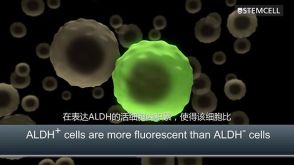
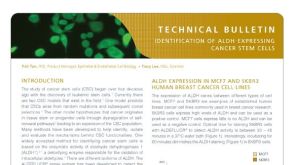 技术公告Identification of ALDH-Expressing Cancer Stem Cells Using ALDEFLUOR™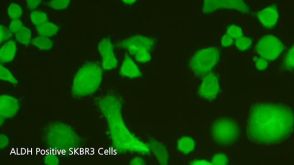

 沪公网安备31010102008431号