A Micropatterned Human Pluripotent Stem Cell-Based Ventricular Cardiac Anisotropic Sheet for Visualizing Drug-Induced Arrhythmogenicity.
A novel cardiomimetic biohybrid material,termed as the human ventricular cardiac anisotropic sheet (hvCAS) is reported. Well-characterized human pluripotent stem-cell-derived ventricular cardiomyocytes are strategically aligned to reproduce key electrophysiological features of native human ventricle,which,along with specific selection criteria,allows for a direct visualization of arrhythmic spiral re-entry and represents a revolutionary tool to assess preclinical drug-induced arrhythmogenicity.
View Publication
产品类型:
产品号#:
05850
05857
05870
05875
85850
85857
85870
85875
产品名:
mTeSR™1
mTeSR™1
Claassen DA et al. (AUG 2009)
Molecular Reproduction and Development 76 8 722--732
ROCK inhibition enhances the recovery and growth of cryopreserved human embryonic stem cells and human induced pluripotent stem cells
Poor recovery of cryopreserved human embryonic stem (hES) cells and induced pluripotent stem (iPS) cells is a significant impediment to progress with pluripotent stem cells. In this study,we demonstrate that Y-27632,a specific inhibitor of Rho kinase (ROCK) activity,significantly enhances recovery of hES cells from cryopreserved stocks when cultured with or without a growth inactivated feeder layer. Furthermore,treatment with the ROCK inhibitor for several days increased the number of colonies and colony size of hES cells compared to shorter exposures. Remarkably,hES cells that had formed relatively few colonies 5 days after thawing exhibited rapid growth upon addition of Y-27632. Additionally,we determined that Y-27632 significantly improves the recovery of cryopreserved human iPS cells and their growth upon subculture. Thus,Y-27632 provides a means to kick-start" slow-growing human pluripotent stem cells�
View Publication
产品类型:
产品号#:
05850
05857
05870
05875
85850
85857
85870
85875
产品名:
mTeSR™1
mTeSR™1
Kurian L et al. (JAN 2013)
Nature methods 10 1 77--83
Conversion of human fibroblasts to angioblast-like progenitor cells.
Lineage conversion of one somatic cell type to another is an attractive approach for generating specific human cell types. Lineage conversion can be direct,in the absence of proliferation and multipotent progenitor generation,or indirect,by the generation of expandable multipotent progenitor states. We report the development of a reprogramming methodology in which cells transition through a plastic intermediate state,induced by brief exposure to reprogramming factors,followed by differentiation. We use this approach to convert human fibroblasts to mesodermal progenitor cells,including by non-integrative approaches. These progenitor cells demonstrated bipotent differentiation potential and could generate endothelial and smooth muscle lineages. Differentiated endothelial cells exhibited neo-angiogenesis and anastomosis in vivo. This methodology for indirect lineage conversion to angioblast-like cells adds to the armamentarium of reprogramming approaches aimed at the study and treatment of ischemic pathologies.
View Publication
产品类型:
产品号#:
05850
05857
05870
05875
85850
85857
85870
85875
产品名:
mTeSR™1
mTeSR™1
Ward E et al. (MAY 2017)
Stem cells and development
Feeder-Free Derivation of Naïve Human Pluripotent Stem Cells.
Human pluripotent stem cells (HPSCs) cultured in conditions that maintain pluripotency via FGF and TGFβ signaling have been described as being in a primed state. These cells have been shown to exhibit characteristics more closely related to mouse epiblast-derived stem cells than to so called naïve mouse PSCs said to possess a more ground state pluripotency that mimics the early mouse embryo inner cell mass. Initial attempts to create culture conditions favorable for generation of naïve HPSCs from primed HPSCs has required the use of mouse embryonic fibroblasts as a feeder layer to support this transition. A protocol for the routine derivation and maintenance of naïve HPSCs in completely defined conditions is highly desirable for stem cell researchers to enhance the study and clinical translation of naïve HPSCs. Here we describe a standard protocol for transitioning primed HPSCs to a naïve state using commercial RSet media and xeno-free recombinant vitronectin.
View Publication
产品类型:
产品号#:
05230
05970
产品名:
STEMdiff™ 三胚层分化试剂盒
Ben-David U and Benvenisty N (MAR 2014)
Nature protocols 9 3 729--740
Chemical ablation of tumor-initiating human pluripotent stem cells.
The tumorigenicity of human pluripotent stem cells (hPSCs) is widely acknowledged as a major obstacle that withholds their application in regenerative medicine. This protocol describes two efficient and robust ways to chemically eliminate the tumor-initiating hPSCs from monolayer culture. The protocol details how to maintain and differentiate hPSCs,how to apply chemical inhibitors to cultures of hPSCs and their differentiated progeny,and how to assess the purity of the resultant cell cultures using in vitro and in vivo assays. It also describes how to rescue the cytotoxic effect. The elimination and the rescue assay can be completed within 3-5 d,the in vitro assessment requires another day,and the in vivo assessment requires up to 12 additional weeks.
View Publication
Characterization of mouse lymphohematopoietic stem cells lacking spleen colony-forming activity.
The classical definition of lymphohematopoietic stem cells (LHSC),the most primitive progenitors of all blood cells,requires that they have the capacity for self-renewal and for the long-term production of all blood cell lineages. However,other characteristics of LHSC have been debated. Our previous data suggested that mouse LHSC are very slowly proliferating cells that generate delayed multilineage engraftment,while radioprotection" (rapid engraftment that will prevent early death from radiation-induced marrow aplasia) results from more committed progenitors. Alternatively�
View Publication
产品类型:
产品号#:
01700
01705
01701
01702
产品名:
ALDEFLUOR™ 试剂盒
ALDEFLUOR™ DEAB试剂, 1.5 mM, 1 mL
ALDEFLUOR™检测缓冲液
Pei Y et al. (MAR 2015)
Scientific reports 5 9205
A platform for rapid generation of single and multiplexed reporters in human iPSC lines.
Induced pluripotent stem cells (iPSC) are important tools for drug discovery assays and toxicology screens. In this manuscript,we design high efficiency TALEN and ZFN to target two safe harbor sites on chromosome 13 and 19 in a widely available and well-characterized integration-free iPSC line. We show that these sites can be targeted in multiple iPSC lines to generate reporter systems while retaining pluripotent characteristics. We extend this concept to making lineage reporters using a C-terminal targeting strategy to endogenous genes that express in a lineage-specific fashion. Furthermore,we demonstrate that we can develop a master cell line strategy and then use a Cre-recombinase induced cassette exchange strategy to rapidly exchange reporter cassettes to develop new reporter lines in the same isogenic background at high efficiency. Equally important we show that this recombination strategy allows targeting at progenitor cell stages,further increasing the utility of the platform system. The results in concert provide a novel platform for rapidly developing custom single or dual reporter systems for screening assays.
View Publication
Nottingham WT et al. (DEC 2007)
Blood 110 13 4188--97
Runx1-mediated hematopoietic stem-cell emergence is controlled by a Gata/Ets/SCL-regulated enhancer.
The transcription factor Runx1/AML1 is an important regulator of hematopoiesis and is critically required for the generation of the first definitive hematopoietic stem cells (HSCs) in the major vasculature of the mouse embryo. As a pivotal factor in HSC ontogeny,its transcriptional regulation is of high interest but is largely undefined. In this study,we used a combination of comparative genomics and chromatin analysis to identify a highly conserved 531-bp enhancer located at position + 23.5 in the first intron of the 224-kb mouse Runx1 gene. We show that this enhancer contributes to the early hematopoietic expression of Runx1. Transcription factor binding in vivo and analysis of the mutated enhancer in transient transgenic mouse embryos implicate Gata2 and Ets proteins as critical factors for its function. We also show that the SCL/Lmo2/Ldb-1 complex is recruited to the enhancer in vivo. Importantly,transplantation experiments demonstrate that the intronic Runx1 enhancer targets all definitive HSCs in the mouse embryo,suggesting that it functions as a crucial cis-regulatory element that integrates the Gata,Ets,and SCL transcriptional networks to initiate HSC generation.
View Publication
产品类型:
产品号#:
03434
03444
产品名:
MethoCult™ GF M3434
MethoCult™ GF M3434
Benvenuto F et al. (JUL 2007)
Stem cells (Dayton,Ohio) 25 7 1753--60
Human mesenchymal stem cells promote survival of T cells in a quiescent state.
Mesenchymal stem cells (MSC) are part of the bone marrow that provides signals supporting survival and growth of bystander hematopoietic stem cells (HSC). MSC modulate also the immune response,as they inhibit proliferation of lymphocytes. In order to investigate whether MSC can support survival of T cells,we investigated MSC capacity of rescuing T lymphocytes from cell death induced by different mechanisms. We observed that MSC prolong survival of unstimulated T cells and apoptosis-prone thymocytes cultured under starving conditions. MSC rescued T cells from activation induced cell death (AICD) by downregulation of Fas receptor and Fas ligand on T cell surface and inhibition of endogenous proteases involved in cell death. MSC dampened also Fas receptor mediated apoptosis of CD95 expressing Jurkat leukemic T cells. In contrast,rescue from AICD was not associated with a significant change of Bcl-2,an inhibitor of apoptosis induced by cell stress. Accordingly,MSC exhibited a minimal capacity of rescuing Jurkat cells from chemically induced apoptosis,a process disrupting the mitochondrial membrane potential regulated by Bcl-2. These results suggest that MSC interfere with the Fas receptor regulated process of programmed cell death. Overall,MSC can inhibit proliferation of activated T cells while supporting their survival in a quiescent state,providing a model of their activity inside the HSC niche. Disclosure of potential conflicts of interest is found at the end of this article.
View Publication


 EasySep™小鼠TIL(CD45)正选试剂盒




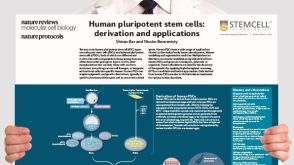 挂图Derivation and Applications of Human Pluripotent Stem Cells Overview of the derivation of human embryonic stem cells (hESCs) and induced pluripotent stem cells (iPSCs)发布日期: 11/26/2020

 沪公网安备31010102008431号