Zakikhani M et al. ( 2006)
Cancer research 66 21 10269--10273
Metformin is an AMP kinase-dependent growth inhibitor for breast cancer cells.
Recent population studies provide clues that the use of metformin may be associated with reduced incidence and improved prognosis of certain cancers. This drug is widely used in the treatment of type 2 diabetes,where it is often referred to as an insulin sensitizer" because it not only lowers blood glucose but also reduces the hyperinsulinemia associated with insulin resistance. As insulin and insulin-like growth factors stimulate proliferation of many normal and transformed cell types�
View Publication
Garg TK et al. (SEP 2012)
Haematologica 97 9 1348--56
Highly activated and expanded natural killer cells for multiple myeloma immunotherapy.
BACKGROUND Patients with gene expression profiling-defined high-risk myeloma in relapse have poor outcomes with current therapies. We tested whether natural killer cells expanded by co-culture with K562 cells transfected with 41BBL and membrane-bound interleukin-15 could kill myeloma cells with a high-risk gene expression profile in vitro and in a unique model which recapitulates human myeloma. DESIGN AND METHODS OPM2 and high-risk primary myeloma tumors were grown in human fetal bone implanted into non-obese diabetic severe combined immunodeficiency mice with a deficient interleukin-2 receptor gamma chain. These mice are devoid of endogenous natural killer and T-cell activity and were used to determine whether adoptively transferred expanded natural killer cells could inhibit myeloma growth and myeloma-associated bone destruction. RESULTS Natural killer cells from healthy donors and myeloma patients expanded a median of 804- and 351-fold,respectively,without significant T-cell expansion. Expanded natural killer cells killed both allogeneic and autologous primary myeloma cells avidly via a perforin-mediated mechanism in which the activating receptor NKG2D,natural cytotoxicity receptors,and DNAX-accessory molecule-1 played a central role. Adoptive transfer of expanded natural killer cells inhibited the growth of established OPM2 and high-risk primary myeloma tumors grown in the murine model. The transferred,expanded natural killer cells proliferated in vivo in an interleukin-2 dose-dependent fashion,persisted up to 4 weeks,were readily detectable in the human bone,inhibited myeloma growth and protected bone from myeloma-induced osteolysis. CONCLUSIONS These studies provide the rationale for testing expanded natural killer cells in humans.
View Publication
产品类型:
产品号#:
19055
19055RF
产品名:
EasySep™人NK细胞富集试剂盒
RoboSep™ 人NK细胞富集试剂盒含滤芯吸头
Chen J and Chen Z-L (MAR 2010)
Chinese journal of cancer 29 3 265--9
Technology update for the sorting and identification of breast cancer stem cells.
Breast cancer stem cells are a group of undifferentiated cells with self-renewal and multidifferentiation potential. Chemotherapeutic and radiotherapeutic resistance,hypoxic resistance,high tumorigenicity,high cell invasion,and metastatic abilities are characteristics of these cells,which are responsible for breast cancer recurrence. Therefore,the correct sorting and identification of breast cancer stem cells is a primary step for research in this field. This article briefly describes the recent progress on sorting and identification technologies for breast cancer stem cells. Sorting technologies include the side population technique,technologies that depend on cell surface markers,ALDEFLUOR assays,and in situ detection. Identification technologies include mammosphere cultures,limited dilution in vitro,and in-vivo animal models. This review provides an important reference for breast cancer stem cell research,which will explore new methods for the treatment of patients with breast cancer.
View Publication
Naramura M et al. (SEP 2010)
Proceedings of the National Academy of Sciences of the United States of America 107 37 16274--9
Rapidly fatal myeloproliferative disorders in mice with deletion of Casitas B-cell lymphoma (Cbl) and Cbl-b in hematopoietic stem cells.
Casitas B-cell lymphoma (Cbl)-family E3 ubiquitin ligases are negative regulators of tyrosine kinase signaling. Recent work has revealed a critical role of Cbl in the maintenance of hematopoietic stem cell (HSC) homeostasis,and mutations in CBL have been identified in myeloid malignancies. Here we show that,in contrast to Cbl or Cbl-b single-deficient mice,concurrent loss of Cbl and Cbl-b in the HSC compartment leads to an early-onset lethal myeloproliferative disease in mice. Cbl,Cbl-b double-deficient bone marrow cells are hypersensitive to cytokines,and show altered biochemical response to thrombopoietin. Thus,Cbl and Cbl-b play redundant but essential roles in HSC regulation,whose breakdown leads to hematological abnormalities that phenocopy crucial aspects of mutant Cbl-driven human myeloid malignancies.
View Publication
Sikandar SS et al. (FEB 2010)
Cancer research 70 4 1469--78
NOTCH signaling is required for formation and self-renewal of tumor-initiating cells and for repression of secretory cell differentiation in colon cancer.
NOTCH signaling is critical for specifying the intestinal epithelial cell lineage and for initiating colorectal adenomas and colorectal cancers (CRC). Based on evidence that NOTCH is important for the maintenance and self-renewal of cancer-initiating cells in other malignancies,we studied the role of NOTCH signaling in colon cancer-initiating cells (CCIC). Tumors formed by CCICs maintain many properties of the primary CRCs from which they were derived,such as glandular organization,cell polarity,gap junctions,and expression of characteristic CRC molecular markers. Furthermore,CCICs have the property of self-renewal. In this study,we show that NOTCH signaling is 10- to 30-fold higher in CCIC compared with widely used colon cancer cell lines. Using small-molecule inhibition and short hairpin RNA knockdown,we show that NOTCH prevents CCIC apoptosis through repression of cell cycle kinase inhibitor p27 and transcription factor ATOH1. NOTCH is also critical to intrinsic maintenance of CCIC self-renewal and the repression of secretory cell lineage differentiation genes such as MUC2. Our findings describe a novel human cell system to study NOTCH signaling in CRC tumor initiation and suggest that inhibition of NOTCH signaling may improve CRC chemoprevention and chemotherapy.
View Publication
产品类型:
产品号#:
01700
01705
01702
产品名:
ALDEFLUOR™ 试剂盒
ALDEFLUOR™ DEAB试剂
ALDEFLUOR™测定缓冲液
Gao L et al. (APR 2000)
Blood 95 7 2198--203
Selective elimination of leukemic CD34(+) progenitor cells by cytotoxic T lymphocytes specific for WT1.
Hematologic malignancies such as acute and chronic myeloid leukemia are characterized by the malignant transformation of immature CD34(+) progenitor cells. Transformation is associated with elevated expression of the Wilm's tumor gene encoded transcription factor (WT1). Here we demonstrate that WT1 can serve as a target for cytotoxic T lymphocytes (CTL) with exquisite specificity for leukemic progenitor cells. HLA-A0201- restricted CTL specific for WT1 kill leukemia cell lines and inhibit colony formation by transformed CD34(+) progenitor cells isolated from patients with chronic myeloid leukemia (CML),whereas colony formation by normal CD34(+) progenitor cells is unaffected. Thus,the tissue-specific transcription factor WT1 is an ideal target for CTL-mediated purging of leukemic progenitor cells in vitro and for antigen-specific therapy of leukemia and other WT1-expressing malignancies in vivo.
View Publication
产品类型:
产品号#:
04535
04545
产品名:
MethoCult™H4535富集无EPO
MethoCult™ H4535 Enriched,不含EPO
Liang D and Shi Y (JUN 2012)
Medical oncology (Northwood,London,England) 29 2 633--9
Aldehyde dehydrogenase-1 is a specific marker for stem cells in human lung adenocarcinoma.
To investigate whether aldehyde dehydrogenase-1 (ALDH-1) in human lung cancer can be used as a sorting marker for stem cells in targeted therapies against human lung cancer. Spheres were induced by incubating cancer cells in a serum-free medium and formed with epidermal growth factor and fibroblast growth factor-10 (FGF10). Spheroid cells were combined with flow cytometry using the Aldefluor reagent to separate the SSCloALDEbr (ALDH-1-positive) cells. Cancer stem cells (CSCs) were characterized by their proliferation,colony formation,and tumorigenesis in nude mice and using phenotypic analysis. Float-growing spheres (pulmospheres") were developed after SPC-A1 cells were cultured in a serum-free medium. The resultant sphere-forming cells included ALDH-1-positive cells as high as 15.13%. ALDH-1-positive CSCs have high proliferative ability�
View Publication
产品类型:
产品号#:
01700
01705
01702
产品名:
ALDEFLUOR™ 试剂盒
ALDEFLUOR™ DEAB试剂
ALDEFLUOR™测定缓冲液
Sullivan JP et al. (DEC 2010)
Cancer research 70 23 9937--48
Aldehyde dehydrogenase activity selects for lung adenocarcinoma stem cells dependent on notch signaling.
Aldehyde dehydrogenase (ALDH) is a candidate marker for lung cancer cells with stem cell-like properties. Immunohistochemical staining of a large panel of primary non-small cell lung cancer (NSCLC) samples for ALDH1A1,ALDH3A1,and CD133 revealed a significant correlation between ALDH1A1 (but not ALDH3A1 or CD133) expression and poor prognosis in patients including those with stage I and N0 disease. Flow cytometric analysis of a panel of lung cancer cell lines and patient tumors revealed that most NSCLCs contain a subpopulation of cells with elevated ALDH activity,and that this activity is associated with ALDH1A1 expression. Isolated ALDH(+) lung cancer cells were observed to be highly tumorigenic and clonogenic as well as capable of self-renewal compared with their ALDH(-) counterparts. Expression analysis of sorted cells revealed elevated Notch pathway transcript expression in ALDH(+) cells. Suppression of the Notch pathway by treatment with either a γ-secretase inhibitor or stable expression of shRNA against NOTCH3 resulted in a significant decrease in ALDH(+) lung cancer cells,commensurate with a reduction in tumor cell proliferation and clonogenicity. Taken together,these findings indicate that ALDH selects for a subpopulation of self-renewing NSCLC stem-like cells with increased tumorigenic potential,that NSCLCs harboring tumor cells with ALDH1A1 expression have inferior prognosis,and that ALDH1A1 and CD133 identify different tumor subpopulations. Therapeutic targeting of the Notch pathway reduces this ALDH(+) component,implicating Notch signaling in lung cancer stem cell maintenance.
View Publication
产品类型:
产品号#:
01700
01705
01702
产品名:
ALDEFLUOR™ 试剂盒
ALDEFLUOR™ DEAB试剂
ALDEFLUOR™测定缓冲液
Sancho-Martinez I et al. (FEB 2016)
Nature communications 7 10743
Establishment of human iPSC-based models for the study and targeting of glioma initiating cells.
Glioma tumour-initiating cells (GTICs) can originate upon the transformation of neural progenitor cells (NPCs). Studies on GTICs have focused on primary tumours from which GTICs could be isolated and the use of human embryonic material. Recently,the somatic genomic landscape of human gliomas has been reported. RTK (receptor tyrosine kinase) and p53 signalling were found dysregulated in ∼90% and 86% of all primary tumours analysed,respectively. Here we report on the use of human-induced pluripotent stem cells (hiPSCs) for modelling gliomagenesis. Dysregulation of RTK and p53 signalling in hiPSC-derived NPCs (iNPCs) recapitulates GTIC properties in vitro. In vivo transplantation of transformed iNPCs leads to highly aggressive tumours containing undifferentiated stem cells and their differentiated derivatives. Metabolic modulation compromises GTIC viability. Last,screening of 101 anti-cancer compounds identifies three molecules specifically targeting transformed iNPCs and primary GTICs. Together,our results highlight the potential of hiPSCs for studying human tumourigenesis.
View Publication


 EasySep™小鼠TIL(CD45)正选试剂盒




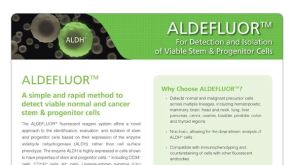 产品手册ALDEFLUOR™: For Identification and Isolation of Viable Stem & Progenitor Cells
 产品手册NeuroCult™-XF: Xeno-Free Culture Medium for the Proliferation of Human Neural Stem Cells

 沪公网安备31010102008431号