Generation of 3D Human iPSC-Derived Multi-Cell Type Neurospheres for Studying Neuron, Astrocyte, and Microglia Crosstalk
Three-dimensional (3D) human brain tissue models derived from induced pluripotent stem cells (iPSCs) have transformed the study of neural development and disease in vitro. While cerebral organoids offer high structural complexity,their large size often leads to necrotic core formation,limiting reproducibility and challenging the integration of microglia. Here,we present a detailed,reproducible protocol for generating multi-cell type 3D neurospheres that incorporate neurons,astrocytes,and optionally microglia,all derived from the same iPSCs. While neurons and astrocytes differentiate spontaneously from neural precursor cells,generated by dual SMAD-inhibition (blocking BMP and TGF-b signaling),microglia are generated in parallel and can infiltrate the mature neurosphere tissue after plating neurospheres into 48-well plates. The system supports a range of downstream applications,including functional confocal live imaging of GCaMP6f after adeno-associated virus (AAV) transduction of neurospheres or immunofluorescence staining after fixation. Our approach has been successfully implemented across multiple laboratories,demonstrating its robustness and translational potential for studying neuron–glia interactions and modeling neurodegenerative processes.
View Publication
T. E. Ludwig et al. (feb 2006)
Nature biotechnology 24 2 185--7
Derivation of human embryonic stem cells in defined conditions.
We have previously reported that high concentrations of basic fibroblast growth factor (bFGF) support feeder-independent growth of human embryonic stem (ES) cells,but those conditions included poorly defined serum and matrix components. Here we report feeder-independent human ES cell culture that includes protein components solely derived from recombinant sources or purified from human material. We describe the derivation of two new human ES cell lines in these defined culture conditions.
View Publication
Distinct epigenomic landscapes of pluripotent and lineage-committed human cells.
Human embryonic stem cells (hESCs) share an identical genome with lineage-committed cells,yet possess the remarkable properties of self-renewal and pluripotency. The diverse cellular properties in different cells have been attributed to their distinct epigenomes,but how much epigenomes differ remains unclear. Here,we report that epigenomic landscapes in hESCs and lineage-committed cells are drastically different. By comparing the chromatin-modification profiles and DNA methylomes in hESCs and primary fibroblasts,we find that nearly one-third of the genome differs in chromatin structure. Most changes arise from dramatic redistributions of repressive H3K9me3 and H3K27me3 marks,which form blocks that significantly expand in fibroblasts. A large number of potential regulatory sequences also exhibit a high degree of dynamics in chromatin modifications and DNA methylation. Additionally,we observe novel,context-dependent relationships between DNA methylation and chromatin modifications. Our results provide new insights into epigenetic mechanisms underlying properties of pluripotency and cell fate commitment. textcopyright 2010 Elsevier Inc.
View Publication
产品类型:
产品号#:
85850
85857
产品名:
mTeSR™1
mTeSR™1
Norrman K et al. (JAN 2010)
PLoS ONE 5 8 e12413
Quantitative comparison of constitutive promoters in human ES cells.
BACKGROUND: Constitutive promoters that ensure sustained and high level gene expression are basic research tools that have a wide range of applications,including studies of human embryology and drug discovery in human embryonic stem cells (hESCs). Numerous cellular/viral promoters that ensure sustained gene expression in various cell types have been identified but systematic comparison of their activities in hESCs is still lacking. METHODOLOGY/PRINCIPAL FINDINGS: We have quantitatively compared promoter activities of five commonly used constitutive promoters,including the human β-actin promoter (ACTB),cytomegalovirus (CMV),elongation factor-1α,(EF1α),phosphoglycerate kinase (PGK) and ubiquitinC (UbC) in hESCs. Lentiviral gene transfer was used to ensure stable integration of promoter-eGFP constructs into the hESCs genome. Promoter activities were quantitatively compared in long term culture of undifferentiated hESCs and in their differentiated progenies. CONCLUSION/SIGNIFICANCE: The ACTB,EF1α and PGK promoters showed stable activities during long term culture of undifferentiated hESCs. The ACTB promoter was superior by maintaining expression in 75-80% of the cells after 50 days in culture. During embryoid body (EB) differentiation,promoter activities of all five promoters decreased. Although the EF1α promoter was downregulated in approximately 50% of the cells,it was the most stable promoter during differentiation. Gene expression analysis of differentiated eGFP+ and eGFP- cells indicate that promoter activities might be restricted to specific cell lineages,suggesting the need to carefully select optimal promoters for constitutive gene expression in differentiated hESCs.
View Publication
产品类型:
产品号#:
85850
85857
产品名:
mTeSR™1
mTeSR™1
Rasheed Z et al. (JAN 2010)
Journal of visualized experiments : JoVE 43
Isolation of stem cells from human pancreatic cancer xenografts.
Cancer stem cells (CSCs) have been identified in a growing number of malignancies and are functionally defined by their ability to undergo self-renewal and produce differentiated progeny. These properties allow CSCs to recapitulate the original tumor when injected into immunocompromised mice. CSCs within an epithelial malignancy were first described in breast cancer and found to display specific cell surface antigen expression (CD44+CD24(low/�?�)). Since then,CSCs have been identified in an increasing number of other human malignancies using CD44 and CD24 as well as a number of other surface antigens. Physiologic properties,including aldehyde dehydrogenase (ALDH) activity,have also been used to isolate CSCs from malignant tissues. Recently,we and others identified CSCs from pancreatic adenocarcinoma based on ALDH activity and the expression of the cell surface antigens CD44 and CD24,and CD133. These highly tumorigenic populations may or may not be overlapping and display other functions. We found that ALDH+ and CD44+CD24+ pancreatic CSCs are similarly tumorigenic,but ALDH+ cells are relatively more invasive. In this protocol we describe a method to isolate viable pancreatic CSCs from low-passage human xenografts. Xenografted tumors are harvested from mice and made into a single-cell suspension. Tissue debris and dead cells are separated from live cells and then stained using antibodies against CD44 and CD24 and using the ALDEFLUOR reagent,a fluorescent substrate of ALDH. CSCs are then isolated by fluorescence activated cell sorting. Isolated CSCs can then be used for analytical or functional assays requiring viable cells.
View Publication
产品类型:
产品号#:
01700
01705
01702
产品名:
ALDEFLUOR™ 试剂盒
ALDEFLUOR™ DEAB试剂
ALDEFLUOR™测定缓冲液
Huang X et al. (DEC 2016)
Advanced materials (Deerfield Beach,Fla.) 28 48 10732--10737
Light-Patterned RNA Interference of 3D-Cultured Human Embryonic Stem Cells.
A new method of spatially controlled gene regulation in 3D-cultured human embryonic stem cells is developed using hollow gold nanoshells (HGNs) and near-infrared (NIR) light. Targeted cell(s) are discriminated from neighboring cell(s) by focusing NIR light emitted from a two-photon microscope. Irradiation of cells that have internalized HGNs releases surface attached siRNAs and leads to concomitant gene downregulation.
View Publication
产品类型:
产品号#:
85850
85857
产品名:
mTeSR™1
mTeSR™1
Butts JC et al. (APR 2017)
Proceedings of the National Academy of Sciences of the United States of America
Differentiation of V2a interneurons from human pluripotent stem cells.
The spinal cord consists of multiple neuronal cell types that are critical to motor control and arise from distinct progenitor domains in the developing neural tube. Excitatory V2a interneurons in particular are an integral component of central pattern generators that control respiration and locomotion; however,the lack of a robust source of human V2a interneurons limits the ability to molecularly profile these cells and examine their therapeutic potential to treat spinal cord injury (SCI). Here,we report the directed differentiation of CHX10(+) V2a interneurons from human pluripotent stem cells (hPSCs). Signaling pathways (retinoic acid,sonic hedgehog,and Notch) that pattern the neural tube were sequentially perturbed to identify an optimized combination of small molecules that yielded ∼25% CHX10(+) cells in four hPSC lines. Differentiated cultures expressed much higher levels of V2a phenotypic markers (CHX10 and SOX14) than other neural lineage markers. Over time,CHX10(+) cells expressed neuronal markers [neurofilament,NeuN,and vesicular glutamate transporter 2 (VGlut2)],and cultures exhibited increased action potential frequency. Single-cell RNAseq analysis confirmed CHX10(+) cells within the differentiated population,which consisted primarily of neurons with some glial and neural progenitor cells. At 2 wk after transplantation into the spinal cord of mice,hPSC-derived V2a cultures survived at the site of injection,coexpressed NeuN and VGlut2,extended neurites textgreater5 mm,and formed putative synapses with host neurons. These results provide a description of V2a interneurons differentiated from hPSCs that may be used to model central nervous system development and serve as a potential cell therapy for SCI.
View Publication


 EasySep™小鼠TIL(CD45)正选试剂盒




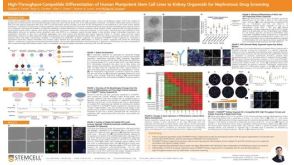 科学海报High-Throughput-Compatible Differentiation of Human Pluripotent Stem Cell Lines to Kidney Organoids for Nephrotoxic Drug Screening
 实验方案How to Dissociate and Plate Human Pluripotent Stem Cell-Derived Cardiomyocytes for Microelectrode Array (MEA) Assay
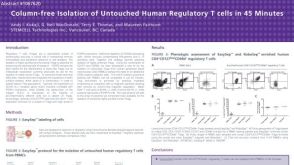 科学海报Immunomagnetic Cell Isolation of Untouched Human Regulatory T Cells
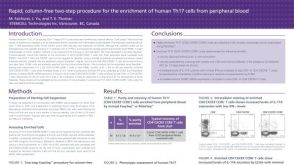 科学海报Cell Enrichment of Human Th17 Cells from Peripheral Blood
 产品手册Derive, Expand, and Differentiate Human Skeletal Muscle Progenitor Cells
 沪公网安备31010102008431号