Bershteyn M et al. (APR 2017)
Cell stem cell 20 4 435--449.e4
Human iPSC-Derived Cerebral Organoids Model Cellular Features of Lissencephaly and Reveal Prolonged Mitosis of Outer Radial Glia.
Classical lissencephaly is a genetic neurological disorder associated with mental retardation and intractable epilepsy,and Miller-Dieker syndrome (MDS) is the most severe form of the disease. In this study,to investigate the effects of MDS on human progenitor subtypes that control neuronal output and influence brain topology,we analyzed cerebral organoids derived from control and MDS-induced pluripotent stem cells (iPSCs) using time-lapse imaging,immunostaining,and single-cell RNA sequencing. We saw a cell migration defect that was rescued when we corrected the MDS causative chromosomal deletion and severe apoptosis of the founder neuroepithelial stem cells,accompanied by increased horizontal cell divisions. We also identified a mitotic defect in outer radial glia,a progenitor subtype that is largely absent from lissencephalic rodents but critical for human neocortical expansion. Our study,therefore,deepens our understanding of MDS cellular pathogenesis and highlights the broad utility of cerebral organoids for modeling human neurodevelopmental disorders.
View Publication
产品类型:
产品号#:
05872
05873
07920
07922
85850
85857
85870
85875
100-0483
100-0484
产品名:
ACCUTASE™
ACCUTASE™
mTeSR™1
mTeSR™1
Hausser Scientificᵀᴹ 明线血球计数板
ReLeSR™
A. M. Tukker et al. (JUL 2018)
Neurotoxicology 67 215--225
Human iPSC-derived neuronal models for in vitro neurotoxicity assessment.
Neurotoxicity testing still relies on ethically debated,expensive and time consuming in vivo experiments,which are unsuitable for high-throughput toxicity screening. There is thus a clear need for a rapid in vitro screening strategy that is preferably based on human-derived neurons to circumvent interspecies translation. Recent availability of commercially obtainable human induced pluripotent stem cell (hiPSC)-derived neurons and astrocytes holds great promise in assisting the transition from the current standard of rat primary cortical cultures to an animal-free alternative. We therefore composed several hiPSC-derived neuronal models with different ratios of excitatory and inhibitory neurons in the presence or absence of astrocytes. Using immunofluorescent stainings and multi-well micro-electrode array (mwMEA) recordings we demonstrate that these models form functional neuronal networks that become spontaneously active. The differences in development of spontaneous neuronal activity and bursting behavior as well as spiking patterns between our models confirm the importance of the presence of astrocytes. Preliminary neurotoxicity assessment demonstrates that these cultures can be modulated with known seizurogenic compounds,such as picrotoxin (PTX) and endosulfan,and the neurotoxicant methylmercury (MeHg). However,the chemical-induced effects on different parameters for neuronal activity,such as mean spike rate (MSR) and mean burst rate (MBR),may depend on the ratio of inhibitory and excitatory neurons. Our results thus indicate that hiPSC-derived neuronal models must be carefully designed and characterized prior to large-scale use in neurotoxicity screening.
View Publication
产品类型:
产品号#:
05790
05792
05793
05794
05795
R1061
R1034
R1116
产品名:
BrainPhys™神经元培养基
BrainPhys™神经元培养基和SM1试剂盒
BrainPhys™ 神经元培养基N2-A和SM1试剂盒
BrainPhys™原代神经元试剂盒
BrainPhys™ hPSC 神经元试剂盒
Mou H et al. (APR 2012)
Cell stem cell 10 4 385--397
Generation of multipotent lung and airway progenitors from mouse ESCs and patient-specific cystic fibrosis iPSCs
Deriving lung progenitors from patient-specific pluripotent cells is a key step in producing differentiated lung epithelium for disease modeling and transplantation. By mimicking the signaling events that occur during mouse lung development,we generated murine lung progenitors in a series of discrete steps. Definitive endoderm derived from mouse embryonic stem cells (ESCs) was converted into foregut endoderm,then into replicating Nkx2.1+ lung endoderm,and finally into multipotent embryonic lung progenitor and airway progenitor cells. We demonstrated that precisely-timed BMP,FGF,and WNT signaling are required for NKX2.1 induction. Mouse ESC-derived Nkx2.1+ progenitor cells formed respiratory epithelium (tracheospheres) when transplanted subcutaneously into mice. We then adapted this strategy to produce disease-specific lung progenitor cells from human Cystic Fibrosis induced pluripotent stem cells (iPSCs),creating a platform for dissecting human lung disease. These disease-specific human lung progenitors formed respiratory epithelium when subcutaneously engrafted into immunodeficient mice.
View Publication
产品类型:
产品号#:
05850
05857
05870
05875
85850
85857
85870
85875
产品名:
mTeSR™1
mTeSR™1
Liu J et al. (SEP 2012)
Human Molecular Genetics 21 17 3795--3805
Signaling defects in iPSC-derived fragile X premutation neurons
Fragile X-associated tremor/ataxia syndrome (FXTAS) is a leading monogenic neurodegenerative disorder affecting premutation carriers of the fragile X (FMR1) gene. To investigate the underlying cellular neuropathology,we produced induced pluripotent stem cell-derived neurons from isogenic subclones of primary fibroblasts of a female premutation carrier,with each subclone bearing exclusively either the normal or the expanded (premutation) form of the FMR1 gene as the active allele. We show that neurons harboring the stably-active,expanded allele (EX-Xa) have reduced postsynaptic density protein 95 protein expression,reduced synaptic puncta density and reduced neurite length. Importantly,such neurons are also functionally abnormal,with calcium transients of higher amplitude and increased frequency than for neurons harboring the normal-active allele. Moreover,a sustained calcium elevation was found in the EX-Xa neurons after glutamate application. By excluding the individual genetic background variation,we have demonstrated neuronal phenotypes directly linked to the FMR1 premutation. Our approach represents a unique isogenic,X-chromosomal epigenetic model to aid the development of targeted therapeutics for FXTAS,and more broadly as a model for the study of common neurodevelopmental (e.g. autism) and neurodegenerative (e.g. Parkinsonism,dementias) disorders.
View Publication
Bizy A et al. (NOV 2013)
Stem Cell Research 11 3 1335--1347
Myosin light chain 2-based selection of human iPSC-derived early ventricular cardiac myocytes
Applications of human induced pluripotent stem cell derived-cardiac myocytes (hiPSC-CMs) would be strengthened by the ability to generate specific cardiac myocyte (CM) lineages. However,purification of lineage-specific hiPSC-CMs is limited by the lack of cell marking techniques. Here,we have developed an iPSC-CM marking system using recombinant adenoviral reporter constructs with atrial- or ventricular-specific myosin light chain-2 (MLC-2) promoters. MLC-2a and MLC-2v selected hiPSC-CMs were purified by fluorescence-activated cell sorting and their biochemical and electrophysiological phenotypes analyzed. We demonstrate that the phenotype of both populations remained stable in culture and they expressed the expected sarcomeric proteins,gap junction proteins and chamber-specific transcription factors. Compared to MLC-2a cells,MLC-2v selected CMs had larger action potential amplitudes and durations. In addition,by immunofluorescence,we showed that MLC-2 isoform expression can be used to enrich hiPSC-CM consistent with early atrial and ventricular myocyte lineages. However,only the ventricular myosin light chain-2 promoter was able to purify a highly homogeneous population of iPSC-CMs. Using this approach,it is now possible to develop ventricular-specific disease models using iPSC-CMs while atrial-specific iPSC-CM cultures may require additional chamber-specific markers. ?? 2013 Elsevier B.V.
View Publication
产品类型:
产品号#:
05850
05857
05870
05875
85850
85857
85870
85875
产品名:
mTeSR™1
mTeSR™1
Zhao Q et al. (JAN 2015)
Proceedings of the National Academy of Sciences of the United States of America 112 2 530--535
MSCs derived from iPSCs with a modified protocol are tumor-tropic but have much less potential to promote tumors than bone marrow MSCs.
Mesenchymal stem or stromal cells (MSCs) have many potential therapeutic applications including therapies for cancers and tissue damages caused by cancers or radical cancer treatments. However,tissue-derived MSCs such as bone marrow MSCs (BM-MSCs) may promote cancer progression and have considerable donor variations and limited expandability. These issues hinder the potential applications of MSCs,especially those in cancer patients. To circumvent these issues,we derived MSCs from transgene-free human induced pluripotent stem cells (iPSCs) efficiently with a modified protocol that eliminated the need of flow cytometric sorting. Our iPSC-derived MSCs were readily expandable,but still underwent senescence after prolonged culture and did not form teratomas. These iPSC-derived MSCs homed to cancers with efficiencies similar to BM-MSCs but were much less prone than BM-MSCs to promote the epithelial-mesenchymal transition,invasion,stemness,and growth of cancer cells. The observations were probably explained by the much lower expression of receptors for interleukin-1 and TGFβ,downstream protumor factors,and hyaluronan and its cofactor TSG6,which all contribute to the protumor effects of BM-MSCs. The data suggest that iPSC-derived MSCs prepared with the modified protocol are a safer and better alternative to BM-MSCs for therapeutic applications in cancer patients. The protocol is scalable and can be used to prepare the large number of cells required for off-the-shelf" therapies and bioengineering applications."
View Publication
Standardization and optimization of the hiPSC-based PluriLum assay for detection of embryonic and developmental toxicants
New approach methodologies (NAMs) for predicting embryotoxicity and developmental toxicity are urgently needed for generating human relevant data,while reducing turnover time and costs,and alleviating ethical concerns related to the use of animal models. We have previously developed the PluriLum assay,a NKX2.5-reporter gene 3D model using human-induced pluripotent stem cells (hiPSCs) that are genetically modified to enable the assessment of adverse effects of chemicals on the early-stage embryo. Aiming at improving the predictive value of the PluriLum assay for future screening purposes,we sought to introduce standardization steps to the protocol,improving the overall robustness of the PluriLum assay,as well as a shortening of the assay protocol. First,we showed that the initial size of embryoid bodies (EBs) is crucial for a proper differentiation into cardiomyocytes and overall reproducibility of the assay. When the starting diameter of the EBs exceeds 500 µm,robust differentiation can be anticipated. In terms of reproducibility,exposure to the fungicide epoxiconazole at smaller initial diameters resulted in a larger variation of the derived data,compared to more reliable concentration–response curves obtained using spheroids with larger initial diameters. We further investigated the ideal length of the differentiation protocol,resulting in a shortening of the PluriLum assay by 24 h to 7 days. Following exposure to the teratogens all-trans and 13-cis retinoic acid,both cardiomyocyte contraction and measurement of NKX2.5-derived luminescence were recorded with a similar or increased sensitivity after 6 days of differentiation when compared to the original 7 days. Finally,we have introduced an efficient step for enzymatic dissociation of the EBs at assay termination. This allows for an even splitting of the individual EBs and testing of additional endpoints other than the NKX2.5-luciferase reporter,which was demonstrated in this work by the simultaneous assessment of ATP levels. In conclusion,we have introduced standardizations and streamlined the PluriLum assay protocol to improve its suitability as a NAM for screening of a large number of chemicals for developmental toxicity testing.
View Publication
产品类型:
产品号#:
100-0276
100-1130
85850
85857
产品名:
mTeSR™ Plus
mTeSR™ Plus
mTeSR™1
mTeSR™1
(Jan 2025)
International Journal of Molecular Sciences 26 2
Establishment of iPSC-Derived MSCs Expressing hsa-miR-4662a-5p for Enhanced Immune Modulation in Graft-Versus-Host Disease (GVHD)
The immune-modulatory effects of mesenchymal stromal cells (MSCs) are widely used to treat inflammatory disorders,with indoleamine 2,4-dioxygenase-1 (IDO-1) playing a pivotal role in suppressing stimulated T-cell proliferation. Taking that three-dimensional (3D) cultures enhance MSCs’ anti-inflammatory properties compared with two-dimensional (2D) cultures,the differentially expressed miRNAs were examined. Thus,we identified hsa-miR-4662a-5p (miR-4662a) as a key inducer of IDO-1 via its suppression of bridging integrator-1 (BIN-1),a negative regulator of the IDO-1 gene. The IDO-1-inducing potential of miR-4662a was conserved across primary MSCs from various donors and sources but exhibited variability. Notably,iPSC-derived MSCs (iMSCs) demonstrated superior IDO-1 induction and immune-modulatory efficacy compared with their donor-matched primary MSCs. Accordingly,iMSCs expressing miR-4662a (4662a/iMSC) exhibited stronger suppressive effects on T-cell proliferation and more potent suppressive effects on graft-versus-host disease (GVHD),improving survival rates and reducing tissue damage in the liver and gut. Our results point to the therapeutic potential of standardized,off-the-shelf 4662a/iMSC as a robust immune-modulating cell therapy for GVHD.
View Publication
产品类型:
产品号#:
85850
85857
产品名:
mTeSR™1
mTeSR™1
(Jun 2025)
Stem Cell Research & Therapy 16 10
DMSO-free cryopreservation of hiPSC-derived cardiomyocytes: low temperature characterization and protocol development
BackgroundHuman-induced pluripotent stem cell-derived cardiomyocytes (hiPSC-CMs) have attracted significant interest for use in disease modeling,drug discovery and potential therapeutic applications. However,conventional hiPSC-CM cryopreservation protocols largely use dimethyl sulfoxide (DMSO) as the cryoprotectant (CPA),which is linked with a loss of post-thaw recovery and function for various cell types and is not ideal for therapeutic protocols. Additionally,the effect of freezing parameters such as cooling rate and nucleation temperature on post-thaw recovery of hiPSC-CMs has not been explored.MethodshiPSC-CMs were generated by Wnt pathway inhibition,followed by sodium l-lactate purification. Subsequently,biophysical characterization of the cells was performed. A differential evolution (DE) algorithm was utilized to determine the optimal composition of a mixture of a sugar,sugar alcohol and amino acid to replace DMSO as the CPA. The hiPSC-CMs were subjected to controlled-rate freezing at different cooling rates and nucleation temperatures. The optimum freezing parameters were identified by post-thaw recoveries and the partitioning ratio obtained from low temperature Raman spectroscopy studies. The post-thaw osmotic behavior of hiPSC-CMs was studied by measuring diameter of cells resuspended in the isotonic culture medium over time. Immunocytochemistry and calcium transient studies were performed to evaluate post-thaw function.ResultshiPSC-CMs were found to be slightly larger than hiPSCs and exhibited a large osmotically inactive volume. The best-performing DMSO-free solutions enabled post-thaw recoveries over 90%,which was significantly greater than DMSO (69.4?±?6.4%). A rapid cooling rate of 5 °C/min and a low nucleation temperature of -8 °C was found to be optimal for hiPSC-CMs. hiPSC-CMs displayed anomalous osmotic behavior post-thaw,dropping sharply in volume after resuspension. Post-thaw function was preserved when hiPSC-CMs were frozen with the best-performing DMSO-free CPA or DMSO and the cells displayed similar cardiac markers pre-freeze and post-thaw.ConclusionsIt was shown that a CPA cocktail of naturally-occurring osmolytes could effectively replace DMSO for preserving hiPSC-CMs while preserving morphology and function. Understanding the anomalous osmotic behavior and managing the excessive dehydration of hiPSC-CMs could be crucial to improve post-thaw outcomes. Effective DMSO-free cryopreservation would accelerate the development of drug discovery and therapeutic applications of hiPSC-CMs.Supplementary InformationThe online version contains supplementary material available at 10.1186/s13287-025-04384-5.
View Publication


 EasySep™小鼠TIL(CD45)正选试剂盒




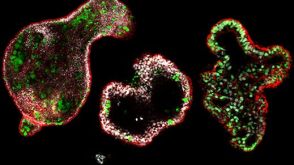 实验方案How to Differentiate hiPSCs into Colonic Organoids Using STEMdiff™

 沪公网安备31010102008431号