CRISPR/Cas9-Based Protocol for Precise Genome Editing in Induced Pluripotent Stem Cells
The advent of clustered regularly interspaced short palindromic repeats (CRISPR)/Cas9-based genome editing has marked a significant advancement in genetic engineering technology. However,the editing of induced pluripotent stem cells (iPSCs) with CRISPR presents notable challenges in ensuring cell survival and achieving high editing efficiency. These challenges become even more complex when considering the specific target site. P53 activation as a result of traditional CRISPR editing can lead to apoptosis,potentially worsening cell health or even resulting in cell death. Mitigating this apoptotic response can enhance cell survival post-CRISPR editing,which will ultimately increase editing efficiency. In our study,we observed that combining p53 inhibition with pro-survival small molecules yields a homologous recombination rate of over 90% when using CRISPR in human iPSCs. This protocol significantly streamlines the editing process and reduces the time and resources necessary for creating isogenic lines.
View Publication
Li X et al. (AUG 2015)
Cell stem cell 17 2 195--203
Small-Molecule-Driven Direct Reprogramming of Mouse Fibroblasts into Functional Neurons.
Recently,direct reprogramming between divergent lineages has been achieved by the introduction of regulatory transcription factors. This approach may provide alternative cell resources for drug discovery and regenerative medicine,but applications could be limited by the genetic manipulation involved. Here,we show that mouse fibroblasts can be directly converted into neuronal cells using only a cocktail of small molecules,with a yield of up to textgreater90% being TUJ1-positive after 16 days of induction. After a further maturation stage,these chemically induced neurons (CiNs) possessed neuron-specific expression patterns,generated action potentials,and formed functional synapses. Mechanistically,we found that a BET family bromodomain inhibitor,I-BET151,disrupted the fibroblast-specific program,while the neurogenesis inducer ISX9 was necessary to activate neuron-specific genes. Overall,our findings provide a proof of principle" for chemically induced direct reprogramming of somatic cell fates across germ layers without genetic manipulation�
View Publication
产品类型:
产品号#:
72052
72054
72112
72114
72232
72234
73202
73712
73714
100-1042
100-0249
100-1051
产品名:
CHIR99021
CHIR99021
Forskolin
Forskolin
SB431542 (Hydrate)
SB431542(水合物)
ISX-9
I-BET151
I-BET151
CHIR99021
Forskolin
SB431542(水合物)
J. C. Wagner et al. (sep 2022)
American journal of transplantation : official journal of the American Society of Transplantation and the American Society of Transplant Surgeons 22 9 2237--2245
Alloantigen-specific regulatory T cell (Treg) therapy is a promising approach for suppressing alloimmune responses and minimizing immunosuppression after solid organ transplantation. Chimeric antigen receptor (CAR) targeting donor alloantigens can confer donor reactivity to Tregs. However,CAR Treg therapy has not been evaluated in vascularized transplant or multi-MHC mismatched models. Here,we evaluated the ability of CAR Tregs targeting HLA-A2 (A2-CAR) to prolong the survival of heterotopic heart transplants in mice. After verifying the in vitro activation,proliferation,and enhanced suppressive function of A2-CAR Tregs in the presence of A2-antigen,we analyzed the in vivo function of Tregs in C57BL/6 (B6) mice receiving A2-expressing heart allografts. A2-CAR Treg infusion increased the median survival of grafts from B6.HLA-A2 transgenic donors from 23 to 99 days,whereas median survival with polyclonal Treg infusion was 35 days. In a more stringent model of haplo-mismatched hearts from BALB/cxB6.HLA-A2 F1 donors,A2-CAR Tregs slightly increased median graft survival from 11 to 14 days,which was further extended to >100 days when combined with a 9-day course of rapamycin treatment. These findings demonstrate the efficacy of CAR Tregs,alone or in combination with immunosuppressive agents,toward protecting vascularized grafts in fully immunocompetent recipients.
View Publication
产品类型:
产品号#:
19852
19852RF
产品名:
EasySep™小鼠CD4+ T细胞分选试剂盒
RoboSep™ 小鼠CD4+ T细胞分选试剂盒
S. Pankaew et al. (dec 2021)
STAR protocols 3 1 101041
Multiplexed single-cell RNA-sequencing of mouse thymic and splenic samples.
Multiplexed single-cell RNA-sequencing (scRNA-seq) enables investigating several biological samples in one scRNA-seq experiment. Here,we use antibodies tagged with a hashtag oligonucleotide (Ab-HTO) to label each sample,and 10?— Genomics technology to analyze single-cell gene expression. Advantages of sample multiplexing are to reduce the cost of scRNA-seq assay and to avoid batch effect. It may also facilitate cell-doublet removal and the merging of several scRNA-seq assays. Herein,we apply multiplexed scRNA-seq to investigate mouse thymocytes and splenic T lymphocytes development. For complete details on the use and execution of this protocol,please refer to Nozais et al. (2021).
View Publication
产品类型:
产品号#:
18000
19851
19851RF
产品名:
EasySep™磁极
EasySep™小鼠T细胞分选试剂盒
RoboSep™ 小鼠T细胞分选试剂盒
(Apr 2024)
The Journal of Experimental Medicine 221 6
Viable mutations of mouse midnolin suppress B cell malignancies
Midnolin is an essential gene with previously unknown effects in vivo. This paper shows that midnolin stimulates proteasome activity necessary for lymphopoiesis and B cell cancer growth in mice. In a genetic screen,we identified two viable missense alleles of the essential gene Midnolin (Midn) that were associated with reductions in peripheral B cells. Causation was confirmed in mice with targeted deletion of four of six MIDN protein isoforms. MIDN was expressed predominantly in lymphocytes where it augmented proteasome activity. We showed that purified MIDN directly stimulated 26S proteasome activity in vitro in a manner dependent on the ubiquitin-like domain and a C-terminal region. MIDN-deficient B cells displayed aberrant activation of the IRE-1/XBP-1 pathway of the unfolded protein response. Partial or complete MIDN deficiency strongly suppressed Eμ-Myc–driven B cell leukemia and the antiapoptotic effects of Eμ-BCL2 on B cells in vivo and induced death of Sp2/0 hybridoma cells in vitro,but only partially impaired normal lymphocyte development. Thus,MIDN is required for proteasome activity in support of normal lymphopoiesis and is essential for malignant B cell proliferation over a broad range of differentiation states.
View Publication
Tyznik AJ et al. ( 2014)
The Journal of Immunology 192 8 3676--85
Distinct requirements for activation of NKT and NK cells during viral infection
NK cells are key regulators of innate defense against mouse CMV (MCMV). Like NK cells,NKT cells also produce high levels of IFN-γ rapidly after MCMV infection. However,whether similar mechanisms govern activation of these two cell types,as well as the significance of NKT cells for host resistance,remain unknown. In this article,we show that,although both NKT and NK cells are activated via cytokines,their particular cytokine requirements differ significantly in vitro and in vivo. IL-12 is required for NKT cell activation in vitro but is not sufficient,whereas NK cells have the capacity to be activated more promiscuously in response to individual cytokines from innate cells. In line with these results,GM-CSF-derived dendritic cells activated only NK cells upon MCMV infection,consistent with their virtual lack of IL-12 production,whereas Flt3 ligand-derived dendritic cells produced IL-12 and activated both NK and NKT cells. In vivo,NKT cell activation was abolished in IL-12(-/-) mice infected with MCMV,whereas NK cells were still activated. In turn,splenic NK cell activation was more IL-18 dependent. The differential requirements for IL-12 and IL-18 correlated with the levels of cytokine receptor expression by NK and NKT cells. Finally,mice lacking NKT cells showed reduced control of MCMV,and depleting NK cells further enhanced viral replication. Taken together,our results show that NKT and NK cells have differing requirements for cytokine-mediated activation,and both can contribute nonredundantly to MCMV defense,revealing that these two innate lymphocyte subsets function together to fine-tune antiviral responses.
View Publication
产品类型:
产品号#:
20119
20155
21000
产品名:
RoboSep™ 吸头组件抛光剂
RoboSep™分选试管套装(9个塑料管+吸头保护器)
RoboSep™- S
Hockemeyer D et al. (SEP 2008)
Cell stem cell 3 3 346--53
A drug-inducible system for direct reprogramming of human somatic cells to pluripotency.
Current approaches to reprogram human somatic cells to pluripotent iPSCs utilize viral transduction of different combinations of transcription factors. These protocols are highly inefficient because only a small fraction of cells carry the appropriate number and stoichiometry of proviral insertions to initiate the reprogramming process. Here we have generated genetically homogeneous secondary" somatic cells�
View Publication
产品类型:
产品号#:
72742
产品名:
Doxycycline (Hyclate)
Horikiri T et al. ( 2017)
PloS one 12 1 e0170342
SOX10-Nano-Lantern Reporter Human iPS Cells; A Versatile Tool for Neural Crest Research.
The neural crest is a source to produce multipotent neural crest stem cells that have a potential to differentiate into diverse cell types. The transcription factor SOX10 is expressed through early neural crest progenitors and stem cells in vertebrates. Here we report the generation of SOX10-Nano-lantern (NL) reporter human induced pluripotent stem cells (hiPS) by using CRISPR/Cas9 systems,that are beneficial to investigate the generation and maintenance of neural crest progenitor cells. SOX10-NL positive cells are produced transiently from hiPS cells by treatment with TGFβ inhibitor SB431542 and GSK3 inhibitor CHIR99021. We found that all SOX10-NL-positive cells expressed an early neural crest marker NGFR,however SOX10-NL-positive cells purified from differentiated hiPS cells progressively attenuate their NL-expression under proliferation. We therefore attempted to maintain SOX10-NL-positive cells with additional signaling on the plane and sphere culture conditions. These SOX10-NL cells provide us to investigate mass culture with neural crest cells for stem cell research.
View Publication
产品类型:
产品号#:
85850
85857
产品名:
mTeSR™1
mTeSR™1
R. U. W. Friis et al. (Oct 2025)
Cancer Immunology,Immunotherapy : CII 74 11
Development of antigen multimers for detection and evaluation of CAR T cells
Chimeric antigen receptor (CAR) T cell therapy has transformed the treatment landscape of hematologic cancers by engineering T cells to specifically target and destroy cancer cells. Monitoring CAR T cell activity and function is essential for optimizing therapeutic outcomes,but existing tools for CAR detection are often limited in specificity and functional assessment capability. Methods: We developed dextran multimers by conjugating multiple CAR-specific antigens to a dextran backbone. The multimers were compared to previously reported antigen tetramers for their ability to stain and detect CAR T cells. Because these multimers incorporate the CAR target antigen,they uniquely enable assessment of CAR T cell functionality. We tested the staining and functional properties of the multimers across a range of CAR constructs with different affinities,using flow cytometry and microscopy. Results: The dextran multimers demonstrated high specificity and sensitivity in staining CAR T cells,with adjustable antigen density to optimize binding. Dextran multimers also enabled effective clustering and subsequent activation of CARs,showing their utility as both a staining and functional assessment tool. The multimers revealed that CARs with different affinities and clustering tendencies displayed varied binding and activation in response to different antigen densities. Conclusions: Dextran multimers offer a dual advantage as versatile reagents for both staining and functional analysis of CAR T cells. Their capacity to engage CARs with the specific antigen provides a valuable platform for evaluating CAR functionality,informing CAR design improvements,and enhancing therapeutic precision.
View Publication


 EasySep™小鼠TIL(CD45)正选试剂盒




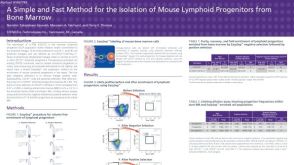 科学海报Cell Isolation of Mouse Lymphoid Progenitors from Bone Marrow
 产品手册NeuroCult™-XF: Xeno-Free Culture Medium for the Proliferation of Human Neural Stem Cells

 沪公网安备31010102008431号