Apolipoprotein-mediated lipid antigen presentation in B cells provides a pathway for innate help by NKT cells.
Natural killer T (NKT) cells are innate-like lymphocytes that recognize lipid antigens and have been shown to enhance B-cell activation and antibody production. B cells typically recruit T-cell help by presenting internalized antigens recognized by their surface antigen receptor. Here,we demonstrate a highly efficient means whereby human B cells present lipid antigens to NKT cells,capturing the antigen using apolipoprotein E (apoE) and the low-density lipoprotein receptor (LDL-R). ApoE dramatically enhances B-cell presentation of alpha-galactosylceramide (alphaGalCer),an exogenous CD1d presented antigen,inducing activation of NKT cells and the subsequent activation of B cells. B cells express the LDL-R on activation,and the activation of NKT cells by B cells is completely LDL-R dependent,as shown by blocking experiments and the complete lack of presentation when using apoE2,an isoform of apoE incapable of LDL-R binding. The dependence on apoE and the LDL-R is much more pronounced in B cells than we had previously seen in dendritic cells,which can apparently use alternate pathways of lipid antigen uptake. Thus,B cells use an apolipoprotein-mediated pathway of lipid antigen presentation,which constitutes a form of innate help for B cells by NKT cells.
View Publication
产品类型:
产品号#:
19054
19054RF
产品名:
EasySep™人B细胞富集试剂盒
RoboSep™ 人B细胞富集试剂盒含滤芯吸头
Kharas MG et al. (JUN 2004)
Blood 103 11 4268--75
Phosphoinositide 3-kinase signaling is essential for ABL oncogene-mediated transformation of B-lineage cells.
BCR-ABL and v-ABL are oncogenic forms of the Abl tyrosine kinase that can cause leukemias in mice and humans. ABL oncogenes trigger multiple signaling pathways whose contribution to transformation varies among cell types. Activation of phosphoinositide 3-kinase (PI3K) is essential for ABL-dependent proliferation and survival in some cell types,and global PI3K inhibitors can enhance the antileukemia effects of the Abl kinase inhibitor imatinib. Although a significant fraction of BCR-ABL-induced human leukemias are of B-cell origin,little is known about PI3K signaling mechanisms in B-lineage cells transformed by ABL oncogenes. Here we show that activation of class I(A) PI3K and downstream inactivation of FOXO transcription factors are essential for survival of murine pro/pre-B cells transformed by v-ABL or BCR-ABL. In addition,analysis of mice lacking individual PI3K genes indicates that products of the Pik3r1 gene contribute to transformation efficiency by BCR-ABL. These findings establish a role for PI3K signaling in B-lineage transformation by ABL oncogenes.
View Publication
产品类型:
产品号#:
03630
产品名:
MethoCult™ M3630
Ma R et al. (APR 2015)
Thyroid 25 4 455--461
Human embryonic stem cells form functional thyroid follicles.
OBJECTIVE: The molecular events that lead to human thyroid cell speciation remain incompletely characterized. It has been shown that overexpression of the regulatory transcription factors Pax8 and Nkx2-1 (ttf-1) directs murine embryonic stem (mES) cells to differentiate into thyroid follicular cells by initiating a transcriptional regulatory network. Such cells subsequently organized into three-dimensional follicular structures in the presence of extracellular matrix. In the current study,human embryonic stem (hES) cells were studied with the aim of recapitulating this scenario and producing functional human thyroid cell lines. METHODS: Reporter gene tagged pEZ-lentiviral vectors were used to express human PAX8-eGFP and NKX2-1-mCherry in the H9 hES cell line followed by differentiation into thyroid cells directed by Activin A and thyrotropin (TSH). RESULTS: Both transcription factors were expressed efficiently in hES cells expressing either PAX8,NKX2-1,or in combination in the hES cells,which had low endogenous expression of these transcription factors. Further differentiation of the double transfected cells showed the expression of thyroid-specific genes,including thyroglobulin (TG),thyroid peroxidase (TPO),the sodium/iodide symporter (NIS),and the TSH receptor (TSHR) as assessed by reverse transcription polymerase chain reaction and immunostaining. Most notably,the Activin/TSH-induced differentiation approach resulted in thyroid follicle formation and abundant TG protein expression within the follicular lumens. On stimulation with TSH,these hES-derived follicles were also capable of dose-dependent cAMP generation and radioiodine uptake,indicating functional thyroid epithelial cells. CONCLUSION: The induced expression of PAX8 and NKX2-1 in hES cells was followed by differentiation into thyroid epithelial cells and their commitment to form functional three-dimensional neo-follicular structures. The data provide proof of principal that hES cells can be committed to thyroid cell speciation under appropriate conditions.
View Publication
产品类型:
产品号#:
05850
05857
05870
05875
85850
85857
85870
85875
产品名:
mTeSR™1
mTeSR™1
Chanda B et al. (SEP 2013)
Cell 155 1 215--227
Retinoic acid signaling is essential for embryonic hematopoietic stem cell development.
Hematopoietic stem cells (HSCs) develop from a specialized subpopulation of endothelial cells known as hemogenic endothelium (HE). Although the HE origin of HSCs is now well established in different species,the signaling pathways that control this transition remain poorly understood. Here,we show that activation of retinoic acid (RA) signaling in aorta-gonad-mesonephros-derived HE ex vivo dramatically enhanced its HSC potential,whereas conditional inactivation of the RA metabolizing enzyme retinal dehydrogenase 2 in VE-cadherin expressing endothelial cells in vivo abrogated HSC development. Wnt signaling completely blocked the HSC inductive effects of RA modulators,whereas inhibition of the pathway promoted the development of HSCs in the absence of RA signaling. Collectively,these findings position RA and Wnt signaling as key regulators of HSC development and in doing so provide molecular insights that will aid in developing strategies for their generation from pluripotent stem cells.
View Publication
产品类型:
产品号#:
01700
01705
01702
产品名:
ALDEFLUOR™ 试剂盒
ALDEFLUOR™ DEAB试剂, 1.5 mM, 1 mL
ALDEFLUOR™检测缓冲液
Zandstra PW et al. (APR 1997)
Proceedings of the National Academy of Sciences of the United States of America 94 9 4698--703
Cytokine manipulation of primitive human hematopoietic cell self-renewal.
Previous studies have shown that primitive human hematopoietic cells detectable as long-term culture-initiating cells (LTC-ICs) and colony-forming cells (CFCs) can be amplified when CD34(+) CD38(-) marrow cells are cultured for 10 days in serum-free medium containing flt3 ligand (FL),Steel factor (SF),interleukin (IL)-3,IL-6,and granulocyte colony-stimulating factor. We now show that the generation of these two cell types in such cultures is differentially affected at the single cell level by changes in the concentrations of these cytokines. Thus,maximal expansion of LTC-ICs (60-fold) was obtained in the presence of 30 times more FL,SF,IL-3,IL-6,and granulocyte colony-stimulating factor than could concomitantly stimulate the near-maximal (280-fold) amplification of CFCs. Furthermore,the reduced ability of suboptimal cytokine concentrations to support the production of LTC-ICs could be ascribed to a differential response of the stimulated cells since this was not accompanied by a change in the number of input CD34(+) CD38(-) cells that proliferated. Reduced LTC-IC amplification in the absence of a significant effect on CFC generation also occurred when the concentrations of FL and SF were decreased but the concentration of IL-3 was high (as compared with cultures containing high levels of all three cytokines). To our knowledge,these findings provide the first evidence suggesting that extrinsically acting cytokines can alter the self-renewal behavior of primary human hematopoietic stem cells independent of effects on their viability or proliferation.
View Publication
产品类型:
产品号#:
05150
05350
产品名:
MyeloCult™ H5100
Lianguzova MS et al. (APR 2007)
Cell biology international 31 4 330--7
Phosphoinositide 3-kinase inhibitor LY294002 but not serum withdrawal suppresses proliferation of murine embryonic stem cells.
Mouse embryonic stem (mES) cells have short duration of their cell cycle and are capable of proliferating in the absence of growth factors. To find out which signaling pathways contribute to the regulation of the mES cell cycle,we used pharmacological inhibitors of MAP and PI3 kinase cascades. The MAP kinase inhibitors as well as serum withdrawal did not affect mES cell cycle distribution,whereas the inhibitor of PI3K activity,LY294002,induced accumulation of cells in G(1) phase followed by apoptotic cell death. Serum withdrawal also causes apoptosis,but it does not change the content and activity of cell cycle regulators. In contrast,in mES cells treated with LY294002,the activities of Cdk2 and E2F were significantly decreased. Interestingly,LY294002had a much stronger effect on cell cycle distribution in low serum conditions,implying that serum can promote G(1)--textgreaterS transition of mES cells by a LY294002-resistant mechanism. Thus,proliferation of mES cells is maintained by at least two separate mechanisms: a LY294002-sensitive pathway,which is active even in the absence of serum,and LY294002-resistant,but serum-dependent,pathway.
View Publication
产品类型:
产品号#:
72152
72154
产品名:
LY294002
LY294002
X. Li et al. (jul 2019)
Stem cells (Dayton,Ohio) 37 7 937--947
p53-TP53-Induced Glycolysis Regulator Mediated Glycolytic Suppression Attenuates DNA Damage and Genomic Instability in Fanconi Anemia Hematopoietic Stem Cells.
Emerging evidence has shown that resting quiescent hematopoietic stem cells (HSCs) prefer to utilize anaerobic glycolysis rather than mitochondrial respiration for energy production. Compelling evidence has also revealed that altered metabolic energetics in HSCs underlies the onset of certain blood diseases; however,the mechanisms responsible for energetic reprogramming remain elusive. We recently found that Fanconi anemia (FA) HSCs in their resting state are more dependent on mitochondrial respiration for energy metabolism than on glycolysis. In the present study,we investigated the role of deficient glycolysis in FA HSC maintenance. We observed significantly reduced glucose consumption,lactate production,and ATP production in HSCs but not in the less primitive multipotent progenitors or restricted hematopoietic progenitors of Fanca-/- and Fancc-/- mice compared with that of wild-type mice,which was associated with an overactivated p53 and TP53-induced glycolysis regulator,the TIGAR-mediated metabolic axis. We utilized Fanca-/- HSCs deficient for p53 to show that the p53-TIGAR axis suppressed glycolysis in FA HSCs,leading to enhanced pentose phosphate pathway and cellular antioxidant function and,consequently,reduced DNA damage and attenuated HSC exhaustion. Furthermore,by using Fanca-/- HSCs carrying the separation-of-function mutant p53R172P transgene that selectively impairs the p53 function in apoptosis but not cell-cycle control,we demonstrated that the cell-cycle function of p53 was not required for glycolytic suppression in FA HSCs. Finally,ectopic expression of the glycolytic rate-limiting enzyme PFKFB3 specifically antagonized p53-TIGAR-mediated metabolic reprogramming in FA HSCs. Together,our results suggest that p53-TIGAR metabolic axis-mediated glycolytic suppression may play a compensatory role in attenuating DNA damage and proliferative exhaustion in FA HSCs. Stem Cells 2019;37:937-947.
View Publication
Christopher MJ et al. (FEB 2011)
The Journal of experimental medicine 208 2 251--60
Expression of the G-CSF receptor in monocytic cells is sufficient to mediate hematopoietic progenitor mobilization by G-CSF in mice.
Granulocyte colony-stimulating factor (G-CSF),the prototypical mobilizing cytokine,induces hematopoietic stem and progenitor cell (HSPC) mobilization from the bone marrow in a cell-nonautonomous fashion. This process is mediated,in part,through suppression of osteoblasts and disruption of CXCR4/CXCL12 signaling. The cellular targets of G-CSF that initiate the mobilization cascade have not been identified. We use mixed G-CSF receptor (G-CSFR)-deficient bone marrow chimeras to show that G-CSF-induced mobilization of HSPCs correlates poorly with the number of wild-type neutrophils. We generated transgenic mice in which expression of the G-CSFR is restricted to cells of the monocytic lineage. G-CSF-induced HSPC mobilization,osteoblast suppression,and inhibition of CXCL12 expression in the bone marrow of these transgenic mice are intact,demonstrating that G-CSFR signals in monocytic cells are sufficient to induce HSPC mobilization. Moreover,G-CSF treatment of wild-type mice is associated with marked loss of monocytic cells in the bone marrow. Finally,we show that bone marrow macrophages produce factors that support the growth and/or survival of osteoblasts in vitro. Together,these data suggest a model in which G-CSFR signals in bone marrow monocytic cells inhibit the production of trophic factors required for osteoblast lineage cell maintenance,ultimately leading to HSPC mobilization.
View Publication
Mortensen M et al. (MAR 2011)
The Journal of experimental medicine 208 3 455--67
The autophagy protein Atg7 is essential for hematopoietic stem cell maintenance.
The role of autophagy,a lysosomal degradation pathway which prevents cellular damage,in the maintenance of adult mouse hematopoietic stem cells (HSCs) remains unknown. Although normal HSCs sustain life-long hematopoiesis,malignant transformation of HSCs leads to leukemia. Therefore,mechanisms protecting HSCs from cellular damage are essential to prevent hematopoietic malignancies. In this study,we crippled autophagy in HSCs by conditionally deleting the essential autophagy gene Atg7 in the hematopoietic system. This resulted in the loss of normal HSC functions,a severe myeloproliferation,and death of the mice within weeks. The hematopoietic stem and progenitor cell compartment displayed an accumulation of mitochondria and reactive oxygen species,as well as increased proliferation and DNA damage. HSCs within the Lin(-)Sca-1(+)c-Kit(+) (LSK) compartment were significantly reduced. Although the overall LSK compartment was expanded,Atg7-deficient LSK cells failed to reconstitute the hematopoietic system of lethally irradiated mice. Consistent with loss of HSC functions,the production of both lymphoid and myeloid progenitors was impaired in the absence of Atg7. Collectively,these data show that Atg7 is an essential regulator of adult HSC maintenance.
View Publication


 EasySep™小鼠TIL(CD45)正选试剂盒




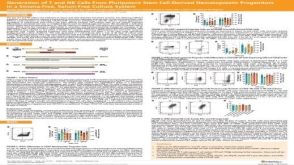 科学海报Generation of T and NK Cells From Pluripotent Stem Cell-Derived Hematopoietic Progenitors in a Stroma-Free, Serum-Free Culture System
 挂图Identification of Colonies Derived from Human Hematopoietic Progenitors Representative colony images and tips for identifying progenitor subtypes in CFU assays
 27:26
线上讲座How to Optimize Your T Cell Therapy Workflow—Without the Use of Serum or Feeder Cells发布日期: 08/27/2024
27:26
线上讲座How to Optimize Your T Cell Therapy Workflow—Without the Use of Serum or Feeder Cells发布日期: 08/27/2024
 沪公网安备31010102008431号