

 EasySep™小鼠TIL(CD45)正选试剂盒




Q&A: Assessing Antigen-Specific T Cell Functionality with Dendritic Cell/CD8⁺ T Cell Co-Culture
Q&A: Assessing Antigen-Specific T Cell Functionality with Dendritic Cell/CD8⁺ T Cell Co-Culture
Dendritic cells (DCs) are powerful antigen-presenting cells that process exogenous antigens and present them to CD4+ and CD8+ T cells to generate immune responses. The presentation of exogenous antigens on major histocompatibility complex (MHC) class I molecules to CD8+ T cells is known as cross-presentation and is essential to induce antigen-specific responses of CD8+ T cells to fight infections and disease. Therefore, co-culturing DCs and CD8+ T cells is a valuable method for studying antigen presentation and T cell activation. Using co-cultured T cells, further studies can be conducted on the presentation of tumor antigens, T cell-mediated cytotoxicity, and memory T cell development. Such studies can help develop cancer treatments and vaccines that harness T cell functions to fight tumors and induce long-lasting immune memory for protection against cancer.
In the on-demand webinar, “Assessing Antigen-Specific T Cell Functionality with Dendritic Cell/CD8ᐩ T Cell Co-Culture,” Dr. Catherine Ewen describes, in detail, how to set up DC and CD8⁺ T cell co-culture experiments that generate antigen-specific CD8⁺ T cells, and how to assess CD8⁺ T cell proliferation, functionality, and killing activity.
Continue reading to find the speaker's answers to questions asked following the live webinar. These answers have been edited for length and clarity.
Meet the Speaker

Dr. Catherine Ewen
Dr. Catherine Ewen works as a Senior Scientist at STEMCELL Technologies, where she brings proof-of-concept ideas to the market. Catherine completed her PhD in immunology at the University of Alberta. She spent over 15 years in academic research in areas including infectious disease, vaccine development, cell biology, and autoimmunity. Catherine is passionate about scientific discovery and technological advancements, and her primary goal is to build effective, engaged, and collaborative teams that are driven by innovation and scientific excellence.
Q&A Report
Can I use just one ImmunoCult™ medium?
The protocol described in our technical bulletin is most optimal. The DC maturation is done in ImmunoCult™ Dendritic Cell Medium and the co-culture is performed in ImmunoCult™-XF T Cell Expansion Medium.
Which culture medium is used during the co-culture?
We used ImmunoCult™-XF T Cell Expansion Medium. We haven't tested other media in this setup.
Which inoculum of monocytes is good for producing mo-DCs (monocyte-derived dendritic cells)? I have been struggling with losing a lot of cells during the 7-day culture period.
We provide this information in the ImmunoCult™ Dendritic Cell Kit. The cells are seeded at 1x10⁶ cells/mL and the medium is replaced on Day 3 without disturbing the cells too much. Then, you add the maturation supplement and peptides on Day 5. Minimal manipulation and handling is best for these cells. The quality of the monocytes that you start with will also affect final yields (ie. fresh vs. frozen sources, the viability of starting cells, etc). It’s expected that you will not recover the same number of cells you started with after the differentiation and maturation process.
What do I do if I don’t see the expansion of CD8⁺ T cells?
In this case, you have several options. We recommend checking the viability and phenotype of the T cells and mature DCs for typical markers. You can also check IL-12 secretion by the DCs. We also recommend using a positive control such as CMV peptide pools (expands memory T cells) as most donors will have circulating memory T cells to CMV. Another option for a positive control is to use CEF class I peptide pools, as this is composed of CMV, EBV, and influenza peptides, and most donors will have memory T cells against these peptides.
Can I do a second round of CD8⁺ expansion?
Yes, but with a few modifications. After enriching the antigen-specific T cells for one round, try using fewer DCs and exploring how changing the cytokine concentration or combination might work for you. Some things to consider are T cell exhaustion and phenotype changes that accompany multiple rounds of expansion.
Is the expansion of DCs possible?
No, DCs don't tend to proliferate, as these are terminally differentiated cells. If you are starting with monocytes and differentiating them to DCs, the final yield would depend on the donor, culture method, and sample quality (ie. fresh vs. frozen sources, the viability of starting cells, etc). You should expect the yield of mo-DCs at the end of differentiation and maturation to be lower than the number of monocytes that were seeded on Day 0 of the DC differentiation workflow.
What are some other DC maturation approaches?
This depends on the cell type you start with. Blood-derived DCs such as the cDC1s and cDC2s would respond to different stimuli. Some researchers use TLR9 or TLR3 agonists based on the subset of DC they are working with. There are several diverse approaches and we encourage customers to try various options.
Have you ever phenotyped DCs at day 5 of differentiation from monocytes before adding the maturation cocktail? What phenotypes do they have?
You should see a downregulation of CD14 by Day 5. They will be CD83- and have much lower levels of co-stimulatory molecules and MHC levels compared to mature DCs. Please see Figure 2 on this scientific poster for more details.
Can I use positively selected T cells?
When using Pan-T cells isolated using a CD3 positive selection kit, there may be some basal levels of stimulation of T cells that may be caused by the anti-CD3 antibody in the kit binding to the cells. Other markers such as CD4 may be expressed on non-T cells so you may see some contaminating cells such as monocytes. CD8 can also be expressed on NK/T and NK cells that also respond to IL-2 or IL-15 and can compete with T cells. For these reasons, it is better to opt for negative selection as it will better deplete non-T cells.
Do you have any tips on activating Naive CD8⁺ T cells?
Our mo-DC approach works reasonably well. Please refer to this technical bulletin for more information. In terms of the final yield of antigen-specific CD8⁺ T cells, adding IL-21 was beneficial. An additional suggestion is to isolate naive CD8⁺ T cells using a negative selection kit and use them in co-culture in place of pan CD8⁺ T cells. This increases the frequency of the naive antigen-specific CD8⁺ T cells present in the culture.
Can I use a similar system for DC/CD4⁺ T cell co-cultures?
Overall, you can use a similar system for CD8⁺ and CD4⁺ T cells. However, optimal cytokine concentrations may be different from CD8⁺ T cells, as CD4⁺ T cells have different sensitivities to cytokines and will respond differently to them. Additionally, the CD4⁺ T cells respond to antigens complexed with MHC II, so the source of antigens and antigen-processing steps are distinct from CD8⁺ T cells. CD4⁺ T cells can also produce higher levels of IL-2 compared to CD8⁺ T cells.
As you mentioned, DCs and T cells should stem from the same donor: could you please say a few words about allogeneic CD4 mixed lymphocyte reactions?
Allogeneic co-cultures are quite different from the antigen-specific T cell co-culture system. The frequency of alloantigen T cells is typically higher than observed for antigen-specific T cells. Hence, you can use lower numbers of DCs and different concentrations or combinations of cytokines. You can expect some donor variability, as not all donors respond to the same alloantigens to the same extent. The most common challenge is the observation that many non-alloantigen CD4⁺ T cells will become activated and expanded, a phenomenon called "bystander activation." Titration experiments to find the most optimal concentration of cytokines (you may not need any at all) are required to try and minimize non-antigen-driven T-cell activation.
When working with cytokines, what are some considerations that I need to account for?
Most publications recommend cytokine concentrations in ng/mL, and do not account for differences in biological activity. The specific activity of the cytokine is more important and can vary between lot numbers and vendors. It may be best to stick to the same lot number or vendor as much as possible to reduce variability or test different amounts when using a new lot number to see what works best.
What concentration of IL-21 should I add for priming antigen-specific CD8⁺ T cells and at what time?
We add IL-21 on Day 0 of the co-culture. We used a final concentration of 30 ng/mL, but this needs to be optimized depending on your model system.
For artificial antigen presentation systems (aAPC), which cytokines are necessary for naive CD8⁺ T cell expansion?
There are many aAPC systems that express/present a variety of molecules. Ultimately, to recapitulate DC's capacity to induce T cell priming, at least 3 signals must be present: a source of cognate peptide/MHC class I suitable for the donor's HLA type, a source of costimulation (eg. ligands for CD28), and inflammatory cytokines (such as IL-12). Additional cytokines such as IL-21 priming may still be beneficial. You can explore other combinations such as IL-15 or IL-2 as well. Anytime you change the antigen in your system, some level of optimization may be required.

Tech Bulletin: Dendritic Cell/CD8⁺ T Cell Co-Culture to Assess Antigen-Specific T Cell Functionality
Learn how to assess antigen-specific responses of CD8⁺ T cells, including activation, proliferation, cytokine production, and cytotoxic killing activity.
How is the DC/T cell co-culture different or better than just doing a regular one- or two-week PBMC expansion by treating PBMCs with peptides/antigens of interest?
Is there a way of minimizing the increased expression of activation markers (CD154/CD69) during the expansion of CD4⁺ T cells, particularly during expansions that take more than 7 days?
What should be kept in mind when doing CD4⁺ mixed lymphocyte reactions with tissue-derived DCs?
How can the biological functions (such as antigen presentation/phagocytosis) of human mo-DCs be affected if we use positive selection of the CD14⁺ monocytes without the release of beads?
When working on Class I HLA, does it make a difference to use DCs or any nucleated cells?
Is the method of co-culture the same for mo-DCs and circulating DCs?
Are iPSC-derived DCs comparable to mo-DCs in this co-culture system or are they better?
Do you have a system for monocyte/NK co-culture?
Are these processes applicable to mouse-derived cells from blood and tissue single-cell suspensions?
In mixed leukocyte reactions, do you treat mo-DCs with mitomycin C?
Are these cells sticky on day 5?
Do you have in-vitro T cell exhaustion protocols or reagents to use for studying the biology of T cell exhaustion?
Are mouse CD8⁺ T cells similar to human CD8⁺ T cells in terms of co-culture with DCs for assessing antigen-specific T cells?
Is there a commercially available peptide pool and corresponding tetramer staining (except CMV) that would work in a wider range of donors?
Does using a sterile commercial male human AB serum induce variability (similar to FBS) during the DC/T cell co-culture?
Can you use trypsin to harvest mo-DCs? Does that interfere with the antigen presentation?
Is it possible to do a DC/CD8⁺ co-culture with immature mo-DCs?
Can I do a second round of T cell expansion with aCD3/aCD28 stimulation? Will the re-stimulation drive them to have a higher yield of cells to perform subsequent experiments?
Would you also recommend the pre-maturation of DCs if using RNA transfection for the delivery of the antigen?
Do you know if this technique can be used in veterinary research?
Featured Resources

On-Demand Course on Human T Cell Expansion
Learn how to optimize your T cell culture and expansion protocol by incorporating ImmunoCult™ media and activators in this free self-paced course.
Additional Resources
Related Products

ImmunoCult™-XF T Cell Expansion Medium
Serum-free and xeno-free medium for the expansion of human T cells

EasySep™ Release Human PE Positive Selection Kit
Immunomagnetic positive selection of particle-free human cells labeled with PE-conjugated antibodies
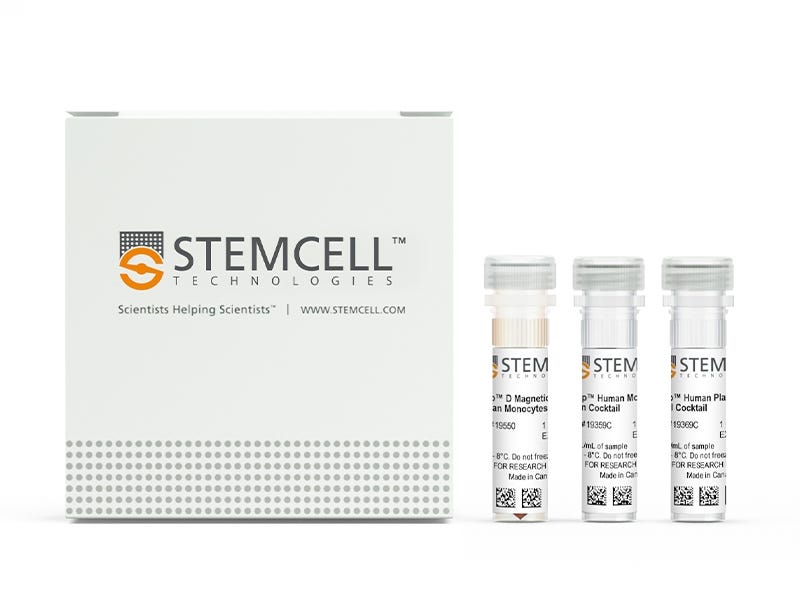
EasySep™ Human Monocyte Isolation Kit
12.5-Minute cell isolation kit using immunomagnetic negative selection

ImmunoCult™ Dendritic Cell Culture Kit
Complete kit for differentiation of human monocytes into dendritic cells
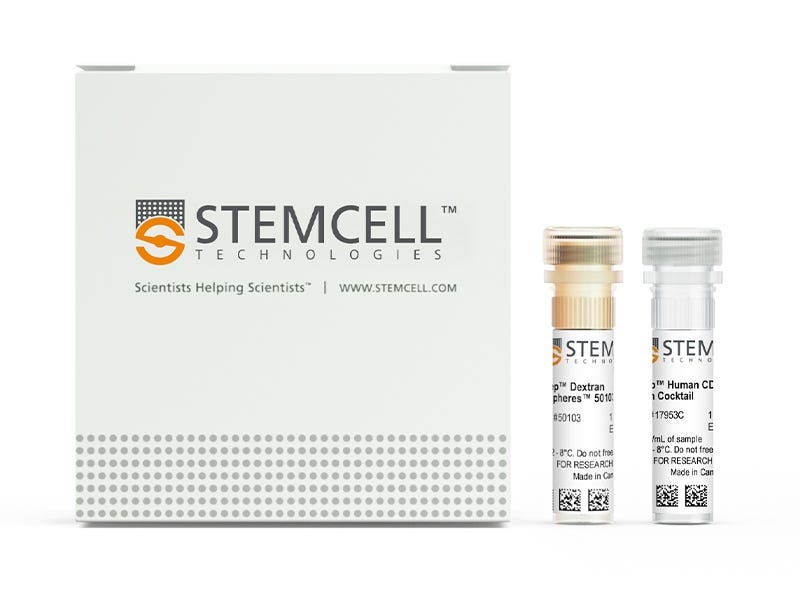
EasySep™ Human CD8⁺ T Cell Isolation Kit
8-Minute cell isolation kit using immunomagnetic negative selection

 沪公网安备31010102008431号