R. G. Walton et al. (dec 2019)
Aging cell 18 6 e13039
Metformin blunts muscle hypertrophy in response to progressive resistance exercise training in older adults: A randomized, double-blind, placebo-controlled, multicenter trial: The MASTERS trial.
Progressive resistance exercise training (PRT) is the most effective known intervention for combating aging skeletal muscle atrophy. However,the hypertrophic response to PRT is variable,and this may be due to muscle inflammation susceptibility. Metformin reduces inflammation,so we hypothesized that metformin would augment the muscle response to PRT in healthy women and men aged 65 and older. In a randomized,double-blind trial,participants received 1,700 mg/day metformin (N = 46) or placebo (N = 48) throughout the study,and all subjects performed 14 weeks of supervised PRT. Although responses to PRT varied,placebo gained more lean body mass (p = .003) and thigh muscle mass (p {\textless} .001) than metformin. CT scan showed that increases in thigh muscle area (p = .005) and density (p = .020) were greater in placebo versus metformin. There was a trend for blunted strength gains in metformin that did not reach statistical significance. Analyses of vastus lateralis muscle biopsies showed that metformin did not affect fiber hypertrophy,or increases in satellite cell or macrophage abundance with PRT. However,placebo had decreased type I fiber percentage while metformin did not (p = .007). Metformin led to an increase in AMPK signaling,and a trend for blunted increases in mTORC1 signaling in response to PRT. These results underscore the benefits of PRT in older adults,but metformin negatively impacts the hypertrophic response to resistance training in healthy older individuals. ClinicalTrials.gov Identifier: NCT02308228.
View Publication
产品号#:
28600
05980
05982
05983
产品名:
L-Calc™有限稀释软件
MyoCult™-SF 扩增添加物试剂盒 (人)
MyoCult™-SF 扩增10X添加物(人)
MyoCult™-SF 贴附基质
M. D. Perry et al. (sep 2019)
Cardiovascular research
Pharmacological activation of IKr in models of long QT Type 2 risks overcorrection of repolarization.
AIMS Current treatment for congenital long QT syndrome Type 2 (cLQTS2),an electrical disorder that increases the risk of life-threatening cardiac arrhythmias,is aimed at reducing the incidence of arrhythmia triggers (beta-blockers) or terminating the arrhythmia after onset (implantable cardioverter-defibrillator). An alternative strategy is to target the underlying disease mechanism,which is reduced rapid delayed rectifier current (IKr) passed by Kv11.1 channels. Small molecule activators of Kv11.1 have been identified but the extent to which these can restore normal cardiac signalling in cLQTS2 backgrounds remains unclear. Here,we examined the ability of ICA-105574,an activator of Kv11.1 that impairs transition to the inactivated state,to restore function to heterozygous Kv11.1 channels containing either inactivation enhanced (T618S,N633S) or expression deficient (A422T) mutations. METHODS AND RESULTS ICA-105574 effectively restored Kv11.1 current from heterozygous inactivation enhanced or expression defective mutant channels in heterologous expression systems. In a human-induced pluripotent stem cell-derived cardiomyocyte (hiPSC-CM) model of cLQTS2 containing the expression defective Kv11.1 mutant A422T,cardiac repolarization,estimated from the duration of calcium transients in isolated cells and the rate corrected field potential duration (FPDc) in culture monolayers of cells,was significantly prolonged. The Kv11.1 activator ICA-105574 was able to reverse the prolonged repolarization in a concentration-dependent manner. However,at higher doses,ICA-105574 produced a shortening of the FPDc compared to controls. In vitro and in silico analysis suggests that this overcorrection occurs as a result of a temporal redistribution of the peak IKr to much earlier in the plateau phase of the action potential,which results in early repolarization. CONCLUSION Kv11.1 activators,which target the primary disease mechanism,provide a possible treatment option for cLQTS2,with the caveat that there may be a risk of overcorrection that could itself be pro-arrhythmic.
View Publication
产品号#:
18056
18056RF
05010
产品名:
STEMdiff™ 心肌细胞分化培养基试剂盒
M. R. Hildebrandt et al. (dec 2019)
Stem cell reports 13 6 1126--1141
Precision Health Resource of Control iPSC Lines for Versatile Multilineage Differentiation.
Induced pluripotent stem cells (iPSC) derived from healthy individuals are important controls for disease-modeling studies. Here we apply precision health to create a high-quality resource of control iPSCs. Footprint-free lines were reprogrammed from four volunteers of the Personal Genome Project Canada (PGPC). Multilineage-directed differentiation efficiently produced functional cortical neurons,cardiomyocytes and hepatocytes. Pilot users demonstrated versatility by generating kidney organoids,T lymphocytes,and sensory neurons. A frameshift knockout was introduced into MYBPC3 and these cardiomyocytes exhibited the expected hypertrophic phenotype. Whole-genome sequencing-based annotation of PGPC lines revealed on average 20 coding variants. Importantly,nearly all annotated PGPC and HipSci lines harbored at least one pre-existing or acquired variant with cardiac,neurological,or other disease associations. Overall,PGPC lines were efficiently differentiated by multiple users into cells from six tissues for disease modeling,and variant-preferred healthy control lines were identified for specific disease settings.
View Publication


 EasySep™小鼠TIL(CD45)正选试剂盒




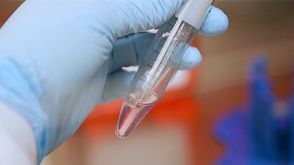 实验方案Enzyme-Free Passaging of Human Pluripotent Stem Cells Using ReLeSR™
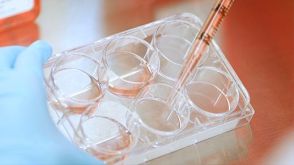 实验方案How to Coat Cultureware with Vitronectin XF™ for Pluripotent Stem Cell Culture
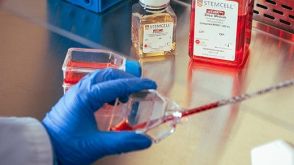 实验方案Transitioning from Feeder-Free Media to mTeSR™ Plus for Human Pluripotent Stem Cell Culture

 42:14
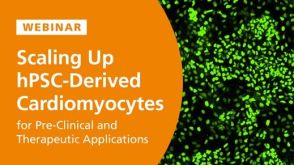
线上讲座Scaling-Up hPSC-Derived Cardiomyocytes for Preclinical and Therapeutic Applications发布日期: 02/21/2025
42:14
线上讲座Scaling-Up hPSC-Derived Cardiomyocytes for Preclinical and Therapeutic Applications发布日期: 02/21/2025


 沪公网安备31010102008431号