E. Hangen et al. (JUL 2018)
Cell reports 24 4 1001--1012.e3
Neuronal Activity and Intracellular Calcium Levels Regulate Intracellular Transport of Newly Synthesized AMPAR.
Regulation of AMPA receptor (AMPAR) trafficking is a key modulator of excitatory synaptic transmission; however,intracellular vesicular transport of newly synthesized AMPARs has been little studied due to technical limitations. By combining molecular tools with imaging strategies in cultured rat hippocampal neurons,we found that vesicles containing newly synthesized,GluA1-subunit-containing AMPARs are transported antero- and retrogradely at a mean speed of 1.5 mu$m.s-1. Synaptic activity and variations in intracellular calcium levels bidirectionally modulate GluA1 transport. Chemical long-term potentiation (cLTP) initially induces a halt in GluA1 transport,followed by a sustained increase,while acute glutamate uncaging on synaptic spines arrests vesicular movements. GluA1 phosphomimetic mutants preferentially travel to the dendritic tip,probably to replenish extrasynaptic pools,distal to the soma. Our findings indicate that AMPAR intracellular transport is highly regulated during synaptic plasticity and likely controls AMPAR numbers at the plasma membrane.
View Publication
产品号#:
05711
05790
05792
05793
05794
05795
100-1281
产品名:
NeuroCult™ SM1 神经添加物
BrainPhys™神经元培养基
BrainPhys™神经元培养基和SM1试剂盒
BrainPhys™ 神经元培养基N2-A和SM1试剂盒
BrainPhys™原代神经元试剂盒
BrainPhys™ hPSC 神经元试剂盒
NeuroCult™ SM1 神经添加物
D. Alvarez-Carbonell et al. (JUL 2018)
Journal of neuroimmune pharmacology : the official journal of the Society on NeuroImmune Pharmacology
The Glucocorticoid Receptor Is a Critical Regulator of HIV Latency in Human Microglial Cells.
We have developed models of HIV latency using microglia derived from adult human patient brain cortex and transformed with the SV40 T large and hTERT antigens. Latent clones infected by HIV reporter viruses display high levels of spontaneous HIV reactivation in culture. BrainPhys,a medium highly representative of the CNS extracellular environment,containing low glucose and 1{\%} FBS,reduced,but did not prevent,HIV reactivation. We hypothesized that spontaneous HIV reactivation in culture was due to the expression of pro-inflammatory genes,such as TNF-alpha$,taking place in the absence of the natural inhibitory signals from astrocytes and neurons. Indeed,expression and secretion of TNF-alpha$ is strongly reduced in HIV-latently infected microglia compared to the subset of cells that have undergone spontaneous HIV reactivation. Whereas inhibitors of NF-kappa$B or of macrophage activation only had a short-term silencing effect,addition of dexamethasone (DEXA),a glucocorticoid receptor (GR) agonist and mediator of anti-inflammation,silenced the HIV provirus in a long-term,and shRNA-mediated knock-down of GR activated HIV. DEXA also decreased secretion of a number of cytokines,including TNF-alpha$. Chromatin immunoprecipitation analysis revealed that DEXA strongly increased GR occupancy at the HIV promoter,and reduced histone 3 acetylated levels. Moreover,TNF-alpha$ expression inhibitors in combination with DEXA induced further HIV silencing and increased the histone 3 lysine 27 tri-methylated epigenetic mark of repression at the HIV promoter region. We conclude that GR is a critical repressor of HIV transcription in microglia,and a novel potential pharmacological target to restrict HIV expression in the CNS.
View Publication
Y. Kim et al. (May 2020)
FASEB Journal 34 6965-6983
Microtubule-associated protein 2 mediates induction of long-term potentiation in hippocampal neurons
Microtubule-associated protein (MAP) 2 has been perceived as a static cytoskeletal protein enriched in neuronal dendritic shafts. Emerging evidence indicates dynamic functions for various MAPs in activity-dependent synaptic plasticity. However,it is unclear how MAP2 is associated with synaptic plasticity mechanisms. Here,we demonstrate that specific silencing of high-molecular-weight MAP2 in vivo abolished induction of long-term potentiation (LTP) in the Schaffer collateral pathway of CA1 pyramidal neurons and in vitro blocked LTP-induced surface delivery of AMPA receptors and spine enlargement. In mature hippocampal neurons,we observed rapid translocation of a subpopulation of MAP2,present in dendritic shafts,to spines following LTP stimulation. Time-lapse confocal imaging showed that spine translocation of MAP2 was coupled with LTP-induced spine enlargement. Consistently,immunogold electron microscopy revealed that LTP stimulation of the Schaffer collateral pathway promoted MAP2 labeling in spine heads of CA1 neurons. This translocation depended on NMDA receptor activation and Ras-MAPK signaling. Furthermore,LTP stimulation led to an increase in surface-expressed AMPA receptors specifically in the neurons with MAP2 spine translocation. Altogether,this study indicates a novel role for MAP2 in LTP mechanisms and suggests that MAP2 participates in activity-dependent synaptic plasticity in mature hippocampal networks.
View Publication


 EasySep™小鼠TIL(CD45)正选试剂盒




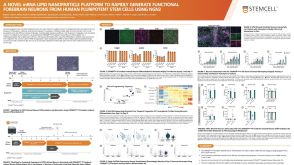 科学海报A Novel mRNA-LNP Platform to Rapidly Generate Functional Forebrain Neurons from hPSCs Using NGN2



 沪公网安备31010102008431号