Guerra M et al. (JUL 2015)
Journal of neuropathology and experimental neurology 74 7 653--71
Cell Junction Pathology of Neural Stem Cells Is Associated With Ventricular Zone Disruption, Hydrocephalus, and Abnormal Neurogenesis.
Fetal-onset hydrocephalus affects 1 to 3 per 1,000 live births. It is not only a disorder of cerebrospinal fluid dynamics but also a brain disorder that corrective surgery does not ameliorate. We hypothesized that cell junction abnormalities of neural stem cells (NSCs) lead to the inseparable phenomena of fetal-onset hydrocephalus and abnormal neurogenesis. We used bromodeoxyuridine labeling,immunocytochemistry,electron microscopy,and cell culture to study the telencephalon of hydrocephalic HTx rats and correlated our findings with those in human hydrocephalic and nonhydrocephalic human fetal brains (n = 12 each). Our results suggest that abnormal expression of the intercellular junction proteins N-cadherin and connexin-43 in NSC leads to 1) disruption of the ventricular and subventricular zones,loss of NSCs and neural progenitor cells; and 2) abnormalities in neurogenesis such as periventricular heterotopias and abnormal neuroblast migration. In HTx rats,the disrupted NSC and progenitor cells are shed into the cerebrospinal fluid and can be grown into neurospheres that display intercellular junction abnormalities similar to those of NSC of the disrupted ventricular zone; nevertheless,they maintain their potential for differentiating into neurons and glia. These NSCs can be used to investigate cellular and molecular mechanisms underlying this condition,thereby opening the avenue for stem cell therapy.
View Publication
Hothi P et al. (OCT 2012)
Oncotarget 3 10 1124--36
High-Throughput Chemical Screens Identify Disulfiram as an Inhibitor of Human Glioblastoma Stem Cells
Glioblastoma Multiforme (GBM) continues to have a poor patient prognosis despite optimal standard of care. Glioma stem cells (GSCs) have been implicated as the presumed cause of tumor recurrence and resistance to therapy. With this in mind,we screened a diverse chemical library of 2,000 compounds to identify therapeutic agents that inhibit GSC proliferation and therefore have the potential to extend patient survival. High-throughput screens (HTS) identified 78 compounds that repeatedly inhibited cellular proliferation,of which 47 are clinically approved for other indications and 31 are experimental drugs. Several compounds (such as digitoxin,deguelin,patulin and phenethyl caffeate) exhibited high cytotoxicity,with half maximal inhibitory concentrations (IC50) in the low nanomolar range. In particular,the FDA approved drug for the treatment of alcoholism,disulfiram (DSF),was significantly potent across multiple patient samples (IC50 of 31.1 nM). The activity of DSF was potentiated by copper (Cu),which markedly increased GSC death. DSF-Cu inhibited the chymotrypsin-like proteasomal activity in cultured GSCs,consistent with inactivation of the ubiquitin-proteasome pathway and the subsequent induction of tumor cell death. Given that DSF is a relatively non-toxic drug that can penetrate the blood-brain barrier,we suggest that DSF should be tested (as either a monotherapy or as an adjuvant) in pre-clinical models of human GBM. Data also support targeting of the ubiquitin-proteasome pathway as a therapeutic approach in the treatment of GBM.
View Publication
产品号#:
05750
05751
产品名:
NeuroCult™ NS-A 基础培养基(人)
NeuroCult™ NS-A 扩增试剂盒(人)
Holmberg Olausson K et al. ( 2014)
PloS one 9 9 e106694
Prominin-1 (CD133) defines both stem and non-stem cell populations in CNS development and gliomas.
Prominin-1 (CD133) is a commonly used cancer stem cell marker in central nervous system (CNS) tumors including glioblastoma (GBM). Expression of Prom1 in cancer is thought to parallel expression and function in normal stem cells. Using RNA in situ hybridization and antibody tools capable of detecting multiple isoforms of Prom1,we find evidence for two distinct Prom1 cell populations in mouse brain. Prom1 RNA is first expressed in stem/progenitor cells of the ventricular zone in embryonic brain. Conversely,in adult mouse brain Prom1 RNA is low in SVZ/SGZ stem cell zones but high in a rare but widely distributed cell population (Prom1(hi)). Lineage marker analysis reveals Prom1(hi) cells are Olig2+Sox2+ glia but Olig1/2 knockout mice lacking oligodendroglia retain Prom1(hi) cells. Bromodeoxyuridine labeling identifies Prom1(hi) as slow-dividing distributed progenitors distinct from NG2+Olig2+ oligodendrocyte progenitors. In adult human brain,PROM1 cells are rarely positive for OLIG2,but express astroglial markers GFAP and SOX2. Variability of PROM1 expression levels in human GBM and patient-derived xenografts (PDX) - from no expression to strong,uniform expression--highlights that PROM1 may not always be associated with or restricted to cancer stem cells. TCGA and PDX data show that high expression of PROM1 correlates with poor overall survival. Within proneural subclass tumors,high PROM1 expression correlates inversely with IDH1 (R132H) mutation. These findings support PROM1 as a tumor cell-intrinsic marker related to GBM survival,independent of its stem cell properties,and highlight potentially divergent roles for this protein in normal mouse and human glia.
View Publication
产品号#:
05750
05751
产品名:
NeuroCult™ NS-A 基础培养基(人)
NeuroCult™ NS-A 扩增试剂盒(人)
Hjelm BE et al. (SEP 2013)
Human Molecular Genetics 22 17 3534--3546
In vitro-differentiated neural cell cultures progress towards donor-identical brain tissue
Multiple research groups have observed neuropathological phenotypes and molecular symptoms in vitro using induced pluripotent stem cell (iPSC)-derived neural cell cultures (i.e. patient-specific neurons and glia). However,the global differences/similarities that may exist between in vitro neural cells and their tissue-derived counterparts remain largely unknown. In this study,we compared temporal series of iPSC-derived in vitro neural cell cultures to endogenous brain tissue from the same autopsy donor. Specifically,we utilized RNA sequencing (RNA-Seq) to evaluate the transcriptional progression of in vitro-differentiated neural cells (over a timecourse of 0,35,70,105 and 140 days),and compared this with donor-identical temporal lobe tissue. We observed in vitro progression towards the reference brain tissue,and the following three results support this conclusion: (i) there was a significant increasing monotonic correlation between the days of our timecourse and the number of actively transcribed protein-coding genes and long intergenic non-coding RNAs (lincRNAs) (P < 0.05),consistent with the transcriptional complexity of the brain; (ii) there was an increase in CpG methylation after neural differentiation that resembled the epigenomic signature of the endogenous tissue; and (iii) there was a significant decreasing monotonic correlation between the days of our timecourse and the percent of in vitro to brain-tissue differences (P < 0.05) for tissue-specific protein-coding genes and all putative lincRNAs. Taken together,these results are consistent with in vitro neural development and physiological progression occurring predominantly by transcriptional activation of downregulated genes rather than deactivation of upregulated genes.
View Publication
产品号#:
05750
05751
05752
产品名:
NeuroCult™ NS-A 基础培养基(人)
NeuroCult™ NS-A 扩增试剂盒(人)
NeuroCult™ NS-A 分化试剂盒(人)
Halvorson KG et al. ( 2015)
PloS one 10 3 e0118926
A high-throughput in vitro drug screen in a genetically engineered mouse model of diffuse intrinsic pontine glioma identifies BMS-754807 as a promising therapeutic agent.
Diffuse intrinsic pontine gliomas (DIPGs) represent a particularly lethal type of pediatric brain cancer with no effective therapeutic options. Our laboratory has previously reported the development of genetically engineered DIPG mouse models using the RCAS/tv-a system,including a model driven by PDGF-B,H3.3K27M,and p53 loss. These models can serve as a platform in which to test novel therapeutics prior to the initiation of human clinical trials. In this study,an in vitro high-throughput drug screen as part of the DIPG preclinical consortium using cell-lines derived from our DIPG models identified BMS-754807 as a drug of interest in DIPG. BMS-754807 is a potent and reversible small molecule multi-kinase inhibitor with many targets including IGF-1R,IR,MET,TRKA,TRKB,AURKA,AURKB. In vitro evaluation showed significant cytotoxic effects with an IC50 of 0.13 μM,significant inhibition of proliferation at a concentration of 1.5 μM,as well as inhibition of AKT activation. Interestingly,IGF-1R signaling was absent in serum-free cultures from the PDGF-B; H3.3K27M; p53 deficient model suggesting that the antitumor activity of BMS-754807 in this model is independent of IGF-1R. In vivo,systemic administration of BMS-754807 to DIPG-bearing mice did not prolong survival. Pharmacokinetic analysis demonstrated that tumor tissue drug concentrations of BMS-754807 were well below the identified IC50,suggesting that inadequate drug delivery may limit in vivo efficacy. In summary,an unbiased in vitro drug screen identified BMS-754807 as a potential therapeutic agent in DIPG,but BMS-754807 treatment in vivo by systemic delivery did not significantly prolong survival of DIPG-bearing mice.
View Publication
产品号#:
05700
产品名:
NeuroCult™ 基础培养基(小鼠和大鼠)
Guillou L et al. (NOV 2016)
Biophysical journal 111 9 2039--2050
Measuring Cell Viscoelastic Properties Using a Microfluidic Extensional Flow Device.
The quantification of cellular mechanical properties is of tremendous interest in biology and medicine. Recent microfluidic technologies that infer cellular mechanical properties based on analysis of cellular deformations during microchannel traversal have dramatically improved throughput over traditional single-cell rheological tools,yet the extraction of material parameters from these measurements remains quite complex due to challenges such as confinement by channel walls and the domination of complex inertial forces. Here,we describe a simple microfluidic platform that uses hydrodynamic forces at low Reynolds number and low confinement to elongate single cells near the stagnation point of a planar extensional flow. In tandem,we present,to our knowledge,a novel analytical framework that enables determination of cellular viscoelastic properties (stiffness and fluidity) from these measurements. We validated our system and analysis by measuring the stiffness of cross-linked dextran microparticles,which yielded reasonable agreement with previously reported values and our micropipette aspiration measurements. We then measured viscoelastic properties of 3T3 fibroblasts and glioblastoma tumor initiating cells. Our system captures the expected changes in elastic modulus induced in 3T3 fibroblasts and tumor initiating cells in response to agents that soften (cytochalasin D) or stiffen (paraformaldehyde) the cytoskeleton. The simplicity of the device coupled with our analytical model allows straightforward measurement of the viscoelastic properties of cells and soft,spherical objects.
View Publication


 EasySep™小鼠TIL(CD45)正选试剂盒




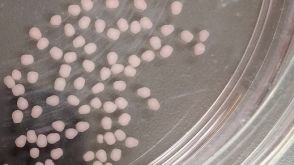 实验方案How to Dissociate 3D Neural Organoids into a Single-Cell Suspension
 43:00
线上讲座Cerebral Organoids as 3D, Stem Cell-Derived Models of Tuberous Sclerosis Complex发布日期: 04/07/2020
43:00
线上讲座Cerebral Organoids as 3D, Stem Cell-Derived Models of Tuberous Sclerosis Complex发布日期: 04/07/2020


 沪公网安备31010102008431号