T. C. Jackson et al. (MAY 2018)
Scientific reports 8 1 7158
Acute Physiology and Neurologic Outcomes after Brain Injury in SCOP/PHLPP1 KO Mice.
Suprachiasmatic nucleus circadian oscillatory protein (SCOP) (a.k.a. PHLPP1) regulates long-term memory consolidation in the brain. Using a mouse model of controlled cortical impact (CCI) we tested if (1) brain tissue levels of SCOP/PHLPP1 increase after a traumatic brain injury (TBI),and (2) if SCOP/PHLPP1 gene knockout (KO) mice have improved (or worse) neurologic outcomes. Blood chemistry (pH,pCO2,pO2,pSO2,base excess,sodium bicarbonate,and osmolarity) and arterial pressure (MAP) differed in isoflurane anesthetized WT vs. KOs at baseline and up to 1 h post-injury. CCI injury increased cortical/hippocampal SCOP/PHLPP1 levels in WTs 7d and 14d post-injury. Injured KOs had higher brain tissue levels of phosphorylated AKT (pAKT) in cortex (14d post-injury),and higher levels of phosphorylated MEK (pMEK) in hippocampus (7d and 14d post-injury) and in cortex (7d post-injury). Consistent with an important role of SCOP/PHLPP1 on memory function,injured-KOs had near normal performance on the probe trial of the Morris water maze,whereas injured-WTs were impaired. CA1/CA3 hippocampal survival was lower in KOs vs. WTs 24 h post-injury but equivalent by 7d. No difference in 21d cortical lesion volume was detected. SCOP/PHLPP1 overexpression in cultured rat cortical neurons had no effect on 24 h cell death after a mechanical stretch-injury.
View Publication
Kim YY et al. (SEP 2016)
PLOS ONE 11 9 e0163812
Alcohol-Induced Molecular Dysregulation in Human Embryonic Stem Cell-Derived Neural Precursor Cells
Adverse effect of alcohol on neural function has been well documented. Especially,the teratogenic effect of alcohol on neurodevelopment during embryogenesis has been demonstrated in various models,which could be a pathologic basis for fetal alcohol spectrum disorders (FASDs). While the developmental defects from alcohol abuse during gestation have been described,the specific mechanisms by which alcohol mediates these injuries have yet to be determined. Recent studies have shown that alcohol has significant effect on molecular and cellular regulatory mechanisms in embryonic stem cell (ESC) differentiation including genes involved in neural development. To test our hypothesis that alcohol induces molecular alterations during neural differentiation we have derived neural precursor cells from pluripotent human ESCs in the presence or absence of ethanol treatment. Genome-wide transcriptomic profiling identified molecular alterations induced by ethanol exposure during neural differentiation of hESCs into neural rosettes and neural precursor cell populations. The Database for Annotation,Visualization and Integrated Discovery (DAVID) functional analysis on significantly altered genes showed potential ethanol's effect on JAK-STAT signaling pathway,neuroactive ligand-receptor interaction,Toll-like receptor (TLR) signaling pathway,cytokine-cytokine receptor interaction and regulation of autophagy. We have further quantitatively verified ethanol-induced alterations of selected candidate genes. Among verified genes we further examined the expression of P2RX3,which is associated with nociception,a peripheral pain response. We found ethanol significantly reduced the level of P2RX3 in undifferentiated hESCs,but induced the level of P2RX3 mRNA and protein in hESC-derived NPCs. Our result suggests ethanol-induced dysregulation of P2RX3 along with alterations in molecules involved in neural activity such as neuroactive ligand-receptor interaction may be a molecular event associated with alcohol-related peripheral neuropathy of an enhanced nociceptive response.
View Publication
W. Afshar Saber et al. ( 2018)
Frontiers in neuroscience 12 451
All-Optical Assay to Study Biological Neural Networks.
We introduce a novel all-optical assay for functional studies of biological neural networks in vitro. We created a novel optogenetic construct named OptoCaMP which is a combination of a channelrhodopsin variant (CheRiff) and a red genetically encoded calcium indicator (GECI) (jRCaMP1b). It enables simultaneous optical stimulation and recording from large population of neurons with single-cell readout. Additionally,we have developed a spatio-temporal all-optical assay to simultaneously stimulate a sub-section of a neural network and record evoked calcium activity,in both stimulated and non-stimulated neurons,thus allowing the investigation of the spread of excitation through an interconnected network. Finally,we demonstrate the sensitivity of this assay to the change of neural network connectivity.
View Publication
Yanpallewar SU et al. (JAN 2010)
The Journal of neuroscience : the official journal of the Society for Neuroscience 30 3 1096--109
Alpha2-adrenoceptor blockade accelerates the neurogenic, neurotrophic, and behavioral effects of chronic antidepressant treatment.
Slow-onset adaptive changes that arise from sustained antidepressant treatment,such as enhanced adult hippocampal neurogenesis and increased trophic factor expression,play a key role in the behavioral effects of antidepressants. alpha(2)-Adrenoceptors contribute to the modulation of mood and are potential targets for the development of faster acting antidepressants. We investigated the influence of alpha(2)-adrenoceptors on adult hippocampal neurogenesis. Our results indicate that alpha(2)-adrenoceptor agonists,clonidine and guanabenz,decrease adult hippocampal neurogenesis through a selective effect on the proliferation,but not the survival or differentiation,of progenitors. These effects persist in dopamine beta-hydroxylase knock-out (Dbh(-/-)) mice lacking norepinephrine,supporting a role for alpha(2)-heteroceptors on progenitor cells,rather than alpha(2)-autoreceptors on noradrenergic neurons that inhibit norepinephrine release. Adult hippocampal progenitors in vitro express all the alpha(2)-adrenoceptor subtypes,and decreased neurosphere frequency and BrdU incorporation indicate direct effects of alpha(2)-adrenoceptor stimulation on progenitors. Furthermore,coadministration of the alpha(2)-adrenoceptor antagonist yohimbine with the antidepressant imipramine significantly accelerates effects on hippocampal progenitor proliferation,the morphological maturation of newborn neurons,and the increase in expression of brain derived neurotrophic factor and vascular endothelial growth factor implicated in the neurogenic and behavioral effects of antidepressants. Finally,short-duration (7 d) yohimbine and imipramine treatment results in robust behavioral responses in the novelty suppressed feeding test,which normally requires 3 weeks of treatment with classical antidepressants. Our results demonstrate that alpha(2)-adrenoceptors,expressed by progenitor cells,decrease adult hippocampal neurogenesis,while their blockade speeds up antidepressant action,highlighting their importance as targets for faster acting antidepressants.
View Publication
Sacino AN et al. (MAY 2014)
Acta Neuropathologica 127 5 645--665
Amyloidogenic α-synuclein seeds do not invariably induce rapid, widespread pathology in mice
In order to further evaluate the parameters whereby intracerebral administration of recombinant α-synuclein (αS) induces pathological phenotypes in mice,we conducted a series of studies where αS fibrils were injected into the brains of M83 (A53T) and M47 (E46K) αS transgenic (Tg) mice,and non-transgenic (nTg) mice. Using multiple markers to assess αS inclusion formation,we find that injected fibrillar human αS induced widespread cerebral αS inclusion formation in the M83 Tg mice,but in both nTg and M47 Tg mice,induced αS inclusion pathology is largely restricted to the site of injection. Furthermore,mouse αS fibrils injected into nTg mice brains also resulted in inclusion pathology restricted to the site of injection with no evidence for spread. We find no compelling evidence for extensive spread of αS pathology within white matter tracts,and we attribute previous reports of white matter tract spreading to cross-reactivity of the αS pSer129/81A antibody with phosphorylated neurofilament subunit L. These studies suggest that,with the exception of the M83 Tg mice which appear to be uniquely susceptible to induction of inclusion pathology by exogenous forms of αS,there are significant barriers in mice to widespread induction of αS pathology following intracerebral administration of amyloidogenic αS.
View Publication
Su CTE et al. (FEB 2015)
Journal of visualized experiments : JoVE 96 1--9
An Optogenetic Approach for Assessing Formation of Neuronal Connections in a Co-culture System.
Here we describe a protocol to generate a co-culture consisting of 2 different neuronal populations. Induced pluripotent stem cells (iPSCs) are reprogrammed from human fibroblasts using episomal vectors. Colonies of iPSCs can be observed 30 days after initiation of fibroblast reprogramming. Pluripotent colonies are manually picked and grown in neural induction medium to permit differentiation into neural progenitor cells (NPCs). iPSCs rapidly convert into neuroepithelial cells within 1 week and retain the capability to self-renew when maintained at a high culture density. Primary mouse NPCs are differentiated into astrocytes by exposure to a serum-containing medium for 7 days and form a monolayer upon which embryonic day 18 (E18) rat cortical neurons (transfected with channelrhodopsin-2 (ChR2)) are added. Human NPCs tagged with the fluorescent protein,tandem dimer Tomato (tdTomato),are then seeded onto the astrocyte/cortical neuron culture the following day and allowed to differentiate for 28 to 35 days. We demonstrate that this system forms synaptic connections between iPSC-derived neurons and cortical neurons,evident from an increase in the frequency of synaptic currents upon photostimulation of the cortical neurons. This co-culture system provides a novel platform for evaluating the ability of iPSC-derived neurons to create synaptic connections with other neuronal populations.
View Publication
Barmada SJ et al. (AUG 2014)
Nature Chemical Biology 10 8 677--685
Autophagy induction enhances TDP43 turnover and survival in neuronal ALS models.
Nature Chemical Biology 10,677 (2014). doi:10.1038/nchembio.1563
View Publication
Saporta MA et al. (JAN 2015)
Experimental neurology 263 190--199
Axonal Charcot-Marie-Tooth disease patient-derived motor neurons demonstrate disease-specific phenotypes including abnormal electrophysiological properties
OBJECTIVE Charcot-Marie-Tooth (CMT) disease is a group of inherited peripheral neuropathies associated with mutations or copy number variations in over 70 genes encoding proteins with fundamental roles in the development and function of Schwann cells and peripheral axons. Here,we used iPSC-derived cells to identify common pathophysiological mechanisms in axonal CMT. METHODS iPSC lines from patients with two distinct forms of axonal CMT (CMT2A and CMT2E) were differentiated into spinal cord motor neurons and used to study axonal structure and function and electrophysiological properties in vitro. RESULTS iPSC-derived motor neurons exhibited gene and protein expression,ultrastructural and electrophysiological features of mature primary spinal cord motor neurons. Cytoskeletal abnormalities were found in neurons from a CMT2E (NEFL) patient and corroborated by a mouse model of the same NEFL point mutation. Abnormalities in mitochondrial trafficking were found in neurons derived from this patient,but were only mildly present in neurons from a CMT2A (MFN2) patient. Novel electrophysiological abnormalities,including reduced action potential threshold and abnormal channel current properties were observed in motor neurons derived from both of these patients. INTERPRETATION Human iPSC-derived motor neurons from axonal CMT patients replicated key pathophysiological features observed in other models of MFN2 and NEFL mutations,including abnormal cytoskeletal and mitochondrial dynamics. Electrophysiological abnormalities found in axonal CMT iPSC-derived human motor neurons suggest that these cells are hyperexcitable and have altered sodium and calcium channel kinetics. These findings may provide a new therapeutic target for this group of heterogeneous inherited neuropathies.
View Publication
Curcio M et al. (FEB 2015)
Cell Death and Disease 6 2 e1645
Brain ischemia downregulates the neuroprotective GDNF-Ret signaling by a calpain-dependent mechanism in cultured hippocampal neurons
The glial cell line-derived neurotrophic factor (GDNF) has an important role in neuronal survival through binding to the GFRα1 (GDNF family receptor alpha-1) receptor and activation of the receptor tyrosine kinase Ret. Transient brain ischemia alters the expression of the GDNF signaling machinery but whether the GDNF receptor proteins are also affected,and the functional consequences,have not been investigated. We found that excitotoxic stimulation of cultured hippocampal neurons leads to a calpain-dependent downregulation of the long isoform of Ret (Ret51),but no changes were observed for Ret9 or GFRα1 under the same conditions. Cleavage of Ret51 by calpains was selectively mediated by activation of the extrasynaptic pool of N-methyl-d-aspartate receptors and leads to the formation of a stable cleavage product. Calpain-mediated cleavage of Ret51 was also observed in hippocampal neurons subjected to transient oxygen and glucose deprivation (OGD),a model of global brain ischemia,as well as in the ischemic region in the cerebral cortex of mice exposed to transient middle cerebral artery occlusion. Although the reduction of Ret51 protein levels decreased the total GDNF-induced receptor activity (as determined by assessing total phospho-Ret51 protein levels) and their downstream signaling activity,the remaining receptors still showed an increase in phosphorylation after incubation of hippocampal neurons with GDNF. Furthermore,GDNF protected hippocampal neurons when present before,during or after OGD,and the effects under the latter conditions were more significant in neurons transfected with human Ret51. These results indicate that the loss of Ret51 in brain ischemia partially impairs the neuroprotective effects of GDNF.
View Publication
Jackson TC et al. (FEB 2018)
Experimental Neurology 300 232--246
BrainPhys increases neurofilament levels in CNS cultures, and facilitates investigation of axonal damage after a mechanical stretch-injury in vitro
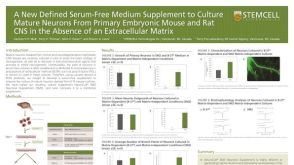
Neurobasal®/B27 is a gold standard culture media used to study primary neurons in vitro. An alternative media (BrainPhys®/SM1) was recently developed which robustly enhances neuronal activity vs. Neurobasal® or DMEM. To the best of our knowledge BrainPhys® has not been explored in the setting of neuronal injury. Here we characterized the utility of BrainPhys® in a model of in vitro mechanical-stretch injury. METHODS/RESULTSPrimary rat cortical neurons were maintained in classic Neurobasal®,or sequentially maintained in Neurocult® followed by BrainPhys® (hereafter simply referred to as BrainPhys® maintained neurons?). The levels of axonal markers and proteins involved in neurotransmission were compared on day in vitro 10 (DIV10). BrainPhys® maintained neurons had higher levels of GluN2B,GluR1,Neurofilament light/heavy chain (NF-L & NF-H),and protein phosphatase 2 A (PP2A) vs. neurons in Neurobasal®. Mechanical stretch-injury (50ms/54% biaxial stretch) to BrainPhys® maintained neurons modestly (albeit significantly) increased 24h lactate dehydrogenase (LDH) levels but markedly decreased axonal NF-L levels post-injury vs. uninjured controls or neurons given a milder 38% stretch-injury. Furthermore,two 54% stretch-injuries (in tandem) exacerbated 24h LDH release,increased α-spectrin breakdown products (SBDPs),and decreased Tau levels. Also,BrainPhys® maintained cultures had decreased markers of cell damage 24h after a single 54% stretch-injury vs. neurons in Neurobasal®. Finally,we tested the hypothesis that lentivirus mediated overexpression of the pro-death protein RBM5 exacerbates neuronal and/or axonal injury in primary CNS cultures. RBM5 overexpression vs. empty-vector controls increased 24h LDH release,and SBDP levels,after a single 54% stretch-injury but did not affect NF-L levels or Tau. CONCLUSIONBrainPhys® is a promising new reagent which facilities the investigation of molecular targets involved in axonal and/or neuronal injury in vitro.
View Publication