Li J et al. (MAR 2005)
Clinical Cancer Research 11 6 2195--2204
Generation of PRL-3- and PRL-1-specific monoclonal antibodies as potential diagnostic markers for cancer metastases
PURPOSE: The PRL-3 mRNA is consistently elevated in metastatic samples derived from colorectal cancers. We sought to generate a specific PRL-3 monoclonal antibody (mAb) that might serve as a potential diagnostic marker for colorectal cancer metastasis. EXPERIMENTAL DESIGN: PRL-3 is one of three members (PRL-1,PRL-2,and PRL-3) in a unique protein-tyrosine phosphatase family. Because the three PRLs are 76% to 87% identical in their amino acid sequences,it poses a great challenge to obtain mAbs that are specific for respective phosphatase of regenerating liver (PRL) but not for the other two in the family. We screened over 1,400 hybridoma clones to generate mAbs specific to each PRL member. RESULTS: We obtained two hybridoma clones specifically against PRL-3 and another two clones specifically against PRL-1. These antibodies had been evaluated by several critical tests to show their own specificities and applications. Most importantly,the PRL-3 mAbs were assessed on 282 human colorectal tissue samples (121 normal,17 adenomas,and 144 adenocarcinomas). PRL-3 protein was detected in 11% of adenocarcinoma samples. The PRL-3- and PRL-1-specific mAbs were further examined on 204 human multiple cancer tissues. The differential expressions of PRL-3 and PRL-1 confirmed the mAbs' specificity. CONCLUSIONS: Using several approaches,we show that PRL-3- or PRL-1-specific mAbs react only to their respective antigen. The expression of PRL-3 in textgreater10% of primary colorectal cancer samples indicates that PRL-3 may prime the metastatic process. These mAbs will be useful as markers in clinical diagnosis for assessing tumor aggressiveness.
View Publication
产品号#:
03800
03801
03802
03803
03804
03805
03806
产品名:
ClonaCell™-HY杂交瘤试剂盒
ClonaCell™-HY培养基A
ClonaCell™-HY 培养基 B
ClonaCell™-HY 培养基 C
ClonaCell™-HY 培养基 D
ClonaCell™-HY 培养基 E
ClonaCell™-HY PEG
Vieillard V et al. (AUG 2005)
Proceedings of the National Academy of Sciences 102 31 10981--86
NK cytotoxicity against CD4+ T cells during HIV-1 infection: A gp41 peptide induces the expression of an NKp44 ligand
HIV infection leads to a state of chronic immune activation and progressive deterioration in immune function,manifested most recognizably by the progressive depletion of CD4+ T cells. A substantial percentage of natural killer (NK) cells from patients with HIV infection are activated and express the natural cytotoxicity receptor (NCR) NKp44. Here we show that a cellular ligand for NKp44 (NKp44L) is expressed during HIV-1 infection and is correlated with both the progression of CD4+ T cell depletion and the increase of viral load. CD4+ T cells expressing this ligand are highly sensitive to the NK lysis activity mediated by NKp44+ NK cells. The expression of NKp44L is induced by the linear motif NH2-SWSNKS-COOH of the HIV-1 envelope gp41 protein. This highly conserved motif appears critical to the sharp increase in NK lysis of CD4+ T cells from HIV-infected patients. These studies strongly suggest that induction of NKp44L plays a key role in the lysis of CD4+ T cells by activated NK cells in HIV infection and consequently provide a framework for considering how HIV-1 may use NK cell immune surveillance to trigger CD4+ T cells. Understanding this mechanism may help to develop future therapeutic strategies and vaccines against HIV-1 infection.
View Publication
产品号#:
03800
03801
03802
03803
03804
03805
03806
05150
15021
15061
产品名:
ClonaCell™-HY杂交瘤试剂盒
ClonaCell™-HY培养基A
ClonaCell™-HY 培养基 B
ClonaCell™-HY 培养基 C
ClonaCell™-HY 培养基 D
ClonaCell™-HY 培养基 E
ClonaCell™-HY PEG
MyeloCult™ H5100
RosetteSep™人T细胞富集抗体混合物
RosetteSep™人T细胞富集抗体混合物
Jin C et al. (APR 2006)
Glycobiology 16 4 349--57
Immunoglobulin G specifically binding plant N-glycans with high affinity could be generated in rabbits but not in mice.
Xylosylated and core alpha1,3-fucosylated N-glycans from plants are immunogenic,and they play a still obscure role in allergy and in the field of plant-made protein pharmaceuticals. We immunized mice to generate monoclonal antibodies (mAbs) binding plant N-glycans specifically via the epitope containing either the xylose or the core alpha1,3-fucose residue. Splenocytes expressing N-glycan-specific antibodies derived from C57BL/6 mice previously immunized with plant glycoproteins were preselected by cell sorting to generate hybridoma lines producing specific antibodies. However,we obtained only mAbs unable to distinguish fucosylated from xylosylated N-glycans and reactive even with the pentasaccharide core Man3GlcNAc2. In contrast,immunization of rabbits yielded polyclonal sera selectively reactive with either fucosylated or xylosylated N-glycans. Purification of these sera using glyco-modified neoglycoproteins coupled to a chromatography matrix provided polyclonal sera suitable for affinity determination. Surface plasmon resonance measurements using sensor chips with immobilized glyco-modified transferrins revealed dissociation constants of around 10(-9) M. This unexpectedly high affinity of IgG antibodies toward carbohydrate epitopes has repercussions on our conception of the binding strength and significance of antiglycan IgE antibodies in allergy.
View Publication
产品号#:
03800
03801
03802
03803
03804
03805
03806
03831
产品名:
ClonaCell™-HY杂交瘤试剂盒
ClonaCell™-HY培养基A
ClonaCell™-HY 培养基 B
ClonaCell™-HY 培养基 C
ClonaCell™-HY 培养基 D
ClonaCell™-HY 培养基 E
ClonaCell™-HY PEG
ClonaCell™-HY 液体 HAT 筛选培养基
Matsumoto SC et al. (JAN 2006)
The FASEB Journal 20 3 550--2
Retinal dysfunction in patients with chronic Chagas' disease is associated to anti-Trypanosoma cruzi antibodies that cross-react with rhodopsin
To investigate retinal involvement in chronic Chagas' disease,we performed electroretinography and retinal fluorescein angiography studies in chagasic patients. Our results demonstrated a dissociated electrophysiological response characterized by both an abnormal reduction of the electroretinographic b-wave amplitude and a delayed latency,under the dark-adaptated condition. These alterations are compatible with a selective dysfunction of the rods. Antibodies raised against Trypanosoma cruzi that also interact with beta1-adrenergic receptor blocked light stimulation of cGMP-phosphodiesterase in bovine rod membranes. The specificity from the antibody-rhodopsin interaction was confirmed by Western blot analysis and antigenic competition experiments. Our results suggest an immunomediated rhodopsin blockade. T. cruzi infection probably induces an autoimmune response against rhodopsin in the chronic phase of Chagas' disease through a molecular mimicry mechanism similar to that described previously on cardiac human beta1-adrenergic and M2-cholinergic receptors,all related to the same subfamily of G-protein-coupled receptors.
View Publication
产品号#:
03800
03801
03802
03803
03804
03805
03806
产品名:
ClonaCell™-HY杂交瘤试剂盒
ClonaCell™-HY培养基A
ClonaCell™-HY 培养基 B
ClonaCell™-HY 培养基 C
ClonaCell™-HY 培养基 D
ClonaCell™-HY 培养基 E
ClonaCell™-HY PEG
Weidanz Ja et al. (OCT 2006)
Journal of Immunology (Baltimore,Md. : 1950) 177 8 5088--97
Levels of specific peptide-HLA class I complex predicts tumor cell susceptibility to CTL killing.
Recognition of tumor-associated Ags (TAAs) on tumor cells by CTLs and the subsequent tumor cell death are assumed to be dependent on TAA protein expression and to correlate directly with the level of peptide displayed in the binding site of the HLA class I molecule. In this study we evaluated whether the levels of Her-2/neu protein expression on human tumor cell lines directly correlate with HLA-A*0201/Her2/neu peptide presentation and CTL recognition. We developed a TCR mimic (TCRm) mAb designated 1B8 that specifically recognizes the HLA-A2.1/Her2/neu peptide (369-377) (Her2(369)-A2) complex. TCRm mAb staining intensity varied for the five human tumor cell lines analyzed,suggesting quantitative differences in levels of the Her2(369)-A2 complex on these cells. Analysis of tumor cell lines pretreated with IFN-gamma and TNF-alpha for Her2/neu protein and HLA-A2 molecule expression did not reveal a direct correlation between the levels of Her2/neu Ag,HLA-A2 molecule,and Her2(369)-A2 complex expression. However,compared with untreated cells,cytokine-treated cell lines showed an increase in Her2(369)-A2 epitope density that directly correlated with enhanced tumor cell death (p = 0.05). Although a trend was observed between tumor cell lysis and the level of the Her2(369)-A2 complex for untreated cells,the association was not significant. These findings suggest that tumor cell susceptibility to CTL-mediated lysis may be predicted based on the level of specific peptide-MHC class I expression rather than on the total level of TAA expression. Further,these studies demonstrate the potential of the TCRm mAb for validation of endogenous HLA-peptide epitopes on tumor cells.
View Publication
Temporal impact of substrate mechanics on differentiation of human embryonic stem cells to cardiomyocytes
A significant clinical need exists to differentiate human pluripotent stem cells (hPSCs) into cardiomyocytes,enabling tissue modeling for in vitro discovery of new drugs or cell-based therapies for heart repair in vivo. Chemical and mechanical microenvironmental factors are known to impact the efficiency of stem cell differentiation,but cardiac differentiation protocols in hPSCs are typically performed on rigid tissue culture polystyrene (TCPS) surfaces,which do not present a physiological mechanical setting. To investigate the temporal effects of mechanics on cardiac differentiation,we cultured human embryonic stem cells (hESCs) and their derivatives on polyacrylamide hydrogel substrates with a physiologically relevant range of stiffnesses. In directed differentiation and embryoid body culture systems,differentiation of hESCs to cardiac troponin T-expressing (cTnT+) cardiomyocytes peaked on hydrogels of intermediate stiffness. Brachyury expression also peaked on intermediate stiffness hydrogels at day 1 of directed differentiation,suggesting that stiffness impacted the initial differentiation trajectory of hESCs to mesendoderm. To investigate the impact of substrate mechanics during cardiac specification of mesodermal progenitors,we initiated directed cardiomyocyte differentiation on TCPS and transferred cells to hydrogels at the Nkx2.5/Isl1+ cardiac progenitor cell stage. No differences in cardiomyocyte purity with stiffness were observed on day 15. These experiments indicate that differentiation of hESCs is sensitive to substrate mechanics at early stages of mesodermal induction,and proper application of substrate mechanics can increase the propensity of hESCs to differentiate to cardiomyocytes. textcopyright 2013 Acta Materialia Inc.
View Publication
产品号#:
05850
05857
05870
05875
85850
85857
85870
85875
产品名:
mTeSR™1
mTeSR™1
Tan H-K et al. (MAY 2014)
Stem cells translational medicine 3 5 586--98
Human finger-prick induced pluripotent stem cells facilitate the development of stem cell banking.
Induced pluripotent stem cells (iPSCs) derived from somatic cells of patients can be a good model for studying human diseases and for future therapeutic regenerative medicine. Current initiatives to establish human iPSC (hiPSC) banking face challenges in recruiting large numbers of donors with diverse diseased,genetic,and phenotypic representations. In this study,we describe the efficient derivation of transgene-free hiPSCs from human finger-prick blood. Finger-prick sample collection can be performed on a do-it-yourself" basis by donors and sent to the hiPSC facility for reprogramming. We show that single-drop volumes of finger-prick samples are sufficient for performing cellular reprogramming�
View Publication
产品号#:
05850
05857
05870
05875
09600
09650
85850
85857
85870
85875
产品名:
StemSpan™ SFEM
StemSpan™ SFEM
mTeSR™1
mTeSR™1
Qu Q et al. (MAR 2014)
Nature communications 5 3449
High-efficiency motor neuron differentiation from human pluripotent stem cells and the function of Islet-1.
Efficient derivation of large-scale motor neurons (MNs) from human pluripotent stem cells is central to the understanding of MN development,modelling of MN disorders in vitro and development of cell-replacement therapies. Here we develop a method for rapid (20 days) and highly efficient (˜70%) differentiation of mature and functional MNs from human pluripotent stem cells by tightly modulating neural patterning temporally at a previously undefined primitive neural progenitor stage. This method also allows high-yield (textgreater250%) MN production in chemically defined adherent cultures. Furthermore,we show that Islet-1 is essential for formation of mature and functional human MNs,but,unlike its mouse counterpart,does not regulate cell survival or suppress the V2a interneuron fate. Together,our discoveries improve the strategy for MN derivation,advance our understanding of human neural specification and MN development,and provide invaluable tools for human developmental studies,drug discovery and regenerative medicine.
View Publication
Garcí et al. ( 2014)
Journal of General Virology 95 PART 5 1033--42
Characterization of an enhanced antigenic change in the pandemic 2009 H1N1 influenza virus haemagglutinin
Murine hybridomas producing neutralizing mAbs specific to the pandemic influenza virus A/California/07/2009 haemagglutinin (HA) were isolated. These antibodies recognized at least two different but overlapping new epitopes that were conserved in the HA of most Spanish pandemic isolates. However,one of these isolates (A/Extremadura/RR6530/2010) lacked reactivity with the mAbs and carried two unique mutations in the HA head (S88Y and K136N) that were required simultaneously to eliminate reactivity with the murine antibodies. This unusual requirement directly illustrates the phenomenon of enhanced antigenic change proposed previously for the accumulation of simultaneous amino acid substitutions at antigenic sites of the influenza A virus HA during virus evolution (Shih et al.,Proc Natl Acad Sci USA,104,6283-6288,2007). The changes found in the A/Extremadura/RR6530/2010 HA were not found in escape mutants selected in vitro with one of the mAbs,which contained instead nearby single amino acid changes in the HA head. Thus,either single or double point mutations may similarly alter epitopes of the new antigenic site identified in this work in the 2009 H1N1 pandemic virus HA. Moreover,this site is relevant for the human antibody response,as shown by competition of mAbs and human post-infection sera for virus binding. The results are discussed in the context of the HA antigenic structure and challenges posed for identification of sequence changes with possible antigenic impact during virus surveillance.
View Publication
产品号#:
03805
03806
03831
03800
产品名:
ClonaCell™-HY 培养基 E
ClonaCell™-HY PEG
ClonaCell™-HY 液体 HAT 筛选培养基
ClonaCell™-HY杂交瘤试剂盒
Izard J et al. (FEB 2001)
Journal of Bacteriology 183 3 1078--84
Cytoplasmic filament-deficient mutant of Treponema denticola has pleiotropic defects
In Treponema denticola,a ribbon-like structure of cytoplasmic filaments spans the cytoplasm at all stages of the cell division process. Insertional inactivation was used as a first step to determine the function of the cytoplasmic filaments. A suicide plasmid was constructed that contained part of cfpA and a nonpolar erythromycin resistance cassette (ermF and ermAM) inserted near the beginning of the gene. The plasmid was electroporated into T. denticola,and double- crossover recombinants which had the chromosomal copy of cfpA insertionally inactivated were selected. Immunoblotting and electron microscopy confirmed the lack of cytoplasmic filaments. The mutant was further analyzed by dark-field microscopy to determine cell morphology and by the binding of two fluorescent dyes to DNA to assess the distribution of cellular nucleic acids. The cytoplasmic filament protein-deficient mutant exhibited pleiotropic defects,including highly condensed chromosomal DNA,compared to the homogeneous distribution of the DNA throughout the cytoplasm in a wild-type cell. Moreover,chains of cells are formed by the cytoplasmic filament- deficient mutant,and those cells show reduced spreading in agarose,which may be due to the abnormal cell length. The chains of cells and the highly condensed chromosomal DNA suggest that the cytoplasmic filaments may be involved in chromosome structure,segregation,or the cell division process in Treponema.
View Publication


 EasySep™小鼠TIL(CD45)正选试剂盒




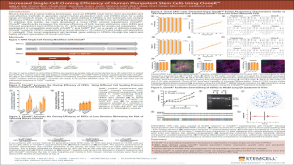 科学海报Increased Single-Cell Cloning Efficiency of Human Pluripotent Stem Cells Using CloneR™
 沪公网安备31010102008431号