Yano M and Pirofski L-a (JAN 2011)
Clinical and vaccine immunology : CVI 18 1 59--66
Characterization of gene use and efficacy of mouse monoclonal antibodies to Streptococcus pneumoniae serotype 8.
Streptococcus pneumoniae is the most common cause of community-acquired pneumonia in the United States and globally. Despite the availability of pneumococcal capsular polysaccharide (PPS) and protein conjugate-based vaccines,the prevalence of antibiotic-resistant pneumococcal strains,serotype (ST) replacement in nonconjugate vaccine strains,and uncertainty as to whether the PPS vaccine that is used in adults protects against pneumonia emphasize the need for continued efforts to understand the nature of protective PPS antibody responses. In this study,we generated mouse monoclonal antibodies (MAbs) to a conjugate consisting of the PPS of serotype 8 (PPS8) S. pneumoniae and tetanus toxoid. Thirteen MAbs,including four IgMs that bound to PPS8 and phosphorylcholine (PC) and five IgMs and four IgG1s that bound to PPS8 but not PC,were produced,and their nucleotide sequences,epitope and fine specificity,and efficacy against lethal challenge with ST8 S. pneumoniae were determined. MAbs that bound to PPS8 exhibited gene use that was distinct from that exhibited by MAbs that bound to PC. Only PPS8-binding MAbs that did not bind PC were protective in mice. All 13 MAbs used germ line variable-region heavy (V(H)) and light (V(L)) chain genes,with no evidence of somatic hypermutation. Our data reveal a relationship between PPS specificity and V(H) gene use and MAb efficacy in mice. These findings provide insight into the relationship between antibody molecular structure and function and hold promise for the development of novel surrogates for pneumococcal vaccine efficacy.
View Publication
产品号#:
03800
03801
03802
03803
03804
03805
03806
产品名:
ClonaCell™-HY杂交瘤试剂盒
ClonaCell™-HY培养基A
ClonaCell™-HY 培养基 B
ClonaCell™-HY 培养基 C
ClonaCell™-HY 培养基 D
ClonaCell™-HY 培养基 E
ClonaCell™-HY PEG
Mou H et al. (APR 2012)
Cell stem cell 10 4 385--397
Generation of multipotent lung and airway progenitors from mouse ESCs and patient-specific cystic fibrosis iPSCs
Deriving lung progenitors from patient-specific pluripotent cells is a key step in producing differentiated lung epithelium for disease modeling and transplantation. By mimicking the signaling events that occur during mouse lung development,we generated murine lung progenitors in a series of discrete steps. Definitive endoderm derived from mouse embryonic stem cells (ESCs) was converted into foregut endoderm,then into replicating Nkx2.1+ lung endoderm,and finally into multipotent embryonic lung progenitor and airway progenitor cells. We demonstrated that precisely-timed BMP,FGF,and WNT signaling are required for NKX2.1 induction. Mouse ESC-derived Nkx2.1+ progenitor cells formed respiratory epithelium (tracheospheres) when transplanted subcutaneously into mice. We then adapted this strategy to produce disease-specific lung progenitor cells from human Cystic Fibrosis induced pluripotent stem cells (iPSCs),creating a platform for dissecting human lung disease. These disease-specific human lung progenitors formed respiratory epithelium when subcutaneously engrafted into immunodeficient mice.
View Publication
产品号#:
05850
05857
05870
05875
85850
85857
85870
85875
产品名:
mTeSR™1
mTeSR™1
Wang X et al. (JUL 2013)
mAbs 5 4 540--4
Generation and characterization of a unique reagent that recognizes a panel of recombinant human monoclonal antibody therapeutics in the presence of endogenous human IgG
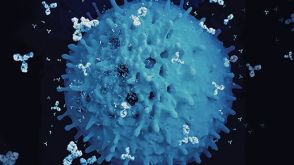
Pharmacokinetic (PK) and immunohistochemistry (IHC) assays are essential to the evaluation of the safety and efficacy of therapeutic monoclonal antibodies (mAb) during drug development. These methods require reagents with a high degree of specificity because low concentrations of therapeutic antibody need to be detected in samples containing high concentrations of endogenous human immunoglobulins. Current assay reagent generation practices are labor-intensive and time-consuming. Moreover,these practices are molecule-specific and so only support one assay for one program at a time. Here,we describe a strategy to generate a unique assay reagent,10C4,that preferentially recognizes a panel of recombinant human mAbs over endogenous human immunoglobulins. This panel-specific" feature enables the reagent to be used in PK and IHC assays for multiple structurally-related therapeutic mAbs. Characterization revealed that the 10C4 epitope is conformational�
View Publication


 EasySep™小鼠TIL(CD45)正选试剂盒





 沪公网安备31010102008431号