Quintarelli C et al. (MAR 2011)
Blood 117 12 3353--62
High-avidity cytotoxic T lymphocytes specific for a new PRAME-derived peptide can target leukemic and leukemic-precursor cells.
The cancer testis antigen (CTA) preferentially expressed antigen of melanoma (PRAME) is overexpressed by many hematologic malignancies,but is absent on normal tissues,including hematopoietic progenitor cells,and may therefore be an appropriate candidate for T cell-mediated immunotherapy. Because it is likely that an effective antitumor response will require high-avidity,PRAME-specific cytotoxic T lymphocytes (CTLs),we attempted to generate such CTLs using professional and artificial antigen-presenting cells loaded with a peptide library spanning the entire PRAME protein and consisting of 125 synthetic pentadecapeptides overlapping by 11 amino acids. We successfully generated polyclonal,PRAME-specific CTL lines and elicited high-avidity CTLs,with a high proportion of cells recognizing a previously uninvestigated HLA-A*02-restricted epitope,P435-9mer (NLTHVLYPV). These PRAME-CTLs could be generated both from normal donors and from subjects with PRAME(+) hematologic malignancies. The cytotoxic activity of our PRAME-specific CTLs was directed not only against leukemic blasts,but also against leukemic progenitor cells as assessed by colony-forming-inhibition assays,which have been implicated in leukemia relapse. These PRAME-directed CTLs did not affect normal hematopoietic progenitors,indicating that this approach may be of value for immunotherapy of PRAME(+) hematologic malignancies.
View Publication
产品号#:
产品名:
Modlich U et al. (JUN 2005)
Blood 105 11 4235--46
Leukemias following retroviral transfer of multidrug resistance 1 (MDR1) are driven by combinatorial insertional mutagenesis.
Previous studies have demonstrated leukemic complications in mice after high-copy retroviral gene transfer of the multidrug resistance 1 (MDR1) cDNA,encoding a membrane-located efflux pump expressed in hematopoietic stem cells. In contrast,no such complications or MDR1-associated alterations of hematopoiesis were observed in numerous other studies exploring MDR1 gene transfer into cell lines,mice,dogs,nonhuman primates,and human subjects. Here,we show that leukemias associated with retroviral expression of MDR1 depend on high vector dose,and involve the selection of clones with combinatorial insertional mutagenesis of proto-oncogenes or other signaling genes. Compared with insertion patterns in normal long-term repopulating hematopoietic cells,such hits were overrepresented in leukemic clones,pointing to a causal role. A similar constellation of insertion sites was also observed in a leukemia arising after high-copy retroviral gene transfer of a fluorescent protein. Spectral karyotyping demonstrated additional chromosomal translocations in a subset of cases,indicative of secondary genetic instability. We also show that insertional mutants can be amplified in vitro prior to transplantation. On the basis of these findings,we suggest the use of preclinical dose-escalation studies to define a therapeutic index for retroviral transgene delivery.
View Publication


 EasySep™小鼠TIL(CD45)正选试剂盒





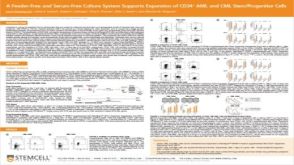 科学海报A Feeder-Free and Serum-Free Culture System Supports Expansion of CD34+ AML and CML Stem/Progenitor Cells
 产品手册Highway1™: Fast, Gentle, and Automated Cell Sorting for Every Lab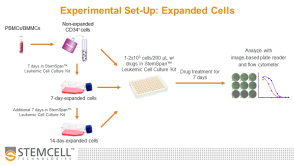



 沪公网安备31010102008431号