Narla RK et al. ( 1998)
Clinical cancer research : an official journal of the American Association for Cancer Research 4 6 1405--1414
4-(3'-Bromo-4'hydroxylphenyl)-amino-6,7-dimethoxyquinazoline: a novel quinazoline derivative with potent cytotoxic activity against human glioblastoma cells.
The novel quinazoline derivative 4-(3'-bromo-4'-hydroxylphenyl)-amino-6,7-dimethoxyquinazoline (WHI-P154) exhibited significant cytotoxicity against U373 and U87 human glioblastoma cell lines,causing apoptotic cell death at micromolar concentrations. The in vitro antiglioblastoma activity of WHI-P154 was amplified textgreater 200-fold and rendered selective by conjugation to recombinant human epidermal growth factor (EGF). The EGF-P154 conjugate was able to bind to and enter target glioblastoma cells within 10-30 min via receptor (R)-mediated endocytosis by inducing internalization of the EGF-R molecules. In vitro treatment with EGF-P154 resulted in killing of glioblastoma cells at nanomolar concentrations with an IC50 of 813 +/- 139 nM,whereas no cytotoxicity against EGF-R-negative leukemia cells was observed,even at concentrations as high as 100 microM. The in vivo administration of EGF-P154 resulted in delayed tumor progression and improved tumor-free survival in a severe combined immunodeficient mouse glioblastoma xenograft model. Whereas none of the control mice remained alive tumor-free beyond 33 days (median tumor-free survival,19 days) and all control mice had tumors that rapidly progressed to reach an average size of textgreater 500 mm3 by 58 days,40% of mice treated for 10 consecutive days with 1 mg/kg/day EGF-P154 remained alive and free of detectable tumors for more than 58 days with a median tumor-free survival of 40 days. The tumors developing in the remaining 60% of the mice never reached a size textgreater 50 mm3. Thus,targeting WHI-P154 to the EGF-R may be useful in the treatment of glioblastoma multiforme.
View Publication
产品号#:
73542
73544
73552
产品名:
WHI-P131
WHI-P131 , 10 mg
WHI-P154
D. Gao et al. (SEP 2014)
Cell 159 1 176--187
Organoid cultures derived from patients with advanced prostate cancer.
The lack of in vitro prostate cancer models that recapitulate the diversity of human prostate cancer has hampered progress in understanding disease pathogenesis and therapy response. Using a 3D organoid system,we report success in long-term culture of prostate cancer from biopsy specimens and circulating tumor cells. The first seven fully characterized organoid lines recapitulate the molecular diversity of prostate cancer subtypes,including TMPRSS2-ERG fusion,SPOP mutation,SPINK1 overexpression,and CHD1 loss. Whole-exome sequencing shows a low mutational burden,consistent with genomics studies,but with mutations in FOXA1 and PIK3R1,as well as in DNA repair and chromatin modifier pathways that have been reported in advanced disease. Loss of p53 and RB tumor suppressor pathway function are the most common feature shared across the organoid lines. The methodology described here should enable the generation of a large repertoire of patient-derived prostate cancer lines amenable to genetic and pharmacologic studies.
View Publication
产品号#:
15122
15162
产品名:
RosetteSep™人CD45去除抗体混合物
RosetteSep™人CD45去除抗体混合物
挂图
SnapShot: Breast Cancer
Overview of signaling pathways, commonly mutated genes and breast cancer subtypes


 EasySep™小鼠TIL(CD45)正选试剂盒




 实验方案How to Measure NK Cell Killing Activity with a Standardized Potency Assay
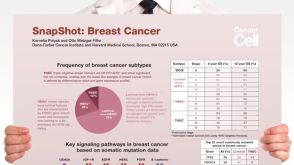 挂图SnapShot: Breast Cancer Overview of signaling pathways, commonly mutated genes and breast cancer subtypes
 技术公告Achieve Scalable, High-Quality Nucleic Acid Extractions with the EasySep™ Total Nucleic Acid Extraction Kit


 沪公网安备31010102008431号