Zeng J et al. (MAY 2012)
The Journal of Immunology 188 9 4297--4304
Enhancing Immunostimulatory Function of Human Embryonic Stem Cell-Derived Dendritic Cells by CD1d Overexpression
Human embryonic stem cell-derived dendritic cells (hESC-DCs) may potentially provide a platform to generate off-the-shelf" therapeutic cancer vaccines. To apply hESC-DCs for cancer immunotherapy in a semiallogeneic setting
View Publication
Torrano V et al. (NOV 2011)
Blood 118 18 4910--8
ETV6-RUNX1 promotes survival of early B lineage progenitor cells via a dysregulated erythropoietin receptor.
ETV6-RUNX1 gene fusion is usually an early,prenatal event in childhood acute lymphoblastic leukemia (ALL). Transformation results in the generation of a persistent (> 14 years) preleukemic clone,which postnatally converts to ALL after the acquisition of necessary secondary genetic alterations. Many cancer cells show some expression of the erythropoietin receptor (EPOR) gene,although the functionality" of any EPOR complexes and their relevant signaling pathways in nonerythroid cells has not been validated. EPOR mRNA is selectively and ectopically expressed in ETV6-RUNX1(+) ALL but the presence of a functional EPOR on the cell surface and its role in leukemogenesis driven by ETV6-RUNX1 remains to be identified. Here we show that ETV6-RUNX1 directly binds the EPOR promoter and that expression of ETV6-RUNX1 alone in normal pre-B cells is sufficient to activate EPOR transcription. We further reveal that murine and human ETV6-RUNX1(+) cells expressing EPOR mRNA have EPO ligand binding activity that correlates with an increased cell survival through activation of the JAK2-STAT5 pathway and up-regulation of antiapoptotic BCL-XL. These data support the contention that ETV6-RUNX1 directly activates ectopic expression of a functional EPOR and provides cell survival signals that may contribute critically to persistence of covert premalignant clones in children.
View Publication
Murphy SV et al. (JAN 2013)
Journal of biomedical materials research. Part A 101 1 272--84
Evaluation of hydrogels for bio-printing applications.
In the United States alone,there are approximately 500,000 burn injuries that require medical treatment every year. Limitations of current treatments necessitate the development of new methods that can be applied quicker,result in faster wound regeneration,and yield skin that is cosmetically similar to undamaged skin. The development of new hydrogel biomaterials and bioprinting deposition technologies has provided a platform to address this need. Herein we evaluated characteristics of twelve hydrogels to determine their suitability for bioprinting applications. We chose hydrogels that are either commercially available,or are commonly used for research purposes. We evaluated specific hydrogel properties relevant to bioprinting applications,specifically; gelation time,swelling or contraction,stability,biocompatibility and printability. Further,we described regulatory,commercial and financial aspects of each of the hydrogels. While many of the hydrogels screened may exhibit characteristics suitable for other applications,UV-crosslinked Extracel,a hyaluronic acid-based hydrogel,had many of the desired properties for our bioprinting application. Taken together with commercial availability,shelf life,potential for regulatory approval and ease of use,these materials hold the potential to be further developed into fast and effective wound healing treatments.
View Publication
Yeo C et al. (SEP 2009)
Regenerative Medicine 4 5 689--696
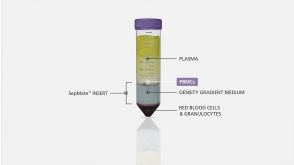
Ficoll-Paque™ versus Lymphoprep™: a comparative study of two density gradient media for therapeutic bone marrow mononuclear cell preparations
AIMS Contradictory outcomes from recent clinical trials investigating the transplantation of autologous bone marrow mononuclear cell (BM-MNC) fraction containing stem/progenitor cells to damaged myocardium,following acute myocardial infarction,may be,in part,due to the different cell isolation protocols used. We compared total BM-MNC numbers and its cellular subsets obtained following isolation using Ficoll-Paque and Lymphoprep - two different density gradient media used in the clinical trials. MATERIALS & METHODS Bone marrow samples were taken from patients entered into the REGENERATE-IHD clinical trial after 5 days of subcutaneous granulocyte colony-stimulating factor injections. Each sample was divided equally for BM-MNC isolation using Ficoll-Paque and Lymphoprep,keeping all other procedural steps constant. Isolated fractions were characterized for hematopoietic stem cells,endothelial progenitor cells,T lymphocytes,B lymphocytes and NK cells using cell surface markers CD34(+),CD133(+)VEGFR2(+),CD45(+)CD3(+),CD45(+)CD19(+) and CD45(+)CD16(+)CD56(+),respectively. There were no significant differences in the absolute numbers and percentage cell recovery of various mononuclear cell types recovered following separation using either density gradient media. Cell viability and the proportion of various cell phenotypes investigated were similar between the two media. They were also equally efficient in excluding unwanted red blood cells,granulocytes and platelets from the final cell products. CONCLUSION We demonstrated that the composition and quantity of cell types found within therapeutic BM-MNC preparations for use in clinical trials of cardiac stem cell transplantation are not influenced by the type of density gradient media used when comparing Ficoll-Paque and Lymphoprep.
View Publication
Callahan KP et al. (OCT 2014)
Leukemia 28 10 1960--8
Flavaglines target primitive leukemia cells and enhance anti-leukemia drug activity.
Identification of agents that target human leukemia stem cells is an important consideration for the development of new therapies. The present study demonstrates that rocaglamide and silvestrol,closely related natural products from the flavagline class of compounds,are able to preferentially kill functionally defined leukemia stem cells,while sparing normal stem and progenitor cells. In addition to efficacy as single agents,flavaglines sensitize leukemia cells to several anticancer compounds,including front-line chemotherapeutic drugs used to treat leukemia patients. Mechanistic studies indicate that flavaglines strongly inhibit protein synthesis,leading to the reduction of short-lived antiapoptotic proteins. Notably though,treatment with flavaglines,alone or in combination with other drugs,yields a much stronger cytotoxic activity toward leukemia cells than the translational inhibitor temsirolimus. These results indicate that the underlying cell death mechanism of flavaglines is more complex than simply inhibiting general protein translation. Global gene expression profiling and cell biological assays identified Myc inhibition and the disruption of mitochondrial integrity to be features of flavaglines,which we propose contribute to their efficacy in targeting leukemia cells. Taken together,these findings indicate that rocaglamide and silvestrol are distinct from clinically available translational inhibitors and represent promising candidates for the treatment of leukemia.
View Publication