Dorosko SM and Connor RI (OCT 2010)
Journal of virology 84 20 10533--42
Primary human mammary epithelial cells endocytose HIV-1 and facilitate viral infection of CD4+ T lymphocytes.
The contribution of mammary epithelial cells (MEC) to human immunodeficiency virus type 1 (HIV-1) in breast milk remains largely unknown. While breast milk contains CD4(+) cells throughout the breast-feeding period,it is not known whether MEC directly support HIV-1 infection or facilitate infection of CD4(+) cells in the breast compartment. This study evaluated primary human MEC for direct infection with HIV-1 and for indirect transfer of infection to CD4(+) target cells. Primary human MEC were isolated and assessed for expression of HIV-1 receptors. MEC were exposed to CCR5-,CXCR4- and dual-tropic strains of HIV-1 and evaluated for viral reverse transcription and integration and productive viral infection. MEC were also tested for the ability to transfer HIV to CD4(+) target cells and to activate resting CD4(+) T cells. Our results demonstrate that MEC express HIV-1 receptor proteins CD4,CCR5,CXCR4,and galactosyl ceramide (GalCer). While no evidence for direct infection of MEC was found,HIV-1 virions were observed in MEC endosomal compartments. Coculture of HIV-exposed MEC resulted in productive infection of activated CD4(+) T cells. In addition,MEC secretions increased HIV-1 replication and proliferation of infected target cells. Overall,our results indicate that MEC are capable of endosomal uptake of HIV-1 and can facilitate virus infection and replication in CD4(+) target cells. These findings suggest that MEC may serve as a viral reservoir for HIV-1 and may enhance infection of CD4(+) T lymphocytes in vivo.
View Publication
产品号#:
19052
19052RF
产品名:
EasySep™人CD4+ T细胞富集试剂盒
RoboSep™ 人CD4+ T细胞富集试剂盒含滤芯吸头
Antunes I et al. (DEC 2010)
Journal of virology 84 24 12564--75
Suppression of innate immune pathology by regulatory T cells during Influenza A virus infection of immunodeficient mice.
The viral infection of higher vertebrates elicits potent innate and adaptive host immunity. However,an excessive or inappropriate immune response also may lead to host pathology that often is more severe than the direct effects of viral replication. Therefore,several mechanisms exist that regulate the magnitude and class of the immune response. Here,we have examined the potential involvement of regulatory T (Treg) cells in limiting pathology induced by influenza A virus (IAV) infection. Using lymphocyte-deficient mice as hosts,we showed that Treg cell reconstitution resulted in a significant delay in weight loss and prolonged survival following infection. The adoptively transferred Treg cells did not affect the high rate of IAV replication in the lungs of lymphocyte-deficient hosts,and therefore their disease-ameliorating effect was mediated through the suppression of innate immune pathology. Mechanistically,Treg cells reduced the accumulation and altered the distribution of monocytes/macrophages in the lungs of IAV-infected hosts. This reduction in lung monocytosis was associated with a specific delay in monocyte chemotactic protein-2 (MCP-2) induction in the infected lungs. Nevertheless,Treg cells failed to prevent the eventual development of severe disease in lymphocyte-deficient hosts,which likely was caused by the ongoing IAV replication. Indeed,using T-cell-deficient mice,which mounted a T-cell-independent B cell response to IAV,we further showed that the combination of virus-neutralizing antibodies and transferred Treg cells led to the complete prevention of clinical disease following IAV infection. Taken together,these results suggested that innate immune pathology and virus-induced pathology are the two main contributors to pathogenesis during IAV infection.
View Publication
BiHC, a T-Cell-Engaging Bispecific Recombinant Antibody, Has Potent Cytotoxic Activity Against Her2 Tumor Cells.
Among different cancer immunotherapy approaches,bispecific antibodies (BsAbs) are of great interest due to their ability to recruit immune cells to kill tumor cells directly. Various BsAbs against Her2 tumor cells have been proposed with potent cytotoxic activities. However,most of these formats require extensive processing to obtain heterodimeric bispecific antibodies. In this study,we describe a bispecific antibody,BiHC (bispecific Her2-CD3 antibody),constructed with a single-domain anti-Her2 and a single-chain Fv (variable fragment) of anti-CD3 in an IgG-like format. In contrast to most IgG-like BsAbs,the two arms in BiHC have different molecular weights,making it easier to separate hetero- or homodimers. BiHC can be expressed in Escherichia coli and purified via Protein A affinity chromatography. The purified BiHC can recruit T cells and induce specific cytotoxicity of Her2-expressing tumor cells in vitro. The BiHC can also efficiently inhibit the tumor growth in vivo. Thus,BiHC is a promising candidate for the treatment of Her2-positive cancers.
View Publication


 EasySep™小鼠TIL(CD45)正选试剂盒










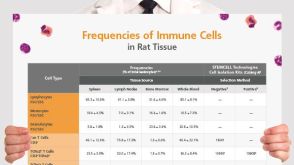 挂图Frequencies of Immune Cells in Rat Tissue Lists the estimated frequencies of more than 15 immune cell types in Sprague Dawley rats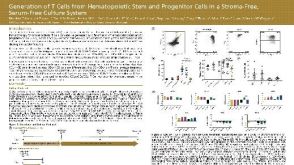


 沪公网安备31010102008431号