J. H. Choi et al. ( 2019)
Science (New York,N.Y.) 364 6440
LMBR1L regulates lymphopoiesis through Wnt/beta-catenin signaling.
Precise control of Wnt signaling is necessary for immune system development. In this study,we detected severely impaired development of all lymphoid lineages in mice,resulting from an N-ethyl-N-nitrosourea-induced mutation in the limb region 1-like gene (Lmbr1l),which encodes a membrane-spanning protein with no previously described function in immunity. The interaction of LMBR1L with glycoprotein 78 (GP78) and ubiquitin-associated domain-containing protein 2 (UBAC2) attenuated Wnt signaling in lymphocytes by preventing the maturation of FZD6 and LRP6 through ubiquitination within the endoplasmic reticulum and by stabilizing destruction complex" proteins. LMBR1L-deficient T cells exhibited hallmarks of Wnt/beta-catenin activation and underwent apoptotic cell death in response to proliferative stimuli. LMBR1L has an essential function during lymphopoiesis and lymphoid activation acting as a negative regulator of the Wnt/beta-catenin pathway."
View Publication
产品号#:
19853
19853RF
17961
17961RF
产品名:
EasySep™小鼠CD8+ T细胞分选试剂盒
RoboSep™ 小鼠CD8+ T细胞分选试剂盒
EasySep™人Naïve Pan-T细胞分选试剂盒
RoboSep™ 人Naïve Pan-T细胞分选试剂盒
S. C. David et al. (may 2019)
Nature microbiology
Direct interaction of whole-inactivated influenza A and pneumococcal vaccines enhances influenza-specific immunity.
The upper respiratory tract is continuously exposed to a vast array of potentially pathogenic viruses and bacteria. Influenza A virus (IAV) has particular synergism with the commensal bacterium Streptococcus pneumoniae in this niche,and co-infection exacerbates pathogenicity and causes significant mortality. However,it is not known whether this synergism is associated with a direct interaction between the two pathogens. We have previously reported that co-administration of a whole-inactivated IAV vaccine (gamma-Flu) with a whole-inactivated pneumococcal vaccine (gamma-PN) enhances pneumococcal-specific responses. In this study,we show that mucosal co-administration of gamma-Flu and gamma-PN similarly augments IAV-specific immunity,particularly tissue-resident memory cell responses in the lung. In addition,our in vitro analysis revealed that S. pneumoniae directly interacts with both gamma-Flu and with live IAV,facilitating increased uptake by macrophages as well as increased infection of epithelial cells by IAV. These observations provide an additional explanation for the synergistic pathogenicity of IAV and S. pneumoniae,as well as heralding the prospect of exploiting the phenomenon to develop better vaccine strategies for both pathogens.
View Publication
产品号#:
19858
19858RF
产品名:
EasySep™小鼠Naïve CD8+ T细胞分选试剂盒
RoboSep™ 小鼠Naïve CD8+ T细胞分选试剂盒
A. Lopresti et al. (jun 2019)
JCI insight 5
Sensitive and easy screening for circulating tumor cells by flow cytometry.
Circulating Tumor Cells (CTCs) represent an easy,repeatable and representative access to information regarding solid tumors. However,their detection remains difficult because of their paucity,their short half-life,and the lack of reliable surface biomarkers. Flow cytometry (FC) is a fast,sensitive and affordable technique,ideal for rare cells detection. Adapted to CTCs detection (i.e. extremely rare cells),most FC-based techniques require a time-consuming pre-enrichment step,followed by a 2-hours staining procedure,impeding on the efficiency of CTCs detection. We overcame these caveats and reduced the procedure to less than one hour,with minimal manipulation. First,cells were simultaneously fixed,permeabilized,then stained. Second,using low-speed FC acquisition conditions and two discriminators (cell size and pan-cytokeratin expression),we suppressed the pre-enrichment step. Applied to blood from donors with or without known malignant diseases,this protocol ensures a high recovery of the cells of interest independently of their epithelial-mesenchymal plasticity and can predict which samples are derived from cancer donors. This proof-of-concept study lays the bases of a sensitive tool to detect CTCs from a small amount of blood upstream of in-depth analyses.
View Publication


 EasySep™小鼠TIL(CD45)正选试剂盒




 科学海报Cell Isolation to Obtain Untouched Naïve CD8 T Cells from Peripheral Blood Mononuclear Cells (PBMCs)
 科学海报Cell Isolation of Human CD4+ Memory T Cells By Column-Free Immunomagnetic Cell Separation
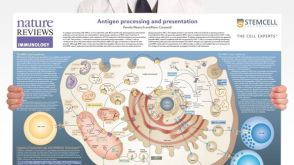 挂图Antigen Processing and Presentation Overview of the mechanisms by which antigens are processed and presented to T cells
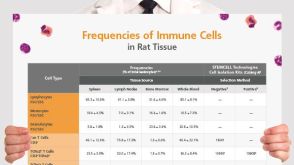 挂图Frequencies of Immune Cells in Rat Tissue Lists the estimated frequencies of more than 15 immune cell types in Sprague Dawley rats
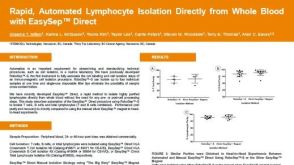 科学海报Rapid, Automated Lymphocyte Isolation Directly from Whole Blood with EasySep™ Direct

 沪公网安备31010102008431号