Wakimoto H et al. (APR 2009)
Cancer research 69 8 3472--81
Human glioblastoma-derived cancer stem cells: establishment of invasive glioma models and treatment with oncolytic herpes simplex virus vectors.
Glioblastoma,the most malignant type of primary brain tumor,is one of the solid cancers where cancer stem cells have been isolated,and studies have suggested resistance of those cells to chemotherapy and radiotherapy. Here,we report the establishment of CSC-enriched cultures derived from human glioblastoma specimens. They grew as neurospheres in serum-free medium with epidermal growth factor and fibroblast growth factor 2,varied in the level of CD133 expression and very efficiently formed highly invasive and/or vascular tumors upon intracerebral implantation into immunodeficient mice. As a novel therapeutic strategy for glioblastoma-derived cancer stem-like cells (GBM-SC),we have tested oncolytic herpes simplex virus (oHSV) vectors. We show that although ICP6 (UL39)-deleted mutants kill GBM-SCs as efficiently as wild-type HSV,the deletion of gamma34.5 significantly attenuated the vectors due to poor replication. However,this was significantly reversed by the additional deletion of alpha47. Infection with oHSV G47Delta (ICP6(-),gamma34.5(-),alpha47(-)) not only killed GBM-SCs but also inhibited their self-renewal as evidenced by the inability of viable cells to form secondary tumor spheres. Importantly,despite the highly invasive nature of the intracerebral tumors generated by GBM-SCs,intratumoral injection of G47Delta significantly prolonged survival. These results for the first time show the efficacy of oHSV against human GBM-SCs,and correlate this cytotoxic property with specific oHSV mutations. This is important for designing new oHSV vectors and clinical trials. Moreover,the new glioma models described in this study provide powerful tools for testing experimental therapeutics and studying invasion and angiogenesis.
View Publication
产品号#:
05707
产品名:
NeuroCult™化学解离试剂盒(小鼠)
Kronenberg G et al. (MAR 2010)
The Journal of neuroscience : the official journal of the Society for Neuroscience 30 9 3419--31
Impact of actin filament stabilization on adult hippocampal and olfactory bulb neurogenesis.
Rearrangement of the actin cytoskeleton is essential for dynamic cellular processes. Decreased actin turnover and rigidity of cytoskeletal structures have been associated with aging and cell death. Gelsolin is a Ca(2+)-activated actin-severing protein that is widely expressed throughout the adult mammalian brain. Here,we used gelsolin-deficient (Gsn(-/-)) mice as a model system for actin filament stabilization. In Gsn(-/-) mice,emigration of newly generated cells from the subventricular zone into the olfactory bulb was slowed. In vitro,gelsolin deficiency did not affect proliferation or neuronal differentiation of adult neural progenitors cells (NPCs) but resulted in retarded migration. Surprisingly,hippocampal neurogenesis was robustly induced by gelsolin deficiency. The ability of NPCs to intrinsically sense excitatory activity and thereby implement coupling between network activity and neurogenesis has recently been established. Depolarization-induced [Ca(2+)](i) increases and exocytotic neurotransmitter release were enhanced in Gsn(-/-) synaptosomes. Importantly,treatment of Gsn(-/-) synaptosomes with mycotoxin cytochalasin D,which,like gelsolin,produces actin disassembly,decreased enhanced Ca(2+) influx and subsequent exocytotic norepinephrine release to wild-type levels. Similarly,depolarization-induced glutamate release from Gsn(-/-) brain slices was increased. Furthermore,increased hippocampal neurogenesis in Gsn(-/-) mice was associated with a special microenvironment characterized by enhanced density of perfused vessels,increased regional cerebral blood flow,and increased endothelial nitric oxide synthase (NOS-III) expression in hippocampus. Together,reduced filamentous actin turnover in presynaptic terminals causes increased Ca(2+) influx and,subsequently,elevated exocytotic neurotransmitter release acting on neural progenitors. Increased neurogenesis in Gsn(-/-) hippocampus is associated with a special vascular niche for neurogenesis.
View Publication
产品号#:
05700
05701
05702
产品名:
NeuroCult™ 基础培养基(小鼠和大鼠)
NeuroCult™ 扩增添加物(小鼠和大鼠)
NeuroCult™扩增试剂盒(小鼠和大鼠)
Zheng H et al. (MAY 2010)
Cancer cell 17 5 497--509
PLAGL2 regulates Wnt signaling to impede differentiation in neural stem cells and gliomas.
A hallmark feature of glioblastoma is its strong self-renewal potential and immature differentiation state,which contributes to its plasticity and therapeutic resistance. Here,integrated genomic and biological analyses identified PLAGL2 as a potent protooncogene targeted for amplification/gain in malignant gliomas. Enhanced PLAGL2 expression strongly suppresses neural stem cell (NSC) and glioma-initiating cell differentiation while promoting their self-renewal capacity upon differentiation induction. Transcriptome analysis revealed that these differentiation-suppressive activities are attributable in part to PLAGL2 modulation of Wnt/beta-catenin signaling. Inhibition of Wnt signaling partially restores PLAGL2-expressing NSC differentiation capacity. The identification of PLAGL2 as a glioma oncogene highlights the importance of a growing class of cancer genes functioning to impart stem cell-like characteristics in malignant cells.
View Publication
产品号#:
05700
05701
05702
05751
产品名:
NeuroCult™ 基础培养基(小鼠和大鼠)
NeuroCult™ 扩增添加物(小鼠和大鼠)
NeuroCult™扩增试剂盒(小鼠和大鼠)
NeuroCult™ NS-A 扩增试剂盒(人)
Veeraraghavalu K et al. (MAY 2010)
The Journal of neuroscience : the official journal of the Society for Neuroscience 30 20 6903--15
Presenilin 1 mutants impair the self-renewal and differentiation of adult murine subventricular zone-neuronal progenitors via cell-autonomous mechanisms involving notch signaling.
The vast majority of pedigrees with familial Alzheimer's disease (FAD) are caused by inheritance of mutations in the PSEN1 1 gene. While genetic ablation studies have revealed a role for presenilin 1 (PS1) in embryonic neurogenesis,little information has emerged regarding the potential effects of FAD-linked PS1 variants on proliferation,self-renewal and differentiation,key events that control cell fate commitment of adult brain neural progenitors (NPCs). We used adult brain subventricular zone (SVZ)-derived NPC cultures transduced with recombinant lentivirus as a means to investigate the effects of various PS1 mutants on self-renewal and differentiation properties. We now show that viral expression of several PS1 mutants in NPCs leads to impaired self-renewal and altered differentiation toward neuronal lineage,in vitro. In line with these observations,diminished constitutive proliferation and steady-state SVZ progenitor pool size was observed in vivo in transgenic mice expressing the PS1DeltaE9 variant. Moreover,NPC cultures established from the SVZ of adult mice expressing PS1DeltaE9 exhibit reduced self-renewal capacity and premature exit toward neuronal fates. To these findings,we show that both the levels of endogenous Notch/CBF-1-transcriptional activity and transcripts encoding Notch target genes are diminished in SVZ NPCs expressing PS1DeltaE9. The deficits in self-renewal and multipotency are restored by expression of Notch1-ICD or a downstream target of the Notch pathway,Hes1. Hence,we argue that a partial reduction in PS-dependent gamma-secretase processing of the Notch,at least in part,accounts for the impairments observed in SVZ NPCs expressing the FAD-linked PS1DeltaE9 variant.
View Publication
产品号#:
05707
产品名:
NeuroCult™化学解离试剂盒(小鼠)
Agostini M et al. (DEC 2010)
Biochemical and biophysical research communications 403 1 13--7
p73 regulates maintenance of neural stem cell.
p73,a member of the p53 family,is a transcription factor that plays a key role in many biological processes. In the present study,we show that TAp73 is expressed in neural stem cells (NSC) and its expression increases following their differentiation. NSC from p73 null mice have a reduced proliferative potential,together with reduced expression of members of the Sox-2 and Notch gene families known to be important for NSC proliferation. In parallel with this in vitro data,the width of the neurogenic areas was reduced in the brains of embryonic and adult p73-/- mice. These data suggest that p73,and in particular TAp73,is important for maintenance of the NSC pool.
View Publication
Belkind-Gerson J et al. (JAN 2013)
Neurogastroenterology and motility : the official journal of the European Gastrointestinal Motility Society 25 1 61--9.e7
Nestin-expressing cells in the gut give rise to enteric neurons and glial cells.
BACKGROUND Neuronal stem cells (NSCs) are promising for neurointestinal disease therapy. Although NSCs have been isolated from intestinal musclularis,their presence in mucosa has not been well described. Mucosa-derived NSCs are accessible endoscopically and could be used autologously. Brain-derived Nestin-positive NSCs are important in endogenous repair and plasticity. The aim was to isolate and characterize mucosa-derived NSCs,determine their relationship to Nestin-expressing cells and to demonstrate their capacity to produce neuroglial networks in vitro and in vivo. METHODS Neurospheres were generated from periventricular brain,colonic muscularis (Musc),and mucosa-submucosa (MSM) of mice expressing green fluorescent protein (GFP) controlled by the Nestin promoter (Nestin-GFP). Neuronal stem cells were also grown as adherent colonies from intestinal mucosal organoids. Their differentiation potential was assessed using immunohistochemistry using glial and neuronal markers. Brain and gut-derived neurospheres were transplanted into explants of chick embryonic aneural hindgut to determine their fate. KEY RESULTS Musc- and MSM-derived neurospheres expressed Nestin and gave rise to cells of neuronal,glial,and mesenchymal lineage. Although Nestin expression in tissue was mostly limited to glia co-labelled with glial fibrillary acid protein (GFAP),neurosphere-derived neurons and glia both expressed Nestin in vitro,suggesting that Nestin+/GFAP+ glial cells may give rise to new neurons. Moreover,following transplantation into aneural colon,brain- and gut-derived NSCs were able to differentiate into neurons. CONCLUSIONS & INFERENCES Nestin-expressing intestinal NSCs cells give rise to neurospheres,differentiate into neuronal,glial,and mesenchymal lineages in vitro,generate neurons in vivo and can be isolated from mucosa. Further studies are needed for exploring their potential for treating neuropathies.
View Publication


 EasySep™小鼠TIL(CD45)正选试剂盒




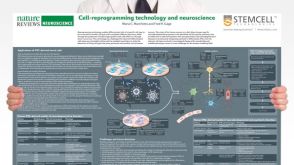 挂图Cell-Reprogramming Technology and Neuroscience Details on human iPSC-derived models of neuropsychiatric and neurodegenerative disorders


 沪公网安备31010102008431号