Pluripotent Stem Cell Course
Learn how to maintain human pluripotent stem cells (hPSCs) and assess their quality and characteristics.
Yan Y et al. (FEB 2017)
Acta biomaterialia 49 192--203
Pluripotent stem cell expansion and neural differentiation in 3-D scaffolds of tunable Poisson's ratio.
Biophysical properties of the scaffolds such as the elastic modulus,have been recently shown to impact stem cell lineage commitment. On the other hand,the contribution of the Poisson's ratio,another important biophysical property,to the stem cell fate decision,has not been studied. Scaffolds with tunable Poisson's ratio (ν) (termed as auxetic scaffolds when Poisson's ratio is zero or negative) are anticipated to provide a spectrum of unique biophysical 3-D microenvironments to influence stem cell fate. To test this hypothesis,in the present work we fabricated auxetic polyurethane scaffolds (ν=0 to -0.45) and evaluated their effects on neural differentiation of mouse embryonic stem cells (ESCs) and human induced pluripotent stem cells (hiPSCs). Compared to the regular scaffolds (ν=+0.30) before auxetic conversion,the auxetic scaffolds supported smaller aggregate formation and higher expression of β-tubulin III upon neural differentiation. The influences of pore structure,Poisson's ratio,and elastic modulus on neural lineage commitment were further evaluated using a series of auxetic scaffolds. The results indicate that Poisson's ratio may confound the effects of elastic modulus,and auxetic scaffolds with proper pore structure and Poisson's ratio enhance neural differentiation. This study demonstrates that tuning the Poisson's ratio of the scaffolds together with elastic modulus and microstructure would enhance the capability to generate broader,more diversified ranges of biophysical 3-D microenvironments for the modulation of cellular differentiation. STATEMENT OF SIGNIFICANCE Biophysical signaling from the substrates and scaffolds plays a critical role in neural lineage commitment of pluripotent stem cells. While the contribution of elastic modulus has been well studied,the influence of Poisson's ratio along with microstructure of the scaffolds remains unknown largely due to the lack of technology to produce materials with tailorable Poisson's ratio. This study fabricated auxetic polyurethane scaffolds with different elastic modulus,Poisson's ratio and microstructure and evaluated neural differentiation of pluripotent stem cells. The findings add a novel angle to understand the impact of biophysical microenvironment on stem cell fate decisions.
View Publication
Palakkan AA et al. (SEP 2015)
Biomedical reports 3 5 626--636
Polarisation and functional characterisation of hepatocytes derived from human embryonic and mesenchymal stem cells.
Adult hepatocytes are polarised with their apical and basolateral membranes separated from neighbouring cells by tight junction proteins. Although efficient differentiation of pluripotent stem cells to hepatocytes has been achieved,the formation of proper polarisation in these cells has not been thoroughly investigated. In the present study,human embryonic stem cells (hESCs) and human mesenchymal stem cells (hMSCs) were differentiated to hepatocyte-like cells and the derived hepatocytes were characterised for mature hepatocyte markers. The secretion of hepatic proteins,expression of hepatic genes and the functional hepatic polarisation of stem cell-derived hepatocytes,foetal hepatocytes and the HepG2 hepatic cell line were evaluated and the different lines were compared. The results indicate that hESC-derived hepatocytes are phenotypically more robust and functionally more efficient compared with the hMSC-derived hepatocytes,suggesting their suitability for toxicity studies.
View Publication
Gualandi C et al. (JUN 2016)
Macromolecular Bioscience
Poly-l-Lactic Acid Nanofiber-Polyamidoamine Hydrogel Composites: Preparation, Properties, and Preliminary Evaluation as Scaffolds for Human Pluripotent Stem Cell Culturing
Electrospun poly-l-lactic acid (PLLA) nanofiber mats carrying surface amine groups,previously introduced by nitrogen atmospheric pressure nonequilibrium plasma,are embedded into aqueous solutions of oligomeric acrylamide-end capped AGMA1,a biocompatible polyamidoamine with arg-gly-asp (RGD)-reminiscent repeating units. The resultant mixture is finally cured giving PLLA-AGMA1 hydrogel composites that absorb large amounts of water and,in the swollen state,are translucent,soft,and pliable,yet as strong as the parent PLLA mat. They do not split apart from each other when swollen in water and remain highly flexible and resistant,since the hydrogel portion is covalently grafted onto the PLLA nanofibers via the addition reaction of the surface amine groups to a part of the terminal acrylic double bonds of AGMA1 oligomers. Preliminary tested as scaffolds,the composites prove capable of maintaining short-term undifferentiated cultures of human pluripotent stem cells in feeder-free conditions.
View Publication
Dambrot C et al. (FEB 2013)
Differentiation 85 3 101--109
Polycistronic lentivirus induced pluripotent stem cells from skin biopsies after long term storage, blood outgrowth endothelial cells and cells from milk teeth
The generation of human induced pluripotent stem cells (hiPSCs) requires the collection of donor tissue,but clinical circumstances in which the interests of patients have highest priority may compromise the quality and availability of cells that are eventually used for reprogramming. Here we compared (i) skin biopsies stored in standard physiological salt solution for up to two weeks (ii) blood outgrowth endothelial cells (BOECs) isolated from fresh peripheral blood and (iii) children's milk teeth lost during normal replacement for their ability to form somatic cell cultures suitable for reprogramming to hiPSCs. We derived all hiPSC lines using the same reprogramming method (a conditional (FLPe) polycistronic lentivirus) and under similar conditions (same batch of virus,fetal calf serum and feeder cells). Skin fibroblasts could be reprogrammed robustly even after long-term biopsy storage. Generation of hiPSCs from juvenile dental pulp cells gave similar high efficiencies,but that of BOECs was lower. In terms of invasiveness of biopsy sampling,biopsy storage and reprogramming efficiencies skin fibroblasts appeared best for the generation of hiPSCs,but where non-invasive procedures are required (e.g. for children and minors) dental pulp cells from milk teeth represent a valuable alternative.
View Publication
An MC et al. ( 2014)
PLoS currents 6 1--19
Polyglutamine Disease Modeling: Epitope Based Screen for Homologous Recombination using CRISPR/Cas9 System.
We have previously reported the genetic correction of Huntington's disease (HD) patient-derived induced pluripotent stem cells using traditional homologous recombination (HR) approaches. To extend this work,we have adopted a CRISPR-based genome editing approach to improve the efficiency of recombination in order to generate allelic isogenic HD models in human cells. Incorporation of a rapid antibody-based screening approach to measure recombination provides a powerful method to determine relative efficiency of genome editing for modeling polyglutamine diseases or understanding factors that modulate CRISPR/Cas9 HR.
View Publication
Cortes CJ et al. (SEP 2014)
Nature Neuroscience 17 9 1180--1189
Polyglutamine-expanded androgen receptor interferes with TFEB to elicit autophagy defects in SBMA
Alamein MA et al. (SEP 2015)
Journal of Tissue Engineering and Regenerative Medicine 9 9 1078--1083
Polymeric nanofibrous substrates stimulate pluripotent stem cells to form three-dimensional multilayered patty-like spheroids in feeder-free culture and maintain their pluripotency
Expansion of pluripotent stem cells in defined media devoid of animal-derived feeder cells to generate multilayered three-dimensional (3D) bulk preparations or spheroids,rather than two-dimensional (2D) monolayers,is advantageous for many regenerative,biological or disease-modelling studies. Here we show that electrospun polymer matrices comprised of nanofibres that mimic the architecture of the natural fibrous extracellular matrix allow for feeder-free expansion of pluripotent human induced pluripotent stem cells (IPSCs) and human embryonic stem cells (HESCs) into multilayered 3D 'patty-like' spheroid structures in defined xeno-free culture medium. The observation that IPSCs and HESCs readily revert to 2D growth in the absence of the synthetic nanofibre membranes suggests that this 3D expansion behaviour is mediated by the physical microenvironment and artificial niche provided by the nanofibres only. Importantly,we could show that such 3D growth as patties maintained the pluripotency of cells as long as they were kept on nanofibres. The generation of complex multilayered 3D structures consisting of only pluripotent cells on biodegradable nanofibre matrices of the desired shape and size will enable both industrial-scale expansion and intricate organ-tissue engineering applications with human pluripotent stem cells,where simultaneous coupling of differentiation pathways of all germ layers from one stem cell source may be required for organ formation.
View Publication
Task K et al. (JAN 2012)
PLoS ONE 7 3 e32975
Population based model of human embryonic stem cell (hESC) differentiation during endoderm induction
The mechanisms by which human embryonic stem cells (hESC) differentiate to endodermal lineage have not been extensively studied. Mathematical models can aid in the identification of mechanistic information. In this work we use a population-based modeling approach to understand the mechanism of endoderm induction in hESC,performed experimentally with exposure to Activin A and Activin A supplemented with growth factors (basic fibroblast growth factor (FGF2) and bone morphogenetic protein 4 (BMP4)). The differentiating cell population is analyzed daily for cellular growth,cell death,and expression of the endoderm proteins Sox17 and CXCR4. The stochastic model starts with a population of undifferentiated cells,wherefrom it evolves in time by assigning each cell a propensity to proliferate,die and differentiate using certain user defined rules. Twelve alternate mechanisms which might describe the observed dynamics were simulated,and an ensemble parameter estimation was performed on each mechanism. A comparison of the quality of agreement of experimental data with simulations for several competing mechanisms led to the identification of one which adequately describes the observed dynamics under both induction conditions. The results indicate that hESC commitment to endoderm occurs through an intermediate mesendoderm germ layer which further differentiates into mesoderm and endoderm,and that during induction proliferation of the endoderm germ layer is promoted. Furthermore,our model suggests that CXCR4 is expressed in mesendoderm and endoderm,but is not expressed in mesoderm. Comparison between the two induction conditions indicates that supplementing FGF2 and BMP4 to Activin A enhances the kinetics of differentiation than Activin A alone. This mechanistic information can aid in the derivation of functional,mature cells from their progenitors. While applied to initial endoderm commitment of hESC,the model is general enough to be applicable either to a system of adult stem cells or later stages of ESC differentiation.
View Publication
West FD et al. (AUG 2010)
Stem cells and development 19 8 1211--1220
Porcine induced pluripotent stem cells produce chimeric offspring.
Ethical and moral issues rule out the use of human induced pluripotent stem cells (iPSCs) in chimera studies that would determine the full extent of their reprogrammed state,instead relying on less rigorous assays such as teratoma formation and differentiated cell types. To date,only mouse iPSC lines are known to be truly pluripotent. However,initial mouse iPSC lines failed to form chimeric offspring,but did generate teratomas and differentiated embryoid bodies,and thus these specific iPSC lines were not completely reprogrammed or truly pluripotent. Therefore,there is a need to address whether the reprogramming factors and process used eventually to generate chimeric mice are universal and sufficient to generate reprogrammed iPSC that contribute to chimeric offspring in additional species. Here we show that porcine mesenchymal stem cells transduced with 6 human reprogramming factors (POU5F1,SOX2,NANOG,KLF4,LIN28,and C-MYC) injected into preimplantation-stage embryos contributed to multiple tissue types spanning all 3 germ layers in 8 of 10 fetuses. The chimerism rate was high,85.3% or 29 of 34 live offspring were chimeras based on skin and tail biopsies harvested from 2- to 5-day-old pigs. The creation of pluripotent porcine iPSCs capable of generating chimeric offspring introduces numerous opportunities to study the facets significantly affecting cell therapies,genetic engineering,and other aspects of stem cell and developmental biology.
View Publication


 EasySep™小鼠TIL(CD45)正选试剂盒




 挂图Pluripotent Stem Cell Biology Nuclear transfer, reprogramming and cell fusion to induce pluripotency in somatic cells
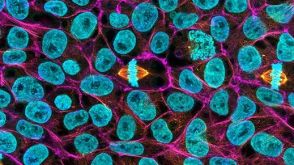 点播Pluripotent Stem Cell Course Learn how to maintain human pluripotent stem cells (hPSCs) and assess their quality and characteristics.


 沪公网安备31010102008431号