Porayette P et al. (DEC 2007)
Biochemical and biophysical research communications 364 3 522--527
Amyloid-?? precursor protein expression and modulation in human embryonic stem cells: A novel role for human chorionic gonadotropin
The amyloid-beta precursor protein (AbetaPP) is a ubiquitously expressed adhesion and neuritogenic protein whose processing has previously been shown to be regulated by reproductive hormones including the gonadotropin luteinizing hormone (LH) in human neuroblastoma cells. We report for the first time the expression of AbetaPP in human embryonic stem (hES) cells at the mRNA and protein levels. Using N- and C-terminal antibodies against AbetaPP,we detected both the mature and immature forms of AbetaPP as well as truncated variants ( approximately 53kDa,47kDa,and 29kDa) by immunoblot analyses. Expression of AbetaPP is regulated by both the stemness of the cells and pregnancy-associated hormones. Addition of human chorionic gonadotropin,the fetal equivalent of LH that is dramatically elevated during pregnancy,markedly increased the expression of all AbetaPP forms. These results indicate a critical molecular signaling link between the hormonal environment of pregnancy and the expression of AbetaPP in hES cells that is suggestive of an important function for this protein during early human embryogenesis prior to the formation of neural precursor cells.
View Publication
Massumi M et al. ( 2016)
PloS one 11 10 e0164457
An Abbreviated Protocol for In Vitro Generation of Functional Human Embryonic Stem Cell-Derived Beta-Like Cells.
The ability to yield glucose-responsive pancreatic beta-cells from human pluripotent stem cells in vitro will facilitate the development of the cell replacement therapies for the treatment of Type 1 Diabetes. Here,through the sequential in vitro targeting of selected signaling pathways,we have developed an abbreviated five-stage protocol (25-30 days) to generate human Embryonic Stem Cell-Derived Beta-like Cells (ES-DBCs). We showed that Geltrex,as an extracellular matrix,could support the generation of ES-DBCs more efficiently than that of the previously described culture systems. The activation of FGF and Retinoic Acid along with the inhibition of BMP,SHH and TGF-beta led to the generation of 75% NKX6.1+/NGN3+ Endocrine Progenitors. The inhibition of Notch and tyrosine kinase receptor AXL,and the treatment with Exendin-4 and T3 in the final stage resulted in 35% mono-hormonal insulin positive cells,1% insulin and glucagon positive cells and 30% insulin and NKX6.1 co-expressing cells. Functionally,ES-DBCs were responsive to high glucose in static incubation and perifusion studies,and could secrete insulin in response to successive glucose stimulations. Mitochondrial metabolic flux analyses using Seahorse demonstrated that the ES-DBCs could efficiently metabolize glucose and generate intracellular signals to trigger insulin secretion. In conclusion,targeting selected signaling pathways for 25-30 days was sufficient to generate ES-DBCs in vitro. The ability of ES-DBCs to secrete insulin in response to glucose renders them a promising model for the in vitro screening of drugs,small molecules or genes that may have potential to influence beta-cell function.
View Publication
Baek ST et al. (DEC 2015)
Nature medicine 21 12 1445--1454
An AKT3-FOXG1-reelin network underlies defective migration in human focal malformations of cortical development.
Focal malformations of cortical development (FMCDs) account for the majority of drug-resistant pediatric epilepsy. Postzygotic somatic mutations activating the phosphatidylinositol-4,5-bisphosphate-3-kinase (PI3K)-protein kinase B (AKT)-mammalian target of rapamycin (mTOR) pathway are found in a wide range of brain diseases,including FMCDs. It remains unclear how a mutation in a small fraction of cells disrupts the architecture of the entire hemisphere. Within human FMCD-affected brain,we found that cells showing activation of the PI3K-AKT-mTOR pathway were enriched for the AKT3(E17K) mutation. Introducing the FMCD-causing mutation into mouse brain resulted in electrographic seizures and impaired hemispheric architecture. Mutation-expressing neural progenitors showed misexpression of reelin,which led to a non-cell autonomous migration defect in neighboring cells,due at least in part to derepression of reelin transcription in a manner dependent on the forkhead box (FOX) transcription factor FOXG1. Treatments aimed at either blocking downstream AKT signaling or inactivating reelin restored migration. These findings suggest a central AKT-FOXG1-reelin signaling pathway in FMCD and support pathway inhibitors as potential treatments or therapies for some forms of focal epilepsy.
View Publication
Tang C et al. (SEP 2011)
Nature biotechnology 29 9 829--34
An antibody against SSEA-5 glycan on human pluripotent stem cells enables removal of teratoma-forming cells.
An important risk in the clinical application of human pluripotent stem cells (hPSCs),including human embryonic and induced pluripotent stem cells (hESCs and hiPSCs),is teratoma formation by residual undifferentiated cells. We raised a monoclonal antibody against hESCs,designated anti-stage-specific embryonic antigen (SSEA)-5,which binds a previously unidentified antigen highly and specifically expressed on hPSCs--the H type-1 glycan. Separation based on SSEA-5 expression through fluorescence-activated cell sorting (FACS) greatly reduced teratoma-formation potential of heterogeneously differentiated cultures. To ensure complete removal of teratoma-forming cells,we identified additional pluripotency surface markers (PSMs) exhibiting a large dynamic expression range during differentiation: CD9,CD30,CD50,CD90 and CD200. Immunohistochemistry studies of human fetal tissues and bioinformatics analysis of a microarray database revealed that concurrent expression of these markers is both common and specific to hPSCs. Immunodepletion with antibodies against SSEA-5 and two additional PSMs completely removed teratoma-formation potential from incompletely differentiated hESC cultures.
View Publication
Koh PW et al. ( 2016)
Scientific data 3 160109
An atlas of transcriptional, chromatin accessibility, and surface marker changes in human mesoderm development.
Mesoderm is the developmental precursor to myriad human tissues including bone,heart,and skeletal muscle. Unravelling the molecular events through which these lineages become diversified from one another is integral to developmental biology and understanding changes in cellular fate. To this end,we developed an in vitro system to differentiate human pluripotent stem cells through primitive streak intermediates into paraxial mesoderm and its derivatives (somites,sclerotome,dermomyotome) and separately,into lateral mesoderm and its derivatives (cardiac mesoderm). Whole-population and single-cell analyses of these purified populations of human mesoderm lineages through RNA-seq,ATAC-seq,and high-throughput surface marker screens illustrated how transcriptional changes co-occur with changes in open chromatin and surface marker landscapes throughout human mesoderm development. This molecular atlas will facilitate study of human mesoderm development (which cannot be interrogated in vivo due to restrictions on human embryo studies) and provides a broad resource for the study of gene regulation in development at the single-cell level,knowledge that might one day be exploited for regenerative medicine.
View Publication
Meng G et al. (APR 2016)
Methods in molecular biology (Clifton,N.J.)
An Effective and Reliable Xeno-free Cryopreservation Protocol for Single Human Pluripotent Stem Cells.
Efficient cryopreservation of human pluripotent stem cells (hPSCs) in chemically defined,xeno-free conditions is highly desirable for medical research and clinical applications such as cell-based therapies. Here we present a simple and effective slow freezing-rapid thawing protocol for the cryopreservation of feeder-free,single hPSCs. This cryopreservation protocol involves the supplementation of 10 % dimethyl sulfoxide (DMSO) and 10 $$M Rho-associated kinase inhibitor Y-27632 into two types of xeno-free,defined media supplements (Knockout Serum Replacement and TeSR2). High post-thaw cell recovery (˜90 %) and cell expansion (˜70 %) can be achieved using this protocol. The cryopreserved single cells retain the morphological characteristics of hPSCs and differentiation capabilities of pluripotent stem cells.
View Publication
Zhu X et al. (SEP 2014)
Sci Rep 4 6420
An efficient genotyping method for genome-modified animals and human cells generated with CRISPR/Cas9 system
The rapid generation of various species and strains of laboratory animals using CRISPR/Cas9 technology has dramatically accelerated the interrogation of gene function in vivo. So far,the dominant approach for genotyping of genome-modified animals has been the T7E1 endonuclease cleavage assay. Here,we present a polyacrylamide gel electrophoresis-based (PAGE) method to genotype mice harboring different types of indel mutations. We developed 6 strains of genome-modified mice using CRISPR/Cas9 system,and utilized this approach to genotype mice from F0 to F2 generation,which included single and multiplexed genome-modified mice. We also determined the maximal detection sensitivity for detecting mosaic DNA using PAGE-based assay as 0.5%. We further applied PAGE-based genotyping approach to detect CRISPR/Cas9-mediated on- and off-target effect in human 293T and induced pluripotent stem cells (iPSCs). Thus,PAGE-based genotyping approach meets the rapidly increasing demand for genotyping of the fast-growing number of genome-modified animals and human cell lines created using CRISPR/Cas9 system or other nuclease systems such as TALEN or ZFN.
View Publication
Moralli D et al. (JUN 2011)
Stem Cell Reviews and Reports 7 2 471--477
An Improved Technique for Chromosomal Analysis of Human ES and iPS Cells
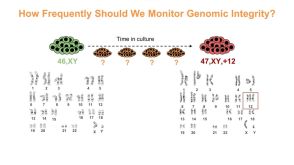
Prolonged in vitro culture of human embryonic stem (hES) cells can result in chromosomal abnormalities believed to confer a selective advantage. This potential occurrence has crucial implications for the appropriate use of hES cells for research and therapeutic purposes. In view of this,time-point karyotypic evaluation to assess genetic stability is recommended as a necessary control test to be carried out during extensive 'passaging'. Standard techniques currently used for the cytogenetic assessment of ES cells include G-banding and/or Fluorescence in situ Hybridization (FISH)-based protocols for karyotype analysis,including M-FISH and SKY. Critical for both banding and FISH techniques are the number and quality of metaphase spreads available for analysis at the microscope. Protocols for chromosome preparation from hES and human induced pluripotent stem (hiPS) cells published so far appear to differ considerably from one laboratory to another. Here we present an optimized technique,in which both the number and the quality of chromosome metaphase spreads were substantially improved when compared to current standard techniques for chromosome preparations. We believe our protocol represents a significant advancement in this line of work,and has the required attributes of simplicity and consistency to be widely accepted as a reference method for high quality,fast chromosomal analysis of human ES and iPS cells.
View Publication
Nguyen TY et al. (OCT 2013)
PLoS ONE 8 10 e76547
An In Vitro Mechanism Study on the Proliferation and Pluripotency of Human Embryonic Stems Cells in Response to Magnesium Degradation
Magnesium (Mg) is a promising biodegradable metallic material for applications in cellular/tissue engineering and biomedical implants/devices. To advance clinical translation of Mg-based biomaterials,we investigated the effects and mechanisms of Mg degradation on the proliferation and pluripotency of human embryonic stem cells (hESCs). We used hESCs as the in vitro model system to study cellular responses to Mg degradation because they are sensitive to toxicants and capable of differentiating into any cell types of interest for regenerative medicine. In a previous study when hESCs were cultured in vitro with either polished metallic Mg (99.9% purity) or pre-degraded Mg,cell death was observed within the first 30 hours of culture. Excess Mg ions and hydroxide ions induced by Mg degradation may have been the causes for the observed cell death; hence,their respective effects on hESCs were investigated for the first time to reveal the potential mechanisms. For this purpose,the mTeSR®1 hESC culture media was either modified to an alkaline pH of 8.1 or supplemented with 0.4-40 mM of Mg ions. We showed that the initial increase of media pH to 8.1 had no adverse effect on hESC proliferation. At all tested Mg ion dosages,the hESCs grew to confluency and retained pluripotency as indicated by the expression of OCT4,SSEA3,and SOX2. When the supplemental Mg ion dosages increased to greater than 10 mM,however,hESC colony morphology changed and cell counts decreased. These results suggest that Mg-based implants or scaffolds are promising in combination with hESCs for regenerative medicine applications,providing their degradation rate is moderate. Additionally,the hESC culture system could serve as a standard model for cytocompatibility studies of Mg in vitro,and an identified 10 mM critical dosage of Mg ions could serve as a design guideline for safe degradation of Mg-based implants/scaffolds.
View Publication
Watson CL et al. (NOV 2014)
Nature Medicine 20 11 1310--4
An in vivo model of human small intestine using pluripotent stem cells.
Differentiation of human pluripotent stem cells (hPSCs) into organ-specific subtypes offers an exciting avenue for the study of embryonic development and disease processes,for pharmacologic studies and as a potential resource for therapeutic transplant. To date,limited in vivo models exist for human intestine,all of which are dependent upon primary epithelial cultures or digested tissue from surgical biopsies that include mesenchymal cells transplanted on biodegradable scaffolds. Here,we generated human intestinal organoids (HIOs) produced in vitro from human embryonic stem cells (ESCs) or induced pluripotent stem cells (iPSCs) that can engraft in vivo. These HIOs form mature human intestinal epithelium with intestinal stem cells contributing to the crypt-villus architecture and a laminated human mesenchyme,both supported by mouse vasculature ingrowth. In vivo transplantation resulted in marked expansion and maturation of the epithelium and mesenchyme,as demonstrated by differentiated intestinal cell lineages (enterocytes,goblet cells,Paneth cells,tuft cells and enteroendocrine cells),presence of functional brush-border enzymes (lactase,sucrase-isomaltase and dipeptidyl peptidase 4) and visible subepithelial and smooth muscle layers when compared with HIOs in vitro. Transplanted intestinal tissues demonstrated digestive functions as shown by permeability and peptide uptake studies. Furthermore,transplanted HIO-derived tissue was responsive to systemic signals from the host mouse following ileocecal resection,suggesting a role for circulating factors in the intestinal adaptive response. This model of the human small intestine may pave the way for studies of intestinal physiology,disease and translational studies.
View Publication
Ting S et al. (SEP 2014)
Stem Cell Research 13 2 202--213
An intermittent rocking platform for integrated expansion and differentiation of human pluripotent stem cells to cardiomyocytes in suspended microcarrier cultures
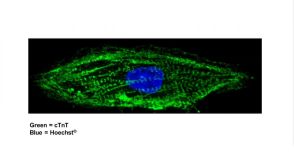
The development of novel platforms for large scale production of human embryonic stem cells (hESC) derived cardiomyocytes (CM) becomes more crucial as the demand for CMs in preclinical trials,high throughput cardio toxicity assays and future regenerative therapeutics rises. To this end,we have designed a microcarrier (MC) suspension agitated platform that integrates pluripotent hESC expansion followed by CM differentiation in a continuous,homogenous process.Hydrodynamic shear stresses applied during the hESC expansion and CM differentiation steps drastically reduced the capability of the cells to differentiate into CMs. Applying vigorous stirring during pluripotent hESC expansion on Cytodex 1 MC in spinner cultures resulted in low CM yields in the following differentiation step (cardiac troponin-T (cTnT): 22.83. ??. 2.56%; myosin heavy chain (MHC): 19.30. ??. 5.31%). Whereas the lower shear experienced in side to side rocker (wave type) platform resulted in higher CM yields (cTNT: 47.50. ??. 7.35%; MHC: 42.85. ??. 2.64%). The efficiency of CM differentiation is also affected by the hydrodynamic shear stress applied during the first 3. days of the differentiation stage. Even low shear applied continuously by side to side rocker agitation resulted in very low CM differentiation efficiency (cTnT. textless. 5%; MHC. textless. 2%). Simply by applying intermittent agitation during these 3. days followed by continuous agitation for the subsequent 9. days,CM differentiation efficiency can be substantially increased (cTNT: 65.73. ??. 10.73%; MHC: 59.73. ??. 9.17%). These yields are 38.3% and 39.3% higher (for cTnT and MHC respectively) than static culture control.During the hESC expansion phase,cells grew on continuously agitated rocker platform as pluripotent cell/MC aggregates (166??88??105??m2) achieving a cell concentration of 3.74??0.55??106cells/mL (18.89??2.82 fold expansion) in 7days. These aggregates were further differentiated into CMs using a WNT modulation differentiation protocol for the subsequent 12days on a rocking platform with an intermittent agitation regime during the first 3days. Collectively,the integrated MC rocker platform produced 190.5??58.8??106 CMs per run (31.75??9.74 CM/hESC seeded). The robustness of the system was demonstrated by using 2 cells lines,hESC (HES-3) and human induced pluripotent stem cell (hiPSC) IMR-90. The CM/MC aggregates formed extensive sarcomeres that exhibited cross-striations confirming cardiac ontogeny. Functionality of the CMs was demonstrated by monitoring the effect of inotropic drug,Isoproterenol on beating frequency.In conclusion,we have developed a simple robust and scalable platform that integrates both hESC expansion and CM differentiation in one unit process which is capable of meeting the need for large amounts of CMs. ?? 2014.
View Publication