Alkaline phosphatase-positive colony formation is a sensitive, specific, and quantitative indicator of undifferentiated human embryonic stem cells.
Human embryonic stem cells (hESCs) can be maintained in vitro as immortal pluripotent cells but remain responsive to many differentiation-inducing signals. Investigation of the initial critical events involved in differentiation induction would be greatly facilitated if a specific,robust,and quantitative assay for pluripotent hESCs with self-renewal potential were available. Here we describe the results of a series of experiments to determine whether the formation of adherent alkaline phosphatase-positive (AP(+)) colonies under conditions optimized for propagating undifferentiated hESCs would meet this need. The findings can be summarized as follows. (a) Most colonies obtained under these conditions consist of textgreateror=30 AP(+) cells that coexpress OCT4,NANOG,SSEA3,SSEA4,TRA-1-60,and TRA-1-81. (b) Most such colonies are derived from SSEA3(+) cells. (c) Primary colonies contain cells that produce secondary colonies of the same composition,including cells that initiate multilineage differentiation in embryoid bodies (EBs). (d) Colony formation is independent of plating density or the colony-forming cell (CFC) content of the test population over a wide range of cell concentrations. (e) CFC frequencies decrease when differentiation is induced by exposure either to retinoic acid or to conditions that stimulate EB formation. Interestingly,this loss of AP(+) clonogenic potential also occurs more rapidly than the loss of SSEA3 or OCT4 expression. The CFC assay thus provides a simple,reliable,broadly applicable,and highly specific functional assay for quantifying undifferentiated hESCs with self-renewal potential. Its use under standardized assay conditions should enhance future elucidation of the mechanisms that regulate hESC propagation and their early differentiation.
View Publication
产品号#:
05850
05857
05870
05875
07923
36254
85850
85857
85870
85875
产品名:
Dispase (1 U/mL)
DMEM/F-12 with 15 mM HEPES
mTeSR™1
mTeSR™1
Erceg S et al. (MAY 2008)
PLoS ONE 3 5 e2122
Differentiation of human embryonic stem cells to regional specific neural precursors in chemically defined medium conditions.
BACKGROUND: Human embryonic stem cells (hESC) provide a unique model to study early events in human development. The hESC-derived cells can potentially be used to replace or restore different tissues including neuronal that have been damaged by disease or injury.backslashnbackslashnMETHODOLOGY AND PRINCIPAL FINDINGS: The cells of two different hESC lines were converted to neural rosettes using adherent and chemically defined conditions. The progenitor cells were exposed to retinoic acid (RA) or to human recombinant basic fibroblast growth factor (bFGF) in the late phase of the rosette formation. Exposing the progenitor cells to RA suppressed differentiation to rostral forebrain dopamine neural lineage and promoted that of spinal neural tissue including motor neurons. The functional characteristics of these differentiated neuronal precursors under both,rostral (bFGF) and caudalizing (RA) signals were confirmed by patch clamp analysis.backslashnbackslashnCONCLUSIONS/SIGNIFICANCE: These findings suggest that our differentiation protocol has the capacity to generate region-specific and electrophysiologically active neurons under in vitro conditions without embryoid body formation,co-culture with stromal cells and without presence of cells of mesodermal or endodermal lineages.
View Publication
产品号#:
05850
05857
05870
05875
85850
85857
85870
85875
产品名:
mTeSR™1
mTeSR™1
Bañ et al. (SEP 2008)
DNA repair 7 9 1471--1483
Mouse but not human embryonic stem cells are deficient in rejoining of ionizing radiation-induced DNA double-strand breaks.
Mouse embryonic stem (mES) cells will give rise to all of the cells of the adult mouse,but they failed to rejoin half of the DNA double-strand breaks (dsb) produced by high doses of ionizing radiation. A deficiency in DNA-PK(cs) appears to be responsible since mES cells expressed textless10% of the level of mouse embryo fibroblasts (MEFs) although Ku70/80 protein levels were higher than MEFs. However,the low level of DNA-PK(cs) found in wild-type cells appeared sufficient to allow rejoining of dsb after doses textless20Gy even in G1 phase cells. Inhibition of DNA-PK(cs) with wortmannin and NU7026 still sensitized mES cells to radiation confirming the importance of the residual DNA-PK(cs) at low doses. In contrast to wild-type cells,mES cells lacking H2AX,a histone protein involved in the DNA damage response,were radiosensitive but they rejoined double-strand breaks more rapidly. Consistent with more rapid dsb rejoining,H2AX(-/-) mES cells also expressed 6 times more DNA-PK(cs) than wild-type mES cells. Similar results were obtained for ATM(-/-) mES cells. Differentiation of mES cells led to an increase in DNA-PK(cs),an increase in dsb rejoining rate,and a decrease in Ku70/80. Unlike mouse ES,human ES cells were proficient in rejoining of dsb and expressed high levels of DNA-PK(cs). These results confirm the importance of homologous recombination in the accurate repair of double-strand breaks in mES cells,they help explain the chromosome abnormalities associated with deficiencies in H2AX and ATM,and they add to the growing list of differences in the way rodent and human cells deal with DNA damage.
View Publication
产品号#:
05850
05857
05870
05875
00321
85850
85857
85870
85875
产品名:
mTeSR™1
mTeSR™1
Raya A et al. (JAN 2008)
Cold Spring Harbor Symposia on Quantitative Biology 73 127--135
Generation of cardiomyocytes from new human embryonic stem cell lines derived from poor-quality blastocysts
Human embryonic stem (hES) cells represent a potential source for cell replacement therapy of many degenerative diseases. Most frequently,hES cell lines are derived from surplus embryos from assisted reproduction cycles,independent of their quality or morphology. Here,we show that hES cell lines can be obtained from poor-quality blastocysts with the same efficiency as that obtained from good- or intermediate-quality blastocysts. Furthermore,we show that the self-renewal,pluripotency,and differentiation ability of hES cell lines derived from either source are comparable. Finally,we present a simple and reproducible embryoid body-based protocol for the differentiation of hES cells into functional cardiomyocytes. The five new hES cell lines derived here should widen the spectrum of available resources for investigating the biology of hES cells and advancing toward efficient strategies of regenerative medicine.
View Publication
产品号#:
05850
05857
05870
05875
85850
85857
85870
85875
产品名:
mTeSR™1
mTeSR™1
Thomas RJ et al. (APR 2009)
Biotechnology and Bioengineering 102 6 1636--1644
Automated, scalable culture of human embryonic stem cells in feeder-free conditions.
Large-scale manufacture of human embryonic stem cells (hESCs) is prerequisite to their widespread use in biomedical applications. However,current hESC culture strategies are labor-intensive and employ highly variable processes,presenting challenges for scaled production and commercial development. Here we demonstrate that passaging of the hESC lines,HUES7,and NOTT1,with trypsin in feeder-free conditions,is compatible with complete automation on the CompacT SelecT,a commercially available and industrially relevant robotic platform. Pluripotency was successfully retained,as evidenced by consistent proliferation during serial passage,expression of stem cell markers (OCT4,NANOG,TRA1-81,and SSEA-4),stable karyotype,and multi-germlayer differentiation in vitro,including to pharmacologically responsive cardiomyocytes. Automation of hESC culture will expedite cell-use in clinical,scientific,and industrial applications.
View Publication
产品号#:
05850
05857
05870
05875
85850
85857
85870
85875
产品名:
mTeSR™1
mTeSR™1
Wilson K et al. (MAY 2008)
Journal of visualized experiments : JoVE 14 1--3
In vitro and in vivo bioluminescence reporter gene imaging of human embryonic stem cells.
The discovery of human embryonic stem cells (hESCs) has dramatically increased the tools available to medical scientists interested in regenerative medicine. However,direct injection of hESCs,and cells differentiated from hESCs,into living organisms has thus far been hampered by significant cell death,teratoma formation,and host immune rejection. Understanding the in vivo hESC behavior after transplantation requires novel imaging techniques to longitudinally monitor hESC localization,proliferation,and viability. Molecular imaging has given investigators a high-throughput,inexpensive,and sensitive means for tracking in vivo cell proliferation over days,weeks,and even months. This advancement has significantly increased the understanding of the spatio-temporal kinetics of hESC engraftment,proliferation,and teratoma-formation in living subjects. A major advance in molecular imaging has been the extension of noninvasive reporter gene assays from molecular and cellular biology into in vivo multi-modality imaging platforms. These reporter genes,under control of engineered promoters and enhancers that take advantage of the host cell s transcriptional machinery,are introduced into cells using a variety of vector and non-vector methods. Once in the cell,reporter genes can be transcribed either constitutively or only under specific biological or cellular conditions,depending on the type of promoter used. Transcription and translation of reporter genes into bioactive proteins is then detected with sensitive,noninvasive instrumentation (e.g.,CCD cameras) using signal-generating probes such as D-luciferin. To avoid the need for excitatory light to track stem cells in vivo as is required for fluorescence imaging,bioluminescence reporter gene imaging systems require only an exogenously administered probe to induce light emission. Firefly luciferase,derived from the firefly Photinus pyralis,encodes an enzyme that catalyzes D-luciferin to the optically active metabolite,oxyluciferin. Optical activity can then be monitored with an external CCD camera. Stably transduced cells that carry the reporter construct within their chromosomal DNA will pass the reporter construct DNA to daughter cells,allowing for longitudinal monitoring of hESC survival and proliferation in vivo. Furthermore,because expression of the reporter gene product is required for signal generation,only viable parent and daughter cells will create bioluminescence signal; apoptotic or dead cells will not. In this video,the specific materials and methods needed for tracking stem cell proliferation and teratoma formation with bioluminescence imaging will be described.
View Publication
产品号#:
05850
05857
05870
05875
85850
85857
85870
85875
产品名:
mTeSR™1
mTeSR™1
Claassen DA et al. (AUG 2009)
Molecular Reproduction and Development 76 8 722--732
ROCK inhibition enhances the recovery and growth of cryopreserved human embryonic stem cells and human induced pluripotent stem cells
Poor recovery of cryopreserved human embryonic stem (hES) cells and induced pluripotent stem (iPS) cells is a significant impediment to progress with pluripotent stem cells. In this study,we demonstrate that Y-27632,a specific inhibitor of Rho kinase (ROCK) activity,significantly enhances recovery of hES cells from cryopreserved stocks when cultured with or without a growth inactivated feeder layer. Furthermore,treatment with the ROCK inhibitor for several days increased the number of colonies and colony size of hES cells compared to shorter exposures. Remarkably,hES cells that had formed relatively few colonies 5 days after thawing exhibited rapid growth upon addition of Y-27632. Additionally,we determined that Y-27632 significantly improves the recovery of cryopreserved human iPS cells and their growth upon subculture. Thus,Y-27632 provides a means to kick-start" slow-growing human pluripotent stem cells�
View Publication
Hematopoietic and endothelial differentiation of human induced pluripotent stem cells.
Induced pluripotent stem cells (iPSCs) provide an unprecedented opportunity for modeling of human diseases in vitro,as well as for developing novel approaches for regenerative therapy based on immunologically compatible cells. In this study,we employed an OP9 differentiation system to characterize the hematopoietic and endothelial differentiation potential of seven human iPSC lines obtained from human fetal,neonatal,and adult fibroblasts through reprogramming with POU5F1,SOX2,NANOG,and LIN28 and compared it with the differentiation potential of five human embryonic stem cell lines (hESC,H1,H7,H9,H13,and H14). Similar to hESCs,all iPSCs generated CD34(+)CD43(+) hematopoietic progenitors and CD31(+)CD43(-) endothelial cells in coculture with OP9. When cultured in semisolid media in the presence of hematopoietic growth factors,iPSC-derived primitive blood cells formed all types of hematopoietic colonies,including GEMM colony-forming cells. Human induced pluripotent cells (hiPSCs)-derived CD43(+) cells could be separated into the following phenotypically defined subsets of primitive hematopoietic cells: CD43(+)CD235a(+)CD41a(+/-) (erythro-megakaryopoietic),lin(-)CD34(+)CD43(+)CD45(-) (multipotent),and lin(-)CD34(+)CD43(+)CD45(+) (myeloid-skewed) cells. Although we observed some variations in the efficiency of hematopoietic differentiation between different hiPSCs,the pattern of differentiation was very similar in all seven tested lines obtained through reprogramming of human fetal,neonatal,or adult fibroblasts with three or four genes. Although several issues remain to be resolved before iPSC-derived blood cells can be administered to humans for therapeutic purposes,patient-specific iPSCs can already be used for characterization of mechanisms of blood diseases and for identification of molecules that can correct affected genetic networks.
View Publication


 EasySep™小鼠TIL(CD45)正选试剂盒




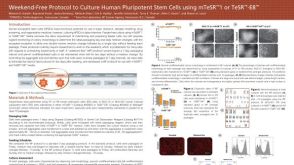 科学海报Weekend-Free Protocol to Culture Human Pluripotent Stem Cells Using mTeSR™1 or TeSR™-E8™
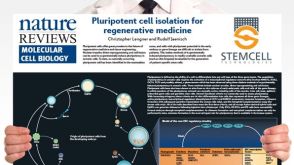 挂图Pluripotent Stem Cell Biology Nuclear transfer, reprogramming and cell fusion to induce pluripotency in somatic cells
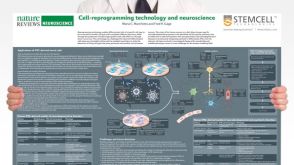 挂图Cell-Reprogramming Technology and Neuroscience Details on human iPSC-derived models of neuropsychiatric and neurodegenerative disorders
 沪公网安备31010102008431号