Synergistic activity of the proteasome inhibitor PS-341 with non-myeloablative 153-Sm-EDTMP skeletally targeted radiotherapy in an orthotopic model of multiple myeloma.
Multiple myeloma is a highly radiosensitive skeletal malignancy,but bone-seeking radionuclides have not yet found their place in disease management. We previously reported that the proteasome inhibitor PS-341 selectively sensitizes myeloma cells to the lethal effects of ionizing radiation. To extend these observations to an in vivo model,we combined PS-341 with the bone-seeking radionuclide 153-Sm-EDTMP. In vitro clonogenic assays demonstrated synergistic killing of myeloma cells exposed to both PS-341 and 153-Sm-EDTMP. Using the orthotopic,syngeneic 5TGM1 myeloma model,the median survivals of mice treated with saline,2 doses of PS-341 (0.5 mg/kg),or a single nonmyeloablative dose of 153-Sm-EDTMP (22.5 MBq) were 21,22,and 28 days,respectively. In contrast,mice treated with combination therapy comprising 2 doses of PS-341 (0.5 mg/kg),1 day prior to and 1 day following 153-Sm-EDTMP (22.5 MBq) showed a significantly prolonged median survival of 49 days (P textless .001). In addition to prolonged survival,this treatment combination yielded reduced clonogenicity of bone marrow-resident 5TGM1 cells,reduced serum myeloma-associated paraprotein levels,and better preservation of bone mineral density. Myelosuppression,determined by peripheral blood cell counts and clonogenicity assays of hematopoietic progenitors,did not differ between animals treated with 153-Sm-EDTMP alone versus those treated with the combination of PS-341 plus 153-Sm-EDTMP. PS-341 is a potent,selective in vivo radiosensitizer that may substantially affect the efficacy of skeletal-targeted radiotherapy in multiple myeloma.
View Publication
产品号#:
04236
产品名:
MethoCult™ SF H4236
Mahdipour E et al. (JAN 2011)
Blood 117 3 815--26
Hoxa3 promotes the differentiation of hematopoietic progenitor cells into proangiogenic Gr-1+CD11b+ myeloid cells.
Injury induces the recruitment of bone marrow-derived cells (BMDCs) that contribute to the repair and regeneration process. The behavior of BMDCs in injured tissue has a profound effect on repair,but the regulation of BMDC behavior is poorly understood. Aberrant recruitment/retention of these cells in wounds of diabetic patients and animal models is associated with chronic inflammation and impaired healing. BMD Gr-1(+)CD11b(+) cells function as immune suppressor cells and contribute significantly to tumor-induced neovascularization. Here we report that Gr-1(+)CD11b(+) cells also contribute to injury-induced neovascularization,but show altered recruitment/retention kinetics in the diabetic environment. Moreover,diabetic-derived Gr-1(+)CD11b(+) cells fail to stimulate neovascularization in vivo and have aberrant proliferative,chemotaxis,adhesion,and differentiation potential. Previously we demonstrated that gene transfer of HOXA3 to wounds of diabetic mice is taken up by and expressed by recruited BMDCs. This is associated with a suppressed inflammatory response,enhanced neovascularization,and accelerated wound healing. Here we show that sustained expression of Hoxa3 in diabetic-derived BMD Gr-1(+)CD11b(+) cells reverses their diabetic phenotype. These findings demonstrate that manipulation of adult stem/progenitor cells ex vivo could be used as a potential therapy in patients with impaired wound healing.
View Publication
产品号#:
03434
03444
产品名:
MethoCult™ GF M3434
MethoCult™ GF M3434
Yoshimi A et al. (MAR 2011)
Blood 117 13 3617--28
Evi1 represses PTEN expression and activates PI3K/AKT/mTOR via interactions with polycomb proteins.
Evi1 (ecotropic viral integration site 1) is essential for proliferation of hematopoietic stem cells and implicated in the development of myeloid disorders. Particularly,high Evi1 expression defines one of the largest clusters in acute myeloid leukemia and is significantly associated with extremely poor prognosis. However,mechanistic basis of Evi1-mediated leukemogenesis has not been fully elucidated. Here,we show that Evi1 directly represses phosphatase and tensin homologue deleted on chromosome 10 (PTEN) transcription in the murine bone marrow,which leads to activation of AKT/mammalian target of rapamycin (mTOR) signaling. In a murine bone marrow transplantation model,Evi1 leukemia showed modestly increased sensitivity to an mTOR inhibitor rapamycin. Furthermore,we found that Evi1 binds to several polycomb group proteins and recruits polycomb repressive complexes for PTEN down-regulation,which shows a novel epigenetic mechanism of AKT/mTOR activation in leukemia. Expression analyses and ChIPassays with human samples indicate that our findings in mice models are recapitulated in human leukemic cells. Dependence of Evi1-expressing leukemic cells on AKT/mTOR signaling provides the first example of targeted therapeutic modalities that suppress the leukemogenic activity of Evi1. The PTEN/AKT/mTOR signaling pathway and the Evi1-polycomb interaction can be promising therapeutic targets for leukemia with activated Evi1.
View Publication
产品号#:
03434
03444
产品名:
MethoCult™ GF M3434
MethoCult™ GF M3434
Neves H et al. (MAY 2006)
Stem cells (Dayton,Ohio) 24 5 1328--37
Effects of Delta1 and Jagged1 on early human hematopoiesis: correlation with expression of notch signaling-related genes in CD34+ cells.
It has been shown that Notch signaling mediated by ligands of both Jagged and Delta families expands the hematopoietic stem cell compartment while blocking or delaying terminal myeloid differentiation. Here we show that Delta1- and Jagged1-expressing stromal cells have distinct effects on the clonogenic and differentiation capacities of human CD34(+) CD38(+) cells. Jagged1 increases the number of bipotent colony-forming unit-granulocyte macrophage (CFU-GM) and unipotent progenitors (CFU-granulocytes and CFU-macrophages),without quantitatively affecting terminal cell differentiation,whereas Delta1 reduces the number of CFU-GM and differentiated monocytic cells. Expression analysis of genes coding for Notch receptors,Notch targets,and Notch signaling modulators in supernatant CD34(+) cells arising upon contact with Jagged1 and Delta1 shows dynamic and differential gene expression profiles over time. At early time points,modest upregulation of Notch1,Notch3,and Hes1 was observed in Jagged1-CD34(+) cells,whereas those in contact with Delta1 strikingly upregulated Notch3 and Hes1. Later,myeloid progenitors with strong clonogenic potential emerging upon contact with Jagged1 upregulated Notch1 and Deltex and downregulated Notch signaling modulators,whereas T/NK progenitors originated by Delta1 strikingly upregulated Notch3 and Deltex and,to a lesser extent,Hes1,Lunatic Fringe,and Numb. Together,the data unravel previously unrecognized expression patterns of Notch signaling-related genes in CD34(+) CD38(+) cells as they develop in Jagged1- or Delta1-stromal cell environments,which appear to reflect sequential maturational stages of CD34(+) cells into distinct cell lineages.
View Publication
产品号#:
04435
04445
产品名:
MethoCult™ H4435 Enriched
MethoCult™ H4435 Enriched
Feng R et al. (MAR 2007)
Blood 109 5 2130--8
SDX-308, a nonsteroidal anti-inflammatory agent, inhibits NF-kappaB activity, resulting in strong inhibition of osteoclast formation/activity and multiple myeloma cell growth.
Multiple myeloma is characterized by increased osteoclast activity that results in bone destruction and lytic lesions. With the prolonged overall patient survival achieved by new treatment modalities,additional drugs are required to inhibit bone destruction. We focused on a novel and more potent structural analog of the nonsteroidal anti-inflammatory drug etodolac,known as SDX-308,and its effects on osteoclastogenesis and multiple myeloma cells. SDX-101 is another structural analog of etodolac that is already used in clinical trials for the treatment of B-cell chronic lymphocytic leukemia (B-CLL). Compared with SDX-101,a 10-fold lower concentration of SDX-308 induced potent (60%-80%) inhibition of osteoclast formation,and a 10- to 100-fold lower concentration inhibited multiple myeloma cell proliferation. Bone resorption was completely inhibited by SDX-308,as determined in dentin-based bone resorption assays. SDX-308 decreased constitutive and RANKL-stimulated NF-kappaB activation and osteoclast formation in an osteoclast cellular model,RAW 264.7. SDX-308 effectively suppressed TNF-alpha-induced IKK-gamma and IkappaB-alpha phosphorylation and degradation and subsequent NF-kappaB activation in human multiple myeloma cells. These results indicate that SDX-308 effectively inhibits multiple myeloma cell proliferation and osteoclast activity,potentially by controlling NF-kappaB activation signaling. We propose that SDX-308 is a promising therapeutic candidate to inhibit multiple myeloma growth and osteoclast activity and that it should receive attention for further study.
View Publication
产品号#:
04434
04444
产品名:
MethoCult™ H4434 Classic
MethoCult™ H4434 Classic
Moreau-Gaudry F et al. (NOV 2001)
Blood 98 9 2664--72
High-level erythroid-specific gene expression in primary human and murine hematopoietic cells with self-inactivating lentiviral vectors.
Use of oncoretroviral vectors in gene therapy for hemoglobinopathies has been impeded by low titer vectors,genetic instability,and poor expression. Fifteen self- inactivating (SIN) lentiviral vectors using 4 erythroid promoters in combination with 4 erythroid enhancers with or without the woodchuck hepatitis virus postregulatory element (WPRE) were generated using the enhanced green fluorescent protein as a reporter gene. Vectors with high erythroid-specific expression in cell lines were tested in primary human CD34(+) cells and in vivo in the murine bone marrow (BM) transplantation model. Vectors containing the ankyrin-1 promoter showed high-level expression and stable proviral transmission. Two vectors containing the ankyrin-1 promoter and 2 erythroid enhancers (HS-40 plus GATA-1 or HS-40 plus 5-aminolevulinate synthase intron 8 [I8] enhancers) and WPRE expressed at levels higher than the HS2/beta-promoter vector in bulk unilineage erythroid cultures and individual erythroid blast-forming units derived from human BM CD34(+) cells. Sca1(+)/lineage(-) Ly5.1 mouse hematopoietic cells,transduced with these 2 ankyrin-1 promoter vectors,were injected into lethally irradiated Ly5.2 recipients. Eleven weeks after transplantation,high-level expression was seen from both vectors in blood (63%-89% of red blood cells) and erythroid cells in BM (70%-86% engraftment),compared with negligible expression in myeloid and lymphoid lineages in blood,BM,spleen,and thymus (0%-4%). The I8/HS-40-containing vector encoding a hybrid human beta/gamma-globin gene led to 43% to 113% human gamma-globin expression/copy of the mouse alpha-globin gene. Thus,modular use of erythroid-specific enhancers/promoters and WPRE in SIN-lentiviral vectors led to identification of high-titer,stably transmitted vectors with high-level erythroid-specific expression for gene therapy of red cell diseases.
View Publication


 EasySep™小鼠TIL(CD45)正选试剂盒




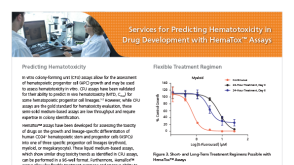 产品手册Services for Predicting Hematotoxicity in Drug Development with HemaTox™ Assays





 沪公网安备31010102008431号