C. Imbratta et al. (apr 2019)
Scientific reports 9 1 6135
Maf deficiency in T cells dysregulates Treg - TH17 balance leading to spontaneous colitis.
The maintenance of homeostasis in the gut is a major challenge for the immune system. Here we demonstrate that the transcription factor MAF plays a central role in T cells for the prevention of gastro-intestinal inflammation. Conditional knock out mice lacking Maf in all T cells developed spontaneous late-onset colitis,correlating with a decrease of FOXP3+RORgammat+ T cells proportion,dampened IL-10 production in the colon and an increase of inflammatory TH17 cells. Strikingly,FOXP3+ specific conditional knock out mice for MAF did not develop colitis and demonstrated normal levels of IL-10 in their colon,despite the incapacity of regulatory T cells lacking MAF to suppress colon inflammation in Rag1-/- mice transferred with na{\{i}}ve CD4+ T cells. We showed that one of the cellular sources of IL-10 in the colon of these mice are TH17 cells. Thus MAF is critically involved in the maintenance of the gut homeostasis by regulating the balance between Treg and TH17 cells either at the level of their differentiation or through the modulation of their functions."
View Publication
产品号#:
19765
19765RF
19852
19852RF
产品名:
EasySep™小鼠Naïve CD4+ T细胞分选试剂盒
RoboSep™ 小鼠Naïve CD4+ T细胞分选试剂盒
EasySep™小鼠CD4+ T细胞分选试剂盒
RoboSep™ 小鼠CD4+ T细胞分选试剂盒
Q. Haas et al. ( 2019)
Cancer immunology research 7 5 707--718
Siglec-9 Regulates an Effector Memory CD8+ T-cell Subset That Congregates in the Melanoma Tumor Microenvironment.
Emerging evidence suggests an immunosuppressive role of altered tumor glycosylation due to downregulation of innate immune responses via immunoregulatory Siglecs. In contrast,human T cells,a major anticancer effector cell,only rarely express Siglecs. However,here,we report that the majority of intratumoral,but not peripheral blood,cytotoxic CD8+ T cells expressed Siglec-9 in melanoma. We identified Siglec-9+ CD8+ T cells as a subset of effector memory cells with high functional capacity and signatures of clonal expansion. This cytotoxic T-cell subset was functionally inhibited in the presence of Siglec-9 ligands or by Siglec-9 engagement by specific antibodies. TCR signaling pathways and key effector functions (cytotoxicity,cytokine production) of CD8+ T cells were suppressed by Siglec-9 engagement,which was associated with the phosphorylation of the inhibitory protein tyrosine phosphatase SHP-1,but not SHP-2. Expression of cognate Siglec-9 ligands was observed on the majority of tumor cells in primary and metastatic melanoma specimens. Targeting the tumor-restricted,glycosylation-dependent Siglec-9 axis may unleash this intratumoral T-cell subset,while confining T-cell activation to the tumor microenvironment.
View Publication
产品号#:
17953
17953RF
100-0710
产品名:
EasySep™人CD8+ T细胞分选试剂盒
RoboSep™ 人CD8+ T细胞分选试剂盒
EasySep™人CD8+ T细胞分选试剂盒
C. Gu et al. (jul 2019)
Journal of immunology (Baltimore,Md. : 1950) 203 2 389--399
Signaling Cascade through DC-ASGPR Induces Transcriptionally Active CREB for IL-10 Induction and Immune Regulation.
The types and magnitude of Ag-specific immune responses can be determined by the functional plasticity of dendritic cells (DCs). However,how DCs display functional plasticity and control host immune responses have not been fully understood. In this study,we report that ligation of DC-asialoglycoprotein receptor (DC-ASGPR),a C-type lectin receptor (CLR) expressed on human DCs,resulted in rapid activation of Syk,followed by PLCgamma2 and PKCdelta engagements. However,different from other Syk-coupled CLRs,including Dectin-1,signaling cascade through DC-ASGPR did not trigger NF-kappaB activation. Instead,it selectively activated MAPK ERK1/2 and JNK. Rapid and prolonged phosphorylation of ERK1/2 led to sequential activation of p90RSK and CREB,which consequently bound to IL10 promoter and initiated cytokine expression. In addition,DC-ASGPR ligation activated Akt,which differentially regulated the activities of GSK-3alpha/beta and beta-catenin and further contributed to IL-10 expression. Our observations demonstrate that DC-ASGPR induces IL-10 expression via an intrinsic signaling pathway,which provides a molecular explanation for DC-ASGPR-mediated programing of DCs to control host immune responses.
View Publication
产品号#:
19251
19251RF
19052
19052RF
产品名:
EasySep™人Pan-DC预富集试剂盒
RoboSep™ 人Pan-DC预富集试剂盒含滤芯吸头
EasySep™人CD4+ T细胞富集试剂盒
RoboSep™ 人CD4+ T细胞富集试剂盒含滤芯吸头
E. Drent et al. (jul 2019)
Clinical cancer research : an official journal of the American Association for Cancer Research 25 13 4014--4025
Combined CD28 and 4-1BB Costimulation Potentiates Affinity-tuned Chimeric Antigen Receptor-engineered T Cells.
PURPOSE Targeting nonspecific,tumor-associated antigens (TAA) with chimeric antigen receptors (CAR) requires specific attention to restrict possible detrimental on-target/off-tumor effects. A reduced affinity may direct CAR-engineered T (CAR-T) cells to tumor cells expressing high TAA levels while sparing low expressing normal tissues. However,decreasing the affinity of the CAR-target binding may compromise the overall antitumor effects. Here,we demonstrate the prime importance of the type of intracellular signaling on the function of low-affinity CAR-T cells. EXPERIMENTAL DESIGN We used a series of single-chain variable fragments (scFv) with five different affinities targeting the same epitope of the multiple myeloma-associated CD38 antigen. The scFvs were incorporated in three different CAR costimulation designs and we evaluated the antitumor functionality and off-tumor toxicity of the generated CAR-T cells in vitro and in vivo. RESULTS We show that the inferior cytotoxicity and cytokine secretion mediated by CD38 CARs of very low-affinity (Kd {\textless} 1.9 × 10⁻⁶ mol/L) bearing a 4-1BB intracellular domain can be significantly improved when a CD28 costimulatory domain is used. Additional 4-1BB signaling mediated by the coexpression of 4-1BBL provided the CD28-based CD38 CAR-T cells with superior proliferative capacity,preservation of a central memory phenotype,and significantly improved in vivo antitumor function,while preserving their ability to discriminate target antigen density. CONCLUSIONS A combinatorial costimulatory design allows the use of very low-affinity binding domains (Kd {\textless} 1 mumol/L) for the construction of safe but also optimally effective CAR-T cells. Thus,very-low-affinity scFvs empowered by selected costimulatory elements can enhance the clinical potential of TAA-targeting CARs.
View Publication
产品号#:
04534
04544
17856
17856RF
100-1569
产品名:
MethoCult™H4534经典无EPO
MethoCult™H4534经典无EPO
EasySep™人CD34正选试剂盒 II
EasySep™人CD34正选试剂盒 II
EasySep™人CD34正选试剂盒 II
S. C. David et al. (may 2019)
Nature microbiology
Direct interaction of whole-inactivated influenza A and pneumococcal vaccines enhances influenza-specific immunity.
The upper respiratory tract is continuously exposed to a vast array of potentially pathogenic viruses and bacteria. Influenza A virus (IAV) has particular synergism with the commensal bacterium Streptococcus pneumoniae in this niche,and co-infection exacerbates pathogenicity and causes significant mortality. However,it is not known whether this synergism is associated with a direct interaction between the two pathogens. We have previously reported that co-administration of a whole-inactivated IAV vaccine (gamma-Flu) with a whole-inactivated pneumococcal vaccine (gamma-PN) enhances pneumococcal-specific responses. In this study,we show that mucosal co-administration of gamma-Flu and gamma-PN similarly augments IAV-specific immunity,particularly tissue-resident memory cell responses in the lung. In addition,our in vitro analysis revealed that S. pneumoniae directly interacts with both gamma-Flu and with live IAV,facilitating increased uptake by macrophages as well as increased infection of epithelial cells by IAV. These observations provide an additional explanation for the synergistic pathogenicity of IAV and S. pneumoniae,as well as heralding the prospect of exploiting the phenomenon to develop better vaccine strategies for both pathogens.
View Publication
产品号#:
19858
19858RF
产品名:
EasySep™ 小鼠Naïve CD8+ T细胞分选试剂盒
RoboSep™ 小鼠Naïve CD8+ T细胞分选试剂盒
J. H. Choi et al. ( 2019)
Science (New York,N.Y.) 364 6440
LMBR1L regulates lymphopoiesis through Wnt/beta-catenin signaling.
Precise control of Wnt signaling is necessary for immune system development. In this study,we detected severely impaired development of all lymphoid lineages in mice,resulting from an N-ethyl-N-nitrosourea-induced mutation in the limb region 1-like gene (Lmbr1l),which encodes a membrane-spanning protein with no previously described function in immunity. The interaction of LMBR1L with glycoprotein 78 (GP78) and ubiquitin-associated domain-containing protein 2 (UBAC2) attenuated Wnt signaling in lymphocytes by preventing the maturation of FZD6 and LRP6 through ubiquitination within the endoplasmic reticulum and by stabilizing destruction complex" proteins. LMBR1L-deficient T cells exhibited hallmarks of Wnt/beta-catenin activation and underwent apoptotic cell death in response to proliferative stimuli. LMBR1L has an essential function during lymphopoiesis and lymphoid activation acting as a negative regulator of the Wnt/beta-catenin pathway."
View Publication
产品号#:
19853
19853RF
17961
17961RF
产品名:
EasySep™小鼠CD8+ T细胞分选试剂盒
RoboSep™ 小鼠CD8+ T细胞分选试剂盒
EasySep™人Naïve Pan-T细胞分选试剂盒
RoboSep™ 人Naïve Pan-T细胞分选试剂盒
M. Carrino et al. ( 2019)
Cell death discovery 5 98
Prosurvival autophagy is regulated by protein kinase CK1 alpha in multiple myeloma.
Multiple myeloma (MM) is a tumor of plasma cells (PCs). Due to the intense immunoglobulin secretion,PCs are prone to endoplasmic reticulum stress and activate several stress-managing pathways,including autophagy. Indeed,autophagy deregulation is maladaptive for MM cells,resulting in cell death. CK1alpha,a pro-survival kinase in MM,has recently been involved as a regulator of the autophagic flux and of the transcriptional competence of the autophagy-related transcription factor FOXO3a in several cancers. In this study,we investigated the role of CK1alpha in autophagy in MM. To study the autophagic flux we generated clones of MM cell lines expressing the mCherry-eGFP-LC3B fusion protein. We observed that CK1 inhibition with the chemical ATP-competitive CK1 alpha/delta inhibitor D4476 resulted in an impaired autophagic flux,likely due to an alteration of lysosomes acidification. However,D4476 caused the accumulation of the transcription factor FOXO3a in the nucleus,and this was paralleled by the upregulation of mRNA coding for autophagic genes. Surprisingly,silencing of CK1alpha by RNA interference triggered the autophagic flux. However,FOXO3a did not shuttle into the nucleus and the transcription of autophagy-related FOXO3a-dependent genes was not observed. Thus,while the chemical inhibition with the dual CK1alpha/delta inhibitor D4476 induced cell death as a consequence of an accumulation of ineffective autophagic vesicles,on the opposite,CK1alpha silencing,although it also determined apoptosis,triggered a full activation of the early autophagic flux,which was then not supported by the upregulation of autophagic genes. Taken together,our results indicate that the family of CK1 kinases may profoundly influence MM cells survival also through the modulation of the autophagic pathway.
View Publication
产品号#:
17877
17877RF
产品名:
EasySep™人CD138正选试剂盒 II
RoboSep™ 人CD138正选试剂盒 II
S. Cao et al. (mar 2019)
Science advances 5 3 eaav6322
Hybrid nanocarriers incorporating mechanistically distinct drugs for lymphatic CD4+ T cell activation and HIV-1 latency reversal.
A proposed strategy to cure HIV uses latency-reversing agents (LRAs) to reactivate latent proviruses for purging HIV reservoirs. A variety of LRAs have been identified,but none has yet proven effective in reducing the reservoir size in vivo. Nanocarriers could address some major challenges by improving drug solubility and safety,providing sustained drug release,and simultaneously delivering multiple drugs to target tissues and cells. Here,we formulated hybrid nanocarriers that incorporate physicochemically diverse LRAs and target lymphatic CD4+ T cells. We identified one LRA combination that displayed synergistic latency reversal and low cytotoxicity in a cell model of HIV and in CD4+ T cells from virologically suppressed patients. Furthermore,our targeted nanocarriers selectively activated CD4+ T cells in nonhuman primate peripheral blood mononuclear cells as well as in murine lymph nodes,and substantially reduced local toxicity. This nanocarrier platform may enable new solutions for delivering anti-HIV agents for an HIV cure.
View Publication
产品号#:
17952
17952RF
100-0696
产品名:
EasySep™人CD4+ T细胞分选试剂盒
RoboSep™ 人CD4+ T细胞分选试剂盒
EasySep™人CD4+ T细胞分离试剂盒
F. Ahmed et al. (apr 2019)
Cells 8 4
Chronic Hepatitis C Virus Infection Impairs M1 Macrophage Differentiation and Contributes to CD8+ T-Cell Dysfunction.
Chronic hepatitis C virus (HCV) infection causes generalized CD8+ T cell impairment,not limited to HCV-specific CD8+ T-cells. Liver-infiltrating monocyte-derived macrophages (MDMs) contribute to the local micro-environment and can interact with and influence cells routinely trafficking through the liver,including CD8+ T-cells. MDMs can be polarized into M1 (classically activated) and M2a,M2b,and M2c (alternatively activated) phenotypes that perform pro- and anti-inflammatory functions,respectively. The impact of chronic HCV infection on MDM subset functions is not known. Our results show that M1 cells generated from chronic HCV patients acquire M2 characteristics,such as increased CD86 expression and IL-10 secretion,compared to uninfected controls. In contrast,M2 subsets from HCV-infected individuals acquired M1-like features by secreting more IL-12 and IFN-gamma. The severity of liver disease was also associated with altered macrophage subset differentiation. In co-cultures with autologous CD8+ T-cells from controls,M1 macrophages alone significantly increased CD8+ T cell IFN-gamma expression in a cytokine-independent and cell-contact-dependent manner. However,M1 macrophages from HCV-infected individuals significantly decreased IFN-gamma expression in CD8+ T-cells. Therefore,altered M1 macrophage differentiation in chronic HCV infection may contribute to observed CD8+ T-cell dysfunction. Understanding the immunological perturbations in chronic HCV infection will lead to the identification of therapeutic targets to restore immune function in HCV+ individuals,and aid in the mitigation of associated negative clinical outcomes.
View Publication


 EasySep™小鼠TIL(CD45)正选试剂盒




 1:07:14
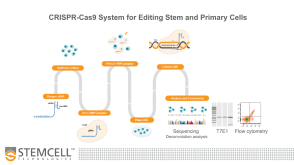
线上讲座Optimized Workflows for High-Efficiency Genome Editing in Stem and Primary Cell Types发布日期: 09/09/2019
1:07:14
线上讲座Optimized Workflows for High-Efficiency Genome Editing in Stem and Primary Cell Types发布日期: 09/09/2019 科学海报Rapid, Automated Lymphocyte Isolation Directly from Whole Blood with EasySep™ Direct

 沪公网安备31010102008431号