Activation of the unfolded protein response is associated with impaired granulopoiesis in transgenic mice expressing mutant Elane.
Severe congenital neutropenia (SCN) is an inborn disorder of granulopoiesis that in many cases is caused by mutations of the ELANE gene,which encodes neutrophil elastase (NE). Recent data suggest a model in which ELANE mutations result in NE protein misfolding,induction of endoplasmic reticulum (ER) stress,activation of the unfolded protein response (UPR),and ultimately a block in granulocytic differentiation. To test this model,we generated transgenic mice carrying a targeted mutation of Elane (G193X) reproducing a mutation found in SCN. The G193X Elane allele produces a truncated NE protein that is rapidly degraded. Granulocytic precursors from G193X Elane mice,though without significant basal UPR activation,are sensitive to chemical induction of ER stress. Basal and stress granulopoiesis after myeloablative therapy are normal in these mice. Moreover,inaction of protein kinase RNA-like ER kinase (Perk),one of the major sensors of ER stress,either alone or in combination with G193X Elane,had no effect on basal granulopoiesis. However,inhibition of the ER-associated degradation (ERAD) pathway using a proteosome inhibitor resulted in marked neutropenia in G193X Elane. The selective sensitivity of G913X Elane granulocytic cells to ER stress provides new and strong support for the UPR model of disease patho-genesis in SCN.
View Publication
产品号#:
03231
03434
03444
产品名:
MethoCult™ M3231
MethoCult™ GF M3434
MethoCult™ GF M3434
Fiedler K et al. (JAN 2011)
Blood 117 4 1329--39
Neutrophil development and function critically depend on Bruton tyrosine kinase in a mouse model of X-linked agammaglobulinemia.
Bruton tyrosine kinase (Btk) is essential for B cell development and function and also appears to be important for myeloid cells. The bone marrow of Btk-deficient mice shows enhanced granulopoiesis compared with that of wild-type mice. In purified granulocyte-monocyte-progenitors (GMP) from Btk-deficient mice,the development of granulocytes is favored at the expense of monocytes. However,Btk-deficient neutrophils are impaired in maturation and function. Using bone marrow chimeras,we show that this defect is cell-intrinsic to neutrophils. In GMP and neutrophils,Btk plays a role in GM-CSF- and Toll-like receptor-induced differentiation. Molecular analyses revealed that expression of the lineage-determining transcription factors C/EBPα,C/EBPβ,and PU.1,depends on Btk. In addition,expression of several granule proteins,including myeloperoxidase,neutrophilic granule protein,gelatinase and neutrophil elastase,is Btk-dependent. In the Arthus reaction,an acute inflammatory response,neutrophil migration into tissues,edema formation,and hemorrhage are significantly reduced in Btk-deficient animals. Together,our findings implicate Btk as an important regulator of neutrophilic granulocyte maturation and function in vivo.
View Publication
Balasubramaniam V et al. (MAR 2010)
American journal of physiology. Lung cellular and molecular physiology 298 3 L315--23
Bone marrow-derived angiogenic cells restore lung alveolar and vascular structure after neonatal hyperoxia in infant mice.
Neonatal hyperoxia impairs vascular and alveolar growth in mice and decreases endothelial progenitor cells. To determine the role of bone marrow-derived cells in restoration of neonatal lung structure after injury,we studied a novel bone marrow myeloid progenitor cell population from Tie2-green fluorescent protein (GFP) transgenic mice (bone marrow-derived angiogenic cells; BMDAC). We hypothesized that treatment with BMDAC would restore normal lung structure in infant mice during recovery from neonatal hyperoxia. Neonatal mice (1-day-old) were exposed to 80% oxygen for 10 days. BMDACs (1 x 10(5)),embryonic endothelial progenitor cells,mouse embryonic fibroblasts (control),or saline were then injected into the pulmonary circulation. At 21 days of age,saline-treated mice had enlarged alveoli,reduced septation,and a reduction in vascular density. In contrast,mice treated with BMDAC had complete restoration of lung structure that was indistinguishable from room air controls. BMDAC comprised 12% of distal lung cells localized to pulmonary vessels or alveolar type II (AT2) cells and persist (8.8%) for 8 wk postinjection. Coculture of AT2 cells or lung endothelial cells (luEC) with BMDAC augmented AT2 and luEC cell growth in vitro. We conclude that treatment with BMDAC after neonatal hyperoxia restores lung structure in this model of bronchopulmonary dysplasia.
View Publication
产品号#:
03534
产品名:
MethoCult™ GF M3534
Smalls-Mantey A et al. ( 2013)
PloS one 8 9 e74858
Comparative efficiency of HIV-1-infected T cell killing by NK cells, monocytes and neutrophils.
HIV-1 infected cells are eliminated in infected individuals by a variety of cellular mechanisms,the best characterized of which are cytotoxic T cell and NK cell-mediated killing. An additional antiviral mechanism is antibody-dependent cellular cytotoxicity. Here we use primary CD4(+) T cells infected with the BaL clone of HIV-1 as target cells and autologous NK cells,monocytes,and neutrophils as effector cells,to quantify the cytotoxicity mediated by the different effectors. This was carried out in the presence or absence of HIV-1-specific antiserum to assess antibody-dependent cellular cytotoxicity. We show that at the same effector to target ratio,NK cells and monocytes mediate similar levels of both antibody-dependent and antibody-independent killing of HIV-1-infected T cells. Neutrophils mediated significant antibody-dependent killing of targets,but were less effective than monocytes or NK cells. These data have implications for acquisition and control of HIV-1 in natural infection and in the context of vaccination.
View Publication
产品号#:
19257
19257RF
19055
19055RF
19059
19059RF
产品名:
EasySep™人NK细胞富集试剂盒
RoboSep™ 人NK细胞富集试剂盒含滤芯吸头
EasySep™人单核细胞富集试剂盒
RoboSep™ 人单核细胞富集试剂盒含滤芯吸头
Heinonen KM et al. (FEB 2006)
Proceedings of the National Academy of Sciences of the United States of America 103 8 2776--81
Protein tyrosine phosphatase 1B negatively regulates macrophage development through CSF-1 signaling.
Protein tyrosine phosphatase 1B (PTP-1B) is a ubiquitously expressed cytosolic phosphatase with the ability to dephosphorylate JAK2 and TYK2,and thereby down-regulate cytokine receptor signaling. Furthermore,PTP-1B levels are up-regulated in certain chronic myelogenous leukemia patients,which points to a potential role for PTP-1B in myeloid development. The results presented here show that the absence of PTP-1B affects murine myelopoiesis by modifying the ratio of monocytes to granulocytes in vivo. This bias toward monocytic development is at least in part due to a decreased threshold of response to CSF-1,because the PTP-1B -/- bone marrow presents no abnormalities at the granulocyte-monocyte progenitor level but produces significantly more monocytic colonies in the presence of CSF-1. This phenomenon is not due to an increase in receptor levels but rather to enhanced phosphorylation of the activation loop tyrosine. PTP-1B -/- cells display increased inflammatory activity in vitro and in vivo through the constitutive up-regulation of activation markers as well as increased sensitivity to endotoxin. Collectively,our data indicate that PTP-1B is an important modulator of myeloid differentiation and macrophage activation in vivo and provide a demonstration of a physiological role for PTP-1B in immune regulation.
View Publication
产品号#:
03231
03434
03444
产品名:
MethoCult™ M3231
MethoCult™ GF M3434
MethoCult™ GF M3434
Grzywacz B et al. (MAR 2011)
Blood 117 13 3548--58
Natural killer-cell differentiation by myeloid progenitors.
Because lymphoid progenitors can give rise to natural killer (NK) cells,NK ontogeny has been considered to be exclusively lymphoid. Here,we show that rare human CD34(+) hematopoietic progenitors develop into NK cells in vitro in the presence of cytokines (interleukin-7,interleukin-15,stem cell factor,and fms-like tyrosine kinase-3 ligand). Adding hydrocortisone and stromal cells greatly increases the frequency of progenitor cells that give rise to NK cells through the recruitment of myeloid precursors,including common myeloid progenitors and granulocytic-monocytic precursors to the NK-cell lineage. WNT signaling was involved in this effect. Cells at more advanced stages of myeloid differentiation (with increasing expression of CD13 and macrophage colony-stimulating factor receptor [M-CSFR]) could also differentiate into NK cells in the presence of cytokines,stroma,and hydrocortisone. NK cells derived from myeloid precursors (CD56(-)CD117(+)M-CSFR(+)) showed more expression of killer immunoglobulin-like receptors,a fraction of killer immunoglobulin-like receptor-positive-expressing cells that lacked NKG2A,a higher cytotoxicity compared with CD56(-)CD117(+)M-CSFR(-) precursor-derived NK cells and thus resemble the CD56(dim) subset of NK cells. Collectively,these studies show that NK cells can be derived from the myeloid lineage.
View Publication
Zimmermann M et al. (JAN 2016)
Scientific Reports 6 19674
IFNα enhances the production of IL-6 by human neutrophils activated via TLR8.
Recently,we reported that human neutrophils produce biologically active amounts of IL-6 when incubated with agonists activating TLR8,a receptor recognizing viral single strand RNA. In this study,we demonstrate that IFNα,a cytokine that modulates the early innate immune responses toward viral and bacterial infections,potently enhances the production of IL-6 in neutrophils stimulated with R848,a TLR8 agonist. We also show that such an effect is not caused by an IFNα-dependent induction of TLR7 and its consequent co-activation with TLR8 in response to R848,but,rather,it is substantially mediated by an increased production and release of endogenous TNFα. The latter cytokine,in an autocrine manner,leads to an augmented synthesis of the IkBζ co-activator and an enhanced recruitment of the C/EBPβ transcription factor to the IL-6 promoter. Moreover,we show that neutrophils from SLE patients with active disease state,hence displaying an IFN-induced gene expression signature,produce increased amounts of both IL-6 and TNFα in response to R848 as compared to healthy donors. Altogether,data uncover novel effects that type I IFN exerts in TLR8-activated neutrophils,which therefore enlarge our knowledge on the various biological actions which type I IFN orchestrates during infectious and autoimmune diseases.
View Publication
产品号#:
19257
19257RF
产品名:
Surdziel E et al. (APR 2011)
Blood 117 16 4338--48
Enforced expression of miR-125b affects myelopoiesis by targeting multiple signaling pathways.
MicroRNAs (miRNAs) are small,noncoding RNAs that regulate gene expression by sequence-specific targeting of multiple mRNAs. Although lineage-,maturation-,and disease-specific miRNA expression has been described,miRNA-dependent phenotypes and miRNA-regulated signaling in hematopoietic cells are largely unknown. Combining functional genomics,biochemical analysis,and unbiased and hypothesis-driven miRNA target prediction,we show that lentivirally over-expressed miR-125b blocks G-CSF-induced granulocytic differentiation and enables G-CSF-dependent proliferation of murine 32D cells. In primary lineage-negative cells,miR-125b over-expression enhances colony-formation in vitro and promotes myelopoiesis in mouse bone marrow chimeras. We identified Stat3 and confirmed Bak1 as miR-125b target genes with approximately 30% and 50% reduction in protein expression,respectively. However,gene-specific RNAi reveals that this reduction,alone and in combination,is not sufficient to block G-CSF-dependent differentiation. STAT3 protein expression,DNA-binding,and transcriptional activity but not induction of tyrosine-phosphorylation and nuclear translocation are reduced upon enforced miR-125b expression,indicating miR-125b-mediated reduction of one or more STAT3 cofactors. Indeed,we identified c-Jun and Jund as potential miR-125b targets and demonstrated reduced protein expression in 32D/miR-125b cells. Interestingly,gene-specific silencing of JUND but not c-JUN partially mimics the miR-125b over-expression phenotype. These data demonstrate coordinated regulation of several signaling pathways by miR-125b linked to distinct phenotypes in myeloid cells.
View Publication


 EasySep™小鼠TIL(CD45)正选试剂盒




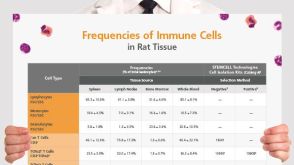 挂图Frequencies of Immune Cells in Rat Tissue Lists the estimated frequencies of more than 15 immune cell types in Sprague Dawley rats


 沪公网安备31010102008431号