Phuc PV et al. (JUN 2012)
Cell and tissue banking 13 2 341--51
Isolation of three important types of stem cells from the same samples of banked umbilical cord blood.
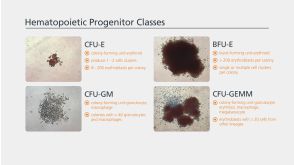
It is known that umbilical cord blood (UCB) is a rich source of stem cells with practical and ethical advantages. Three important types of stem cells which can be harvested from umbilical cord blood and used in disease treatment are hematopoietic stem cells (HSCs),mesenchymal stem cells (MSCs) and endothelial progenitor cells (EPCs). Since these stem cells have shown enormous potential in regenerative medicine,numerous umbilical cord blood banks have been established. In this study,we examined the ability of banked UCB collected to produce three types of stem cells from the same samples with characteristics of HSCs,MSCs and EPCs. We were able to obtain homogeneous plastic rapidly-adherent cells (with characteristics of MSCs),slowly-adherent (with characteristics of EPCs) and non-adherent cells (with characteristics of HSCs) from the mononuclear cell fractions of cryopreserved UCB. Using a protocol of 48 h supernatant transferring,we successfully isolated MSCs which expressed CD13,CD44 and CD90 while CD34,CD45 and CD133 negative,had typical fibroblast-like shape,and was able to differentiate into adipocytes; EPCs which were CD34,and CD90 positive,CD13,CD44,CD45 and CD133 negative,adherent with cobble-like shape; HSCs which formed colonies when cultured in MethoCult medium.
View Publication
产品号#:
84434
84444
产品名:
Ratajczak J et al. (AUG 2011)
Leukemia 25 8 1278--85
Hematopoietic differentiation of umbilical cord blood-derived very small embryonic/epiblast-like stem cells.
A population of CD133(+)Lin(-)CD45(-) very small embryonic/epiblast-like stem cells (VSELs) has been purified by multiparameter sorting from umbilical cord blood (UCB). To speed up isolation of these cells,we employed anti-CD133-conjugated paramagnetic beads followed by staining with Aldefluor to detect aldehyde dehydrogenase (ALDH) activity; we subsequently sorted CD45(-)/GlyA(-)/CD133(+)/ALDH(high) and CD45(-)/GlyA(-)/CD133(+)/ALDH(low) cells,which are enriched for VSELs,and CD45(+)/GlyA /CD133(+)/ALDH(high) and CD45(+)/GlyA(-)/CD133(+)/ALDH(low) cells,which are enriched for hematopoietic stem/progenitor cells (HSPCs). Although freshly isolated CD45(-) VSELs did not grow hematopoietic colonies,the same cells,when activated/expanded over OP9 stromal support,acquired hematopoietic potential and grew colonies composed of CD45(+) hematopoietic cells in methylcellulose cultures. We also observed that CD45(-)/GlyA(-)/CD133(+)/ALDH(high) VSELs grew colonies earlier than CD45(-)/GlyA(-)/CD133(+)/ALDH(low) VSELs,which suggests that the latter cells need more time to acquire hematopoietic commitment. In support of this possibility,real-time polymerase chain reaction analysis confirmed that,whereas freshly isolated CD45(-)/GlyA(-)/CD133(+)/ALDH(high) VSELs express more hematopoietic transcripts (for example,c-myb),CD45(-)/GlyA(-)/CD133(+)/ALDH(low) VSELs exhibit higher levels of pluripotent stem cell markers (for example,Oct-4). More importantly,hematopoietic cells derived from VSELs that were co-cultured over OP9 support were able to establish human lympho-hematopoietic chimerism in lethally irradiated non-obese diabetic/severe combined immunodeficiency mice 4-6 weeks after transplantation. Overall,our data suggest that UCB-VSELs correspond to the most primitive population of HSPCs in UCB.
View Publication
产品号#:
01700
01702
01705
产品名:
ALDEFLUOR™ 试剂盒
ALDEFLUOR™检测缓冲液
ALDEFLUOR™ DEAB试剂, 1.5 mM, 1 mL
Avitabile D et al. (MAY 2011)
American journal of physiology. Heart and circulatory physiology 300 5 H1875--84
Human cord blood CD34+ progenitor cells acquire functional cardiac properties through a cell fusion process.
The efficacy of cardiac repair by stem cell administration relies on a successful functional integration of injected cells into the host myocardium. Safety concerns have been raised about the possibility that stem cells may induce foci of arrhythmia in the ischemic myocardium. In a previous work (36),we showed that human cord blood CD34(+) cells,when cocultured on neonatal mouse cardiomyocytes,exhibit excitation-contraction coupling features similar to those of cardiomyocytes,even though no human genes were upregulated. The aims of the present work are to investigate whether human CD34(+) cells,isolated after 1 wk of coculture with neonatal ventricular myocytes,possess molecular and functional properties of cardiomyocytes and to discriminate,using a reporter gene system,whether cardiac differentiation derives from a (trans)differentiation or a cell fusion process. Umbilical cord blood CD34(+) cells were isolated by a magnetic cell sorting method,transduced with a lentiviral vector carrying the enhanced green fluorescent protein (EGFP) gene,and seeded onto primary cultures of spontaneously beating rat neonatal cardiomyocytes. Cocultured EGFP(+)/CD34(+)-derived cells were analyzed for their electrophysiological features at different time points. After 1 wk in coculture,EGFP(+) cells,in contact with cardiomyocytes,were spontaneously contracting and had a maximum diastolic potential (MDP) of -53.1 mV,while those that remained isolated from the surrounding myocytes did not contract and had a depolarized resting potential of -11.4 mV. Cells were then resuspended and cultured at low density to identify EGFP(+) progenitor cell derivatives. Under these conditions,we observed single EGFP(+) beating cells that had acquired an hyperpolarization-activated current typical of neonatal cardiomyocytes (EGFP(+) cells,-2.24 ± 0.89 pA/pF; myocytes,-1.99 ± 0.63 pA/pF,at -125 mV). To discriminate between cell autonomous differentiation and fusion,EGFP(+)/CD34(+) cells were cocultured with cardiac myocytes infected with a red fluorescence protein-lentiviral vector; under these conditions we found that 100% of EGFP(+) cells were also red fluorescent protein positive,suggesting cell fusion as the mechanism by which cardiac functional features are acquired.
View Publication
产品号#:
09600
09650
产品名:
StemSpan™ SFEM
StemSpan™ SFEM
Liu C et al. (DEC 2010)
Blood 116 25 5518--27
Progenitor cell dose determines the pace and completeness of engraftment in a xenograft model for cord blood transplantation.
Two critical concerns in clinical cord blood transplantation are the initial time to engraftment and the subsequent restoration of immune function. These studies measured the impact of progenitor cell dose on both the pace and strength of hematopoietic reconstitution by transplanting nonobese diabetic/severe combined immunodeficiency/interleukin-2 receptor-gamma-null (NSγ) mice with lineage-depleted aldehyde dehydrogenase-bright CD34(+) human cord blood progenitors. The progress of each transplant was monitored over an extended time course by repeatedly analyzing the peripheral blood for human hematopoietic cells. In vivo human hematopoietic development was complete. After long-term transplantation assays (≥ 19 weeks),human T-cell development was documented within multiple tissues in 16 of 32 NSγ mice. Human T-cell differentiation was active within NSγ thymuses,as documented by the presence of CD4(+) CD8(+) T-cell progenitors as well as T-cell receptor excision circles. It is important to note that although myeloid and B-cell engraftment was detected as early as 4 weeks after transplantation,human T-cell development was exclusively late onset. High progenitor cell doses were associated with a robust human hematopoietic chimerism that accelerated both initial time to engraftment and subsequent T-cell development. At lower progenitor cell doses,the chimerism was weak and the human hematopoietic lineage development was frequently incomplete.
View Publication