Sullivan JP et al. (DEC 2010)
Cancer research 70 23 9937--48
Aldehyde dehydrogenase activity selects for lung adenocarcinoma stem cells dependent on notch signaling.
Aldehyde dehydrogenase (ALDH) is a candidate marker for lung cancer cells with stem cell-like properties. Immunohistochemical staining of a large panel of primary non-small cell lung cancer (NSCLC) samples for ALDH1A1,ALDH3A1,and CD133 revealed a significant correlation between ALDH1A1 (but not ALDH3A1 or CD133) expression and poor prognosis in patients including those with stage I and N0 disease. Flow cytometric analysis of a panel of lung cancer cell lines and patient tumors revealed that most NSCLCs contain a subpopulation of cells with elevated ALDH activity,and that this activity is associated with ALDH1A1 expression. Isolated ALDH(+) lung cancer cells were observed to be highly tumorigenic and clonogenic as well as capable of self-renewal compared with their ALDH(-) counterparts. Expression analysis of sorted cells revealed elevated Notch pathway transcript expression in ALDH(+) cells. Suppression of the Notch pathway by treatment with either a γ-secretase inhibitor or stable expression of shRNA against NOTCH3 resulted in a significant decrease in ALDH(+) lung cancer cells,commensurate with a reduction in tumor cell proliferation and clonogenicity. Taken together,these findings indicate that ALDH selects for a subpopulation of self-renewing NSCLC stem-like cells with increased tumorigenic potential,that NSCLCs harboring tumor cells with ALDH1A1 expression have inferior prognosis,and that ALDH1A1 and CD133 identify different tumor subpopulations. Therapeutic targeting of the Notch pathway reduces this ALDH(+) component,implicating Notch signaling in lung cancer stem cell maintenance.
View Publication
产品号#:
01700
01705
01702
产品名:
ALDEFLUOR™ 试剂盒
ALDEFLUOR™ DEAB试剂, 1.5 mM, 1 mL
ALDEFLUOR™检测缓冲液
Dalley AJ et al. (JAN 2013)
Journal of oral pathology & medicine : official publication of the International Association of Oral Pathologists and the American Academy of Oral Pathology 42 1 37--46
Organotypic culture of normal, dysplastic and squamous cell carcinoma-derived oral cell lines reveals loss of spatial regulation of CD44 and p75 NTR in malignancy.
Oral squamous cell carcinomas (OSCC) often arise from dysplastic lesions. The role of cancer stem cells in tumour initiation is widely accepted,yet the potential existence of pre-cancerous stem cells in dysplastic tissue has received little attention. Cell lines from oral diseases ranging in severity from dysplasia to malignancy provide opportunity to investigate the involvement of stem cells in malignant progression from dysplasia. Stem cells are functionally defined by their ability to generate hierarchical tissue structures in consortium with spatial regulation. Organotypic cultures readily display tissue hierarchy in vitro; hence,in this study,we compared hierarchical expression of stem cell-associated markers in dermis-based organotypic cultures of oral epithelial cells from normal tissue (OKF6-TERT2),mild dysplasia (DOK),severe dysplasia (POE-9n) and OSCC (PE/CA P J15). Expression of CD44,p75(NTR),CD24 and ALDH was studied in monolayers by flow cytometry and in organotypic cultures by immunohistochemistry. Spatial regulation of CD44 and p75(NTR) was evident for organotypic cultures of normal (OKF6-TERT2) and dysplasia (DOK and POE-9n) but was lacking for OSCC (PE/CA PJ15)-derived cells. Spatial regulation of CD24 was not evident. All monolayer cultures exhibited CD44,p75(NTR),CD24 antigens and ALDH activity (ALDEFLUOR(®) assay),with a trend towards loss of population heterogeneity that mirrored disease severity. In monolayer,increased FOXA1 and decreased FOXA2 expression correlated with disease severity,but OCT3/4,Sox2 and NANOG did not. We conclude that dermis-based organotypic cultures give opportunity to investigate the mechanisms that underlie loss of spatial regulation of stem cell markers seen with OSCC-derived cells.
View Publication
产品号#:
01700
01705
01702
产品名:
ALDEFLUOR™ 试剂盒
ALDEFLUOR™ DEAB试剂, 1.5 mM, 1 mL
ALDEFLUOR™检测缓冲液
Ma I and Allan AL (JUN 2011)
Stem cell reviews 7 2 292--306
The role of human aldehyde dehydrogenase in normal and cancer stem cells.
Normal stem cells and cancer stem cells (CSCs) share similar properties,in that both have the capacity to self-renew and differentiate into multiple cell types. In both the normal stem cell and cancer stem cell fields,there has been a great need for a universal marker that can effectively identify and isolate these rare populations of cells in order to characterize them and use this information for research and therapeutic purposes. Currently,it would appear that certain isoenzymes of the aldehyde dehydrogenase (ALDH) superfamily may be able to fulfill this role as a marker for both normal and cancer stem cells. ALDH has been identified as an important enzyme in the protection of normal hematopoietic stem cells,and is now also widely used as a marker to identify and isolate various types of normal stem cells and CSCs. In addition,emerging evidence suggests that ALDH1 is not only a marker for stem cells,but may also play important functional roles related to self-protection,differentiation,and expansion. This comprehensive review discusses the role that ALDH plays in normal stem cells and CSCs,with focus on ALDH1 and ALDH3A1. Discrepancies in the functional themes between cell types and future perspectives for therapeutic applications will also be discussed.
View Publication


 EasySep™小鼠TIL(CD45)正选试剂盒




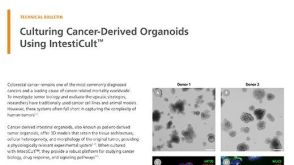
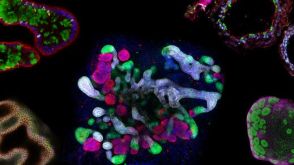 研究综述The Predictive Power of Organoid-Based New Approach Methodologies in Drug Discovery
 24:08
线上讲座Streamline Your Tissue Processing Using the Automated STEMprep™ Tissue Dissociator发布日期: 06/12/2025
24:08
线上讲座Streamline Your Tissue Processing Using the Automated STEMprep™ Tissue Dissociator发布日期: 06/12/2025 专家访谈Tamara Zietek, PhD Studying Intestinal Nutrient Absorption with Organoids


 沪公网安备31010102008431号