Petersen OW and Polyak K (MAY 2010)
Cold Spring Harbor perspectives in biology 2 5 a003160
Stem cells in the human breast.
The origins of the epithelial cells participating in the development,tissue homeostasis,and cancer of the human breast are poorly understood. However,emerging evidence suggests a role for adult tissue-specific stem cells in these processes. In a hierarchical manner,these generate the two main mammary cell lineages,producing an increasing number of cells with distinct properties. Understanding the biological characteristics of human breast stem cells and their progeny is crucial in attempts to compare the features of normal stem cells and cancer precursor cells and distinguish these from nonprecursor cells and cells from the bulk of a tumor. A historical overview of research on human breast stem cells in primary tissue and in culture reveals the progress that has been made in this area,whereas a focus on the cell-of-origin and reprogramming that occurs during neoplastic conversion provides insight into the enigmatic way in which human breast cancers are skewed toward the luminal epithelial lineage.
View Publication
产品号#:
01700
01705
01702
产品名:
ALDEFLUOR™ 试剂盒
ALDEFLUOR™ DEAB试剂, 1.5 mM, 1 mL
ALDEFLUOR™检测缓冲液
Xaymardan M et al. (AUG 2009)
Stem cells (Dayton,Ohio) 27 8 1911--20
c-Kit function is necessary for in vitro myogenic differentiation of bone marrow hematopoietic cells.
In recent years,the differentiation of bone marrow cells (BMCs) into myocytes has been extensively investigated,but the findings remain inconclusive. The purpose of this study was to determine the conditions necessary to induce myogenic differentiation in short-term cultures of adult BMCs,and to identify the BMC subpopulation responsible for this phenomenon. We report that high-density cultures of murine hematopoietic BMCs gave rise to spontaneous beating cell clusters in the presence of vascular endothelial and fibroblast growth factors. These clusters originated from c-kit(pos) cells. The formation of the clusters could be completely blocked by adding a c-kit/tyrosine kinase inhibitor,Gleevec (imatinib mesylate; Novartis International,Basel,Switzerland,http://www.novartis.com),to the culture. Cluster formation was also blunted in BMCs from c-kit-deficient (Kit(W)/Kit(W-v)) mice. Clustered cells expressed cardiomyocyte-specific transcription factor genes Gata-4 and Nkx2.5,sarcomeric proteins beta-MHC and MLC-2v,and ANF and connexin-43. Immunostaining revealed alpha-sarcomeric actinin expression in more than 90% of clustered cells. Under electron microscopy,the clustered cells exhibited a sarcomeric myofiber arrangement and z-bands. This study defines the microenvironment required to achieve a reproducible in vitro model of beating,myogenic cell clusters. This model could be used to examine the mechanisms responsible for the postnatal myogenic differentiation of BMCs. Our results identify c-kit(pos) bone marrow hematopoietic cells as the source of the myogenic clusters.
View Publication
产品号#:
18757
18757RF
产品名:
EasySep™小鼠CD117(cKIT)正选试剂盒
RoboSep™ 小鼠CD117(cKIT)正选试剂盒含滤芯吸头
Reutershan J et al. (MAR 2006)
The Journal of clinical investigation 116 3 695--702
Critical role of endothelial CXCR2 in LPS-induced neutrophil migration into the lung.
In models of acute lung injury,CXC chemokine receptor 2 (CXCR2) mediates migration of polymorphonuclear leukocytes (PMNs) into the lung. Since CXCR2 ligands,including CXCL1 and CXCL2/3,are chemotactic for PMNs,CXCR2 is thought to recruit PMNs by inducing chemotactic migration. In a model of PMN recruitment to the lung,aerosolized bacterial LPS inhalation induced PMN recruitment to the lung in wild-type mice,but not in littermate CXCR2-/- mice. Surprisingly,lethally irradiated wild-type mice reconstituted with CXCR2-/- BM still showed about 50% PMN recruitment into bronchoalveolar lavage fluid and into lung interstitium,but CXCR2-/- mice reconstituted with CXCR2-/- BM showed no PMN recruitment. Conversely,CXCR2-/- mice reconstituted with wild-type BM showed a surprisingly large defect in PMN recruitment,inconsistent with a role of CXCR2 on PMNs alone. Cell culture,immunohistochemistry,flow cytometry,and real-time RT-PCR were used to show expression of CXCR2 on pulmonary endothelial and bronchial epithelial cells. The LPS-induced increase in lung microvascular permeability as measured by Evans blue extravasation required CXCR2 on nonhematopoietic cells. Our data revealed what we believe to be a previously unrecognized role of endothelial and epithelial CXCR2 in LPS-induced PMN recruitment and lung injury.
View Publication
产品号#:
18556
18556RF
产品名:
McCune K et al. (NOV 2010)
Oncology reports 24 5 1233--9
Loss of ERα and FOXA1 expression in a progression model of luminal type breast cancer: insights from PyMT transgenic mouse model.
The classification of breast cancer into multiple molecular subtypes has necessitated the need for biomarkers that can assess tumor progression and the effects of chemopreventive agents on specific breast cancer subtypes. The goal of this study was to identify biomarkers whose expression are altered along with estrogen receptor α (ERα) in the polyoma middle-T antigen (PyMT) transgenic model of breast cancer and to investigate the chemopreventive activity of phenethyl isothiocyanate (PEITC). The diet of PyMT female mice was fortified with PEITC (8 mmol/kg) and the mammary streak and/or gross tumors and metastases in lungs were subjected to immunohistochemical analyses for ERα,FOXA1,and GATA-3. FOXA1 is associated with luminal type A cancers,while GATA-3 is a marker of luminal progenitor cell differentiation. In both control and PEITC-treated groups,there was a progressive loss of ERα and FOXA1 but persistence of GATA-3 expression indicating that the tumors retain luminal phenotype. Overall,the PyMT induced tumors exhibited the entire gamut of phenotypes from ERα+/FOXA1+/GATA-3+ tumors in the early stage to ERα±/FOXA1-/GATA-3+ in the late stage. Thus,PyMT model serves as an excellent model for studying progression of luminal subtype tumors. PEITC treated animals had multiple small tumors,indicating delay in tumor progression. Although these tumors were histologically similar to those in controls,there was a lower expression of these biomarkers in normal luminal cells indicating delay in tumor initiation. In in vitro studies,PEITC depleted AldeFluor-positive putative stem/progenitor cells,which may partly be responsible for the delay in tumor initiation.
View Publication
产品号#:
01700
01705
01702
产品名:
ALDEFLUOR™ 试剂盒
ALDEFLUOR™ DEAB试剂, 1.5 mM, 1 mL
ALDEFLUOR™检测缓冲液
Guo H-B et al. (DEC 2010)
Proceedings of the National Academy of Sciences of the United States of America 107 49 21116--21
Specific posttranslational modification regulates early events in mammary carcinoma formation.
The expression of an enzyme,GnT-V,that catalyzes a specific posttranslational modification of a family of glycoproteins,namely a branched N-glycan,is transcriptionally up-regulated during breast carcinoma oncogenesis. To determine the molecular basis of how early events in breast carcinoma formation are regulated by GnT-V,we studied both the early stages of mammary tumor formation by using 3D cell culture and a her-2 transgenic mouse mammary tumor model. Overexpression of GnT-V in MCF-10A mammary epithelial cells in 3D culture disrupted acinar morphogenesis with impaired hollow lumen formation,an early characteristic of mammary neoplastic transformation. The disrupted acinar morphogenesis of mammary tumor cells in 3D culture caused by her-2 expression was reversed in tumors that lacked GnT-V expression. Moreover,her-2-induced mammary tumor onset was significantly delayed in the GnT-V null tumors,evidence that the lack of the posttranslational modification catalyzed by GnT-V attenuated tumor formation. Inhibited activation of both PKB and ERK signaling pathways was observed in GnT-V null tumor cells. The proportion of tumor-initiating cells (TICs) in the mammary tumors from GnT-V null mice was significantly reduced compared with controls,and GnT-V null TICs displayed a reduced ability to form secondary tumors in NOD/SCID mice. These results demonstrate that GnT-V expression and its branched glycan products effectively modulate her-2-mediated signaling pathways that,in turn,regulate the relative proportion of tumor initiating cells and the latency of her-2-driven tumor onset.
View Publication
Reuben JM et al. (JUL 2011)
European journal of cancer (Oxford,England : 1990) 47 10 1527--36
Primary breast cancer patients with high risk clinicopathologic features have high percentages of bone marrow epithelial cells with ALDH activity and CD44-CD24lo cancer stem cell phenotype.
BACKGROUND: Cancer stem cells (CSCs) are purported to be epithelial tumour cells expressing CD44(+)CD24(lo) that exhibit aldehyde dehydrogenase activity (Aldefluor(+)). We hypothesised that if CSCs are responsible for tumour dissemination,disseminated cells in the bone marrow (BM) would be positive for putative breast CSC markers. Therefore,we assessed the presence of Aldefluor(+) epithelial (CD326(+)CD45(dim)) cells for the presence of the CD44(+)CD24(lo) phenotype in BM of patients with primary breast cancer (PBC). METHODS: BM aspirates were collected at the time of surgery from 66 patients with PBC. Thirty patients received neoadjuvant chemotherapy (NACT) prior to aspiration. BM was analysed for Aldefluor(+) epithelial cells with or without CD44(+)CD24(lo) expression by flow cytometry. BM aspirates from three healthy donors (HD) were subjected to identical processing and analyses and served as controls. RESULTS: Patients with triple-receptor-negative (TN) tumours had a significantly higher median percentage of CD44(+)CD24(lo) CSC within Aldefluor(+) epithelial cell population than patients with other immunohistochemical subtypes (P=0.018). Patients with TN tumours or with pN2 or higher pathologic nodal status were more likely to have a proportion of CD44(+)CD24(lo) CSC within Aldefluor(+) epithelial cell population above the highest level of HD. Furthermore,patients who received NACT were more likely to have percentages of Aldefluor(+) epithelial cells than the highest level of HD (P=0.004). CONCLUSION: The percentage of CD44(+)CD24(lo) CSC in the BM is higher in PBC patients with high risk tumour features. The selection or enrichment of Aldefluor(+) epithelial cells by NACT may represent an opportunity to target these cells with novel therapies.
View Publication
Buckley NE et al. (MAR 2011)
Cancer research 71 5 1933--44
The DeltaNp63 proteins are key allies of BRCA1 in the prevention of basal-like breast cancer.
Little is known about the origin of basal-like breast cancers,an aggressive disease that is highly similar to BRCA1-mutant breast cancers. p63 family proteins that are structurally related to the p53 suppressor protein are known to function in stem cell regulation and stratified epithelia development in multiple tissues,and p63 expression may be a marker of basal-like breast cancers. Here we report that ΔNp63 isoforms of p63 are transcriptional targets for positive regulation by BRCA1. Our analyses of breast cancer tissue microarrays and BRCA1-modulated breast cancer cell lines do not support earlier reports that p63 is a marker of basal-like or BRCA1 mutant cancers. Nevertheless,we found that BRCA1 interacts with the specific p63 isoform ΔNp63γ along with transcription factor isoforms AP-2α and AP-2γ. BRCA1 required ΔNp63γ and AP-2γ to localize to an intronic enhancer region within the p63 gene to upregulate transcription of the ΔNp63 isoforms. In mammary stem/progenitor cells,siRNA-mediated knockdown of ΔNp63 expression resulted in genomic instability,increased cell proliferation,loss of DNA damage checkpoint control,and impaired growth control. Together,our findings establish that transcriptional upregulation of ΔNp63 proteins is critical for BRCA1 suppressor function and that defects in BRCA1-ΔNp63 signaling are key events in the pathogenesis of basal-like breast cancer.
View Publication
产品号#:
01700
01705
01702
产品名:
ALDEFLUOR™ 试剂盒
ALDEFLUOR™ DEAB试剂, 1.5 mM, 1 mL
ALDEFLUOR™检测缓冲液
Alison MR et al. (DEC 2010)
The Journal of pathology 222 4 335--44
Finding cancer stem cells: are aldehyde dehydrogenases fit for purpose?
Despite many years of intensive effort,there is surprisingly little consensus on the most suitable markers with which to locate and isolate stem cells from adult tissues. By comparison,the study of cancer stem cells is still in its infancy; so,unsurprisingly,there is great uncertainty as to the identity of these cells. Stem cell markers can be broadly categorized into molecular determinants of self-renewal,clonogenicity,multipotentiality,adherence to the niche,and longevity. This review assesses the utility of recognizing cancer stem cells by virtue of high expression of aldehyde dehydrogenases (ALDHs),probably significant determinants of cell survival through their ability to detoxify many potentially cytotoxic molecules,and contributing to drug resistance. Antibodies are available against the ALDH enzyme family,but the vast majority of studies have used cell sorting techniques to enrich for cells expressing these enzymes. Live cells expressing high ALDH activity are usually identified by the ALDEFLUOR kit and sorted by fluorescence activated cell sorting (FACS). For many human tumours,but notably breast cancer,cell selection based upon ALDH activity appears to be a useful marker for enriching for cells with tumour-initiating activity (presumed cancer stem cells) in immunodeficient mice,and indeed the frequency of so-called ALDH(bri) cells in many tumours can be an independent prognostic indicator.
View Publication
产品号#:
01700
01705
01702
产品名:
ALDEFLUOR™ 试剂盒
ALDEFLUOR™ DEAB试剂, 1.5 mM, 1 mL
ALDEFLUOR™检测缓冲液
Liu C et al. (MAY 2012)
Molecular biology reports 39 5 5875--81
Co-expression of Oct-4 and Nestin in human breast cancers.
The aim is to investigate the clinical implications of the Oct-4 and Nestin protein in human breast cancers. A total of 346 cases including 26 fresh and 320 paraffin-embedded tumor tissues were selected for characterizing the frequency of CD44(+)CD24(-) tumor cells by flow cytometry and the differential expression of the stem cell-related genes between CD44(+)CD24(-) and non-CD44(+)CD24(-) tumor cells was analyzed by PCR Array and immunofluorescence. In comparison with the non-CD44(+)CD24(-) tumor cells,the CD44(+)CD24(-),particularly for those with high percentage of Oct-4(+) and Nestin(+),tumor cells had higher tumorigenicity by forming mammospheres in vitro. More importantly,42 (13.125%) out of 320 tumor tissues were positive for Oct-4 and Nestin staining. Universal analysis and multivariate analysis revealed that the expression of Oct-4 and Nestin was associated significantly with younger age,pathogenic degrees,lymph node metastasis and triple-negative breast cancer independently (P textless 0.05) as well as shorter survival (P = 0.001). Oct-4 and Nestin were important regulators of the development of breast cancer,and Oct-4 and Nestin may be used as predictors for the prognosis of breast cancers.
View Publication


 EasySep™小鼠TIL(CD45)正选试剂盒




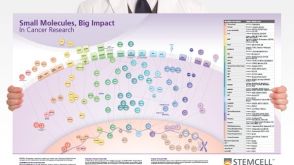 挂图Small Molecules, Big Impact in Cancer Research Overview of signaling pathways and small molecules in cancer research


 沪公网安备31010102008431号