Allan AL et al. (MAY 2005)
Cytometry. Part A : the journal of the International Society for Analytical Cytology 65 1 4--14
Detection and quantification of circulating tumor cells in mouse models of human breast cancer using immunomagnetic enrichment and multiparameter flow cytometry.
BACKGROUND: Circulating tumor cells (CTCs) in the peripheral blood of breast cancer patients may be an important indicator of metastatic disease and poor prognosis. However,the use of experimental models is required to fully elucidate the functional consequences of CTCs. The purpose of this study was to optimize the sensitivity of multiparameter flow cytometry for detection of human tumor cells in mouse models of breast cancer. METHODS: MDA-MB-468 human breast cancer cells were serially diluted in whole mouse blood. Samples were lysed and incubated with a fluorescein isothiocyanate-conjugated anti-human leukocytic antigen antibody and a phycoerythrin-conjugated anti-mouse pan-leukocyte CD45 antibody. Samples were then immunomagnetically depleted of CD45-positive leukocytes,fixed,permeabilized,and stained with propidium iodide before flow cytometric analysis. RESULTS: Human breast cancer cells could be differentiated from mouse leukocytes based on increased light scatter,cell surface marker expression,and aneuploid DNA content. The method was found to have a lower sensitivity limit of 10(-5) and was effective for detecting human breast cancer cells in vivo in the circulation of experimental mice carrying primary human mammary tumors. CONCLUSIONS: This technique has the potential to be a valuable and sensitive tool for investigating the biological relevance of CTCs in experimental mouse models of breast cancer.
View Publication
Development of a primary human co-culture model of inflamed airway mucosa
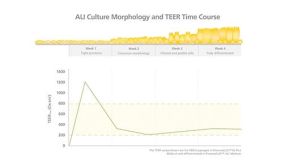
Neutrophil breach of the mucosal surface is a common pathological consequence of infection. We present an advanced co-culture model to explore neutrophil transepithelial migration utilizing airway mucosal barriers differentiated from primary human airway basal cells and examined by advanced imaging. Human airway basal cells were differentiated and cultured at air-liquid interface (ALI) on the underside of 3 μm pore-sized transwells,compatible with the study of transmigrating neutrophils. Inverted ALIs exhibit beating cilia and mucus production,consistent with conventional ALIs,as visualized by micro-optical coherence tomography (μOCT). μOCT is a recently developed imaging modality with the capacity for real time two- A nd three-dimensional analysis of cellular events in marked detail,including neutrophil transmigratory dynamics. Further,the newly devised and imaged primary co-culture model recapitulates key molecular mechanisms that underlie bacteria-induced neutrophil transepithelial migration previously characterized using cell line-based models. Neutrophils respond to imposed chemotactic gradients,and migrate in response to Pseudomonas aeruginosa infection of primary ALI barriers through a hepoxilin A3-directed mechanism. This primary cell-based co-culture system combined with μOCT imaging offers significant opportunity to probe,in great detail,micro-anatomical and mechanistic features of bacteria-induced neutrophil transepithelial migration and other important immunological and physiological processes at the mucosal surface.
View Publication
Yamaji D et al. (OCT 2009)
Genes & development 23 20 2382--7
Development of mammary luminal progenitor cells is controlled by the transcription factor STAT5A.
Mammary alveologenesis is abrogated in the absence of the transcription factors STAT5A/5B,which mediate cytokine signaling. To reveal the underlying causes for this developmental block,we studied mammary stem and progenitor cells. While loss of STAT5A/5B did not affect the stem cell population and its ability to form mammary ducts,luminal progenitors were greatly reduced and unable to form alveoli during pregnancy. Temporally controlled expression of transgenic STAT5A in mammary epithelium lacking STAT5A/5B restored the luminal progenitor population and rescued alveologenesis in a reversible fashion in vivo. Thus,STAT5A is necessary and sufficient for the establishment of luminal progenitor cells.
View Publication
Q. Hou et al. (Feb 2023)
Pharmacological research 188 106676
Dietary genistein increases microbiota-derived short chain fatty acid levels, modulates homeostasis of the aging gut, and extends healthspan and lifespan.
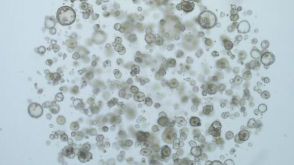
Age-related gastrointestinal decline contributes to whole-organism frailty and mortality. Genistein is known to have beneficial effects on age-related diseases,but its precise role in homeostasis of the aging gut remains to be elucidated. Here,wild-type aging mice and Zmpste24-/- progeroid mice were used to investigate the role of genistein in lifespan and homeostasis of the aging gut in mammals. A series of longitudinal,clinically relevant measurements were performed to evaluate the effect of genistein on healthspan. It was found that dietary genistein promoted a healthier and longer life and was associated with a decrease in the levels of systemic inflammatory cytokines in aging mice. Furthermore,dietary genistein ameliorated gut dysfunctions,such as intestinal inflammation,leaky gut,and impaired epithelial regeneration. A distinct genistein-mediated alteration in gut microbiota was observed by increasing Lachnospira abundance and short-chain fatty acid (SCFA) production. Further fecal microbiota transplantation and dirty cage sharing experiments indicated that the gut microbiota from genistein-fed mice rejuvenated the aging gut and extended the lifespan of progeroid mice. It was demonstrated that genistein-associated SCFAs alleviated tumor necrosis factor alpha-induced intestinal organoid damage. Moreover,genistein-associated propionate promoted regulatory T cell-derived interleukin 10 production,which alleviated macrophage-derived inflammation. This study provided the first data,to the authors' knowledge,indicating that dietary genistein modulates homeostasis in the aging gut and extends the healthspan and lifespan of aging mammals. Moreover,the existence of a link between genistein and the gut microbiota provides a rationale for dietary interventions against age-associated frailty.
View Publication
Deng S et al. (JAN 2010)
PloS one 5 4 e10277
Distinct expression levels and patterns of stem cell marker, aldehyde dehydrogenase isoform 1 (ALDH1), in human epithelial cancers.
Aldehyde dehydrogenase isoform 1 (ALDH1) has been proved useful for the identification of cancer stem cells. However,our knowledge of the expression and activity of ALDH1 in common epithelial cancers and their corresponding normal tissues is still largely absent. Therefore,we characterized ALDH1 expression in 24 types of normal tissues and a large collection of epithelial tumor specimens (six cancer types,n = 792) by immunohistochemical staining. Using the ALDEFUOR assay,ALDH1 activity was also examined in 16 primary tumor specimens and 43 established epithelial cancer cell lines. In addition,an ovarian cancer transgenic mouse model and 7 murine ovarian cancer cell lines were analyzed. We found that the expression levels and patterns of ALDH1 in epithelial cancers are remarkably distinct,and they correlate with their corresponding normal tissues. ALDH1 protein expression levels are positively correlated with ALDH1 enzymatic activity measured by ALDEFLUOR assay. Long-term in vitro culture doesn't significantly affect ALDH1 activity in epithelial tumor cells. Consistent with research on other cancers,we found that high ALDH1 expression is significantly associated with poor clinical outcomes in serous ovarian cancer patients (n = 439,p = 0.0036). Finally,ALDH(br) tumor cells exhibit cancer stem cell properties and are resistant to chemotherapy. As a novel cancer stem cell marker,ALDH1 can be used for tumors whose corresponding normal tissues express ALDH1 in relatively restricted or limited levels such as breast,lung,ovarian or colon cancer.
View Publication
Graham JD et al. (JUL 2009)
Endocrinology 150 7 3318--26
DNA replication licensing and progenitor numbers are increased by progesterone in normal human breast.
Proliferation in the nonpregnant human breast is highest in the luteal phase of the menstrual cycle when serum progesterone levels are high,and exposure to progesterone analogues in hormone replacement therapy is known to elevate breast cancer risk,yet the proliferative effects of progesterone in the human breast are poorly understood. In a model of normal human breast,we have shown that progesterone increased incorporation of 5-bromo-2'-deoxyuridine and increased cell numbers by activation of pathways involved in DNA replication licensing,including E2F transcription factors,chromatin licensing and DNA replication factor 1 (Cdt1),and the minichromosome maintenance proteins and by increased expression of proteins involved in kinetochore formation including Ras-related nuclear protein (Ran) and regulation of chromosome condensation 1 (RCC1). Progenitor cells competent to give rise to both myoepithelial and luminal epithelial cells were increased by progesterone,showing that progesterone influences epithelial cell lineage differentiation. Therefore,we have demonstrated that progesterone augments proliferation of normal human breast cells by both activating DNA replication licensing and kinetochore formation and increasing bipotent progenitor numbers.
View Publication
Yang X et al. (NOV 2010)
Cancer research 70 22 9463--72
Double-negative feedback loop between reprogramming factor LIN28 and microRNA let-7 regulates aldehyde dehydrogenase 1-positive cancer stem cells.
A relatively rare aldehyde dehydrogenase 1 (ALDH1)-positive stem cell-like" subpopulation of tumor cells has the unique ability to initiate and perpetuate tumor growth; moreover
View Publication
Shimono Y et al. (AUG 2009)
Cell 138 3 592--603
Downregulation of miRNA-200c links breast cancer stem cells with normal stem cells.
Human breast tumors contain a breast cancer stem cell (BCSC) population with properties reminiscent of normal stem cells. We found 37 microRNAs that were differentially expressed between human BCSCs and nontumorigenic cancer cells. Three clusters,miR-200c-141,miR-200b-200a-429,and miR-183-96-182 were downregulated in human BCSCs,normal human and murine mammary stem/progenitor cells,and embryonal carcinoma cells. Expression of BMI1,a known regulator of stem cell self-renewal,was modulated by miR-200c. miR-200c inhibited the clonal expansion of breast cancer cells and suppressed the growth of embryonal carcinoma cells in vitro. Most importantly,miR-200c strongly suppressed the ability of normal mammary stem cells to form mammary ducts and tumor formation driven by human BCSCs in vivo. The coordinated downregulation of three microRNA clusters and the similar functional regulation of clonal expansion by miR-200c provide a molecular link that connects BCSCs with normal stem cells.
View Publication