

 EasySep™小鼠TIL(CD45)正选试剂盒




Human B Cell Isolation, Culture, and Analysis
Human B Cell Isolation, Culture, and Analysis
B cells are antibody-producing immune cells that are used to study various infectious diseases, autoimmunity, and cancer. The in vitro culture and expansion of these cells is a useful tool for studying human immunity, B cell biology, vaccine and therapeutic antibody development, and for uncovering their potential use in cell therapies.
To help keep researchers moving forward, STEMCELL Technologies has developed products that support the complete human B cell experimental workflow; from cell sourcing and isolation to expansion and analysis (Figure 1). Here you can get some tips and tricks on how best to obtain high yields of B cells for your research.

Figure 1. Integrated Workflows for Obtaining, Culturing, and Analyzing Human B Cells
(A) Source human cells from whole blood, leukopaks, or cord blood. Fresh or frozen human primary B cells can also be sourced directly from STEMCELL. (B) Isolate B cells directly from primary cell samples using EasySep™ cell separation kits or RosetteSep™ enrichment cocktails, with options to scale workflows using a variety of magnet sizes or automated RoboSep™ cell isolation instruments. Alternatively, isolate CD34+ hematopoietic stem and progenitor cells (HSPCs) from cord blood or source them as primary cells for downstream differentiation to B cells in vitro. (C) Expand isolated B cells for 12 - 15 days using the ImmunoCult™ Human B Cell Expansion Kit, passaging every 3 - 4 days. Alternatively, differentiate CD34+ HSPCs to B cells and expand for 35 days using the StemSpan™ B Cell Generation Kit. (D) Harvest B cells and analyze using downstream assays, including flow cytometry, ELISA, functional assays, and characterization using STEMCELL’s antibodies, ELISA kits, and cell dyes.
*Certain products are only available in select territories.
Sourcing Human Cells for B Cell Research
Human cells for B cell research can be obtained from a variety of sources, including whole blood, leukopaks, cord blood, or as fresh or frozen primary human cells sourced directly from STEMCELL. Selecting the appropriate starting material depends on your experimental goals, scale, and whether your workflow involves direct B cell isolation or B cell generation from CD34⁺ cells.
Sourcing Primary Human B Cells
Streamline your assays with purified, frozen human B cells isolated by positive or negative immunomagnetic selection from peripheral blood or cord blood. We help you get the cells you need with personalized service, custom products, flexible delivery times, and the option to reserve entire lots to prescreen cells for your applications*. Additionally, explore our cryopreservation resources, which include a protocol on how ThawSTAR® can help you to achieve controlled, automated, and highly viable cell thawing.
For more information about primary cells, please see our frequently asked questions.
See all human primary cell products >
*Certain products are only available in select territories.
Isolating Human B Cells
Depending on your research goals, human B cells can be obtained by direct isolation from primary samples or by generation from CD34⁺ hematopoietic stem and progenitor cells.
Starting Your Workflow by Isolating B Cells
Human B cells can be isolated from sources such as whole blood, leukopaks, peripheral blood mononuclear cells (PBMCs), and spleen using EasySep™ cell separation kits or RosetteSep™ enrichment cocktails. B cells isolated with these methods are of high purity and are immediately ready for expansion, analysis, or for use in other downstream applications. For experiments that require a high B cell purity, it is necessary to enrich the samples before progressing to cell culture or expansion. EasySep™ is a powerful immunomagnetic cell isolation platform that isolates cells easily and efficiently without the use of columns, offering easy and fast isolation of highly purified cell populations that are immediately ready for a wide range of downstream applications.
Pro Tips from the Research and Development team, STEMCELL Technologies.
Cell counting is an integral part of determining cell concentrations for plating in culture, determining cell viability, and assessing the results of cell isolation procedures. It is recommended to perform an initial cell count prior to cell isolation; this number can then be compared to the cell count after cell isolation to calculate cell recovery. Additionally, viable cell counts should be performed when a decrease in cell viability may be expected, for example, when working with cryopreserved cells or cells manipulated ex vivo.
Below is a representative flow cytometry plot showing the content of pan-B cells in a sample enriched with EasySep™ Human Pan-B Cell Enrichment Kit.
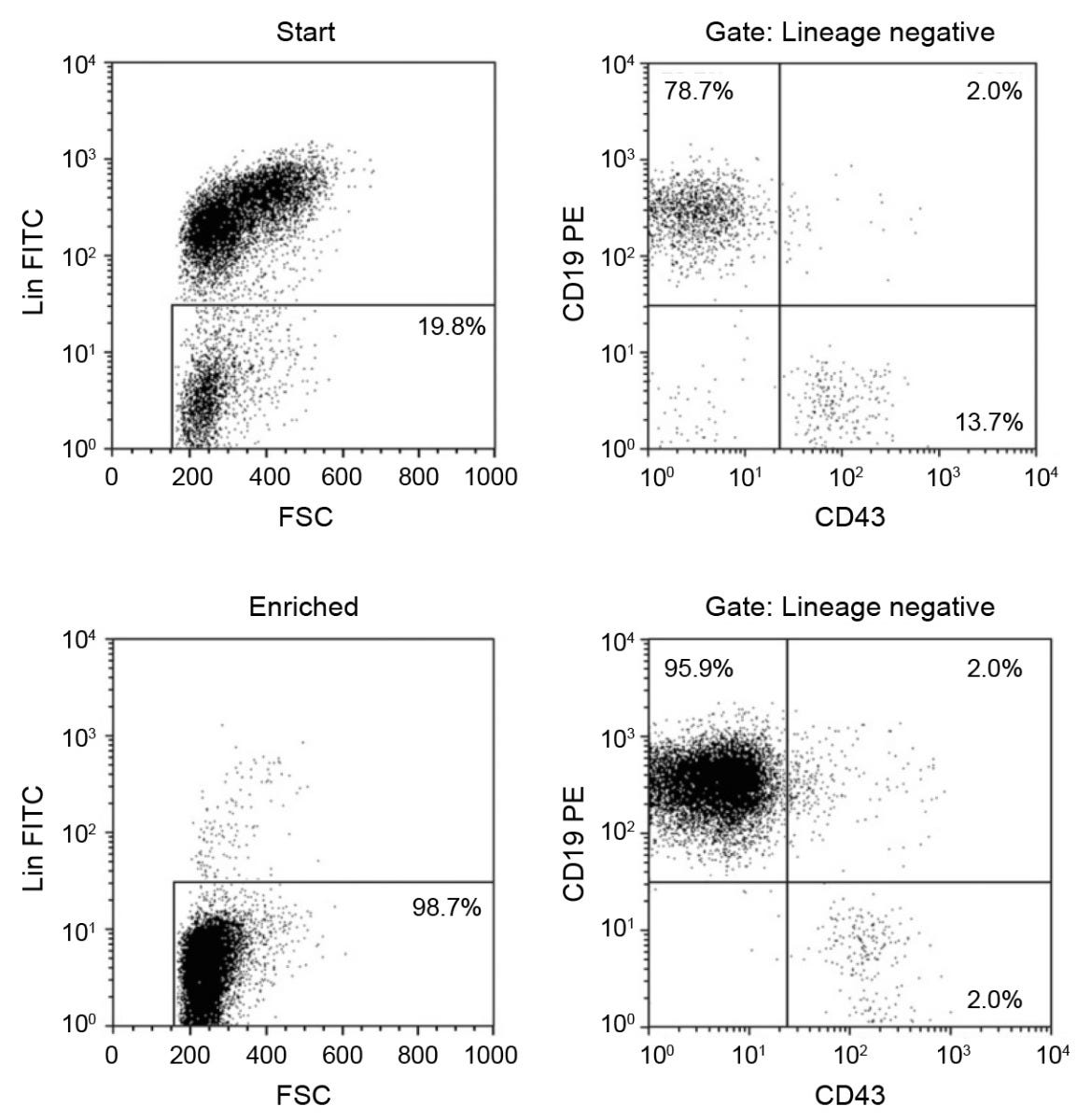
Figure 2. EasySep™ Human Pan-B Cell Enrichment Kit Isolates Pan-B Cells with High Purity
Representative flow cytometry plots gated on viable cells isolated with EasySep™ Human Pan-B Cell Enrichment Kit. Starting with nucleated cells, the pan-B cell [Lineage (CD4, CD8, CD14, CD16, CD56) negative, CD19+ and CD19-CD43+] content of the enriched fraction typically ranges from 90 - 99%.
EasySep™ enables us to isolate B cells from the spleen really fast with good viability. That is what we need. You don’t have to stand in front of a column and wait for it to drip. The viability of the cells that you recover tends to be higher just because it is so fast.
Steevenson N., PhD, National Institutes of Health
There are several different B cell isolation kits available, depending on your starting sample and your cell population of interest. EasySep™ Human Memory B Cell Isolation Kit is designed to isolate CD27+ Memory B cells from fresh or previously frozen PBMCs, while EasySep™ Direct Human B Cell Isolation Kit and EasySep™ Direct Human Naïve B Cell Isolation Kit enable cell separation directly from whole blood. You can also perform immunodensity cell separation by using RosetteSep™ and SepMate™ without any specialized equipment beyond a centrifuge; this method can be easily incorporated into established density gradient centrifugation protocols.
Isolating Cells from Large-Volume Samples
To easily isolate PBMCs or different cell subsets manually from large-volume samples, including leukopaks and whole blood, choose the Easy 250 EasySep™ Magnet with EasySep™ reagents to scale up your isolations with ease. Instead of splitting your cell suspension and performing multiple rounds of isolation, you can process samples of up to 225 mL and 12.5 × 10⁹ cells in as little as 20 minutes with a single isolation.
Automating Your B Cell Isolation Workflow with RoboSep™—Powered by EasySep™
Reduce hands-on time and increase consistency by automating the isolation of human B cells with RoboSep™. Isolate up to 4 samples in parallel with the RoboSep™-S and up to 16 samples with the RoboSep™-16. This column-free system minimizes sample handling, eliminates the risk of cross-contamination between samples, and is compatible with an existing range of EasySep™ Human B Cell Isolation Kits. To see for yourself how RoboSep™ can boost the efficiency of your cell isolation workflows, request a demo for your lab.

Unsure which human B cell isolation product is right for your research? Explore this infographic to find the product best suited to your starting sample and B cell subsets of interest.

Curious about how EasySep™ can simplify your research? Request a sample to experience easy, column-free isolation of highly purified cells.
Find more resources on cell separation technology:
- E-Book Cell Separation Techniques–Everything You Need to Know
- Video How EasySep™ Magnetic Cell Separation Technology Works: Fast and Easy Cell Isolation
- Infographic Human B Cell Research
- Video How to Speed up Your PBMC Isolations with SepMate™
- Brochure Fully Automated Cell Isolation with RoboSep™
- Video Automate Cell Isolation with the RoboSep™-S Cell Separation Instrument
- Immunology Feature The Role of Memory B Cells in Infectious Diseases
Can't Find the Cell Isolation Kit You Need?
If you're working with unique or rare B cell subsets in your research but can't find a readily available cell separation kit, explore our custom cell separation products for solutions tailored to your exact research needs. Contact Product & Scientific Support at techsupport@stemcell.com to discuss your specific cell separation needs or connect with us on LiveChat.
Culturing and Expanding Human B Cells
Once human B cells have been isolated or generated, they can be differentiated or expanded in culture using defined, serum-free systems optimized for robust growth and reproducibility.
Expand Isolated Human B Cells with ImmunoCult™
B cells sourced from STEMCELL or isolated with EasySep™ are highly purified and immediately ready for cell culture. Achieving robust expansion of B cells in culture typically requires the addition of serum or feeder cells. Addition of serum can improve performance; however, there is high lot-to-lot variability in serum composition and its addition increases the risk of contamination by adventitious agents. To minimize this variability, it is important to use serum-free media and supplements, such as ImmunoCult™-XF B Cell Base Medium and ImmunoCult™-ACF Human B Cell Expansion Supplement. To achieve the most optimal expansion, use the ImmunoCult™ Human B Cell Expansion Kit, which is designed to give high cell yield and frequency without the use of serum, specialized cultureware, or feeder cells.
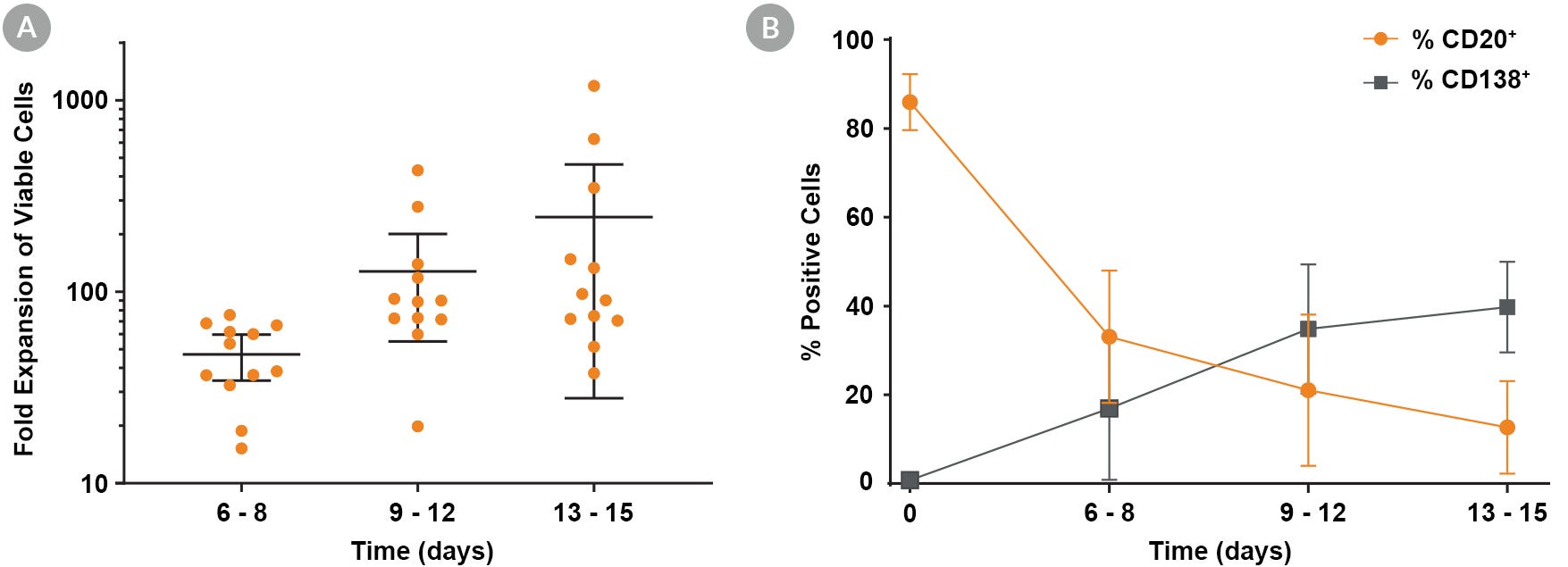
Figure 3. Culturing B Cells with ImmunoCult™ Human B Cell Expansion Kit Results in Strong Expansion and Differentiation Toward CD138+ Cells
B cells isolated from human PBMCs (leukopak) using EasySep™ Human Pan-B Cell Enrichment Kit were seeded at 1 x 10⁵ cells/well in 24-well tissue culture plates and cultured using ImmunoCult™ Human B Cell Expansion Kit. The cells were passaged every 3 - 4 days. (A) Fold expansion of viable cells is shown for n = 12 donors, with bars representing the mean and 95% confidence level (range: 38- to 1190-fold at Day 14 ± 1 day). (B) Expression of CD138 and CD20 was analyzed by flow cytometry at each timepoint (data represent % positive viable cells; mean ± 1 SD). The observed changes indicate maturation of B cells to plasma cells/blasts.
View the performance data for expansion of naïve and memory B cells using ImmunoCult™ Human B Cell Expansion Kit.
Pro Tips from the Research and Development team, STEMCELL Technologies
- To ensure high cell viability and expansion, passage cells every 3 - 4 days and avoid letting cultures become over-confluent
- To avoid introducing error in cell counts due to local variation in cell density, cells should be well-mixed before counting
- Do not disturb the cells while in the incubator between passaging steps; this can affect B cell clustering
- Always perform the experiment in sterile conditions
Generate B Cells from CD34+ HSPCs with StemSpan™
If starting from cord blood-derived CD34+ hematopoietic stem and progenitor cells (HSPCs), like those isolated using the EasySep™ Human Cord Blood CD34 Positive Selection Kit II, you can generate functional B cells in vitro using the StemSpan™ B Cell Generation Kit. This defined, feeder-free and serum-free system supports efficient differentiation through key stages of B cell development, yielding mature CD19+ B cells that produce IgM, IgG, and IgA antibodies. By eliminating serum and stromal co-culture variability, this system provides a reproducible and standardized platform for studying B cell development, immunology, and disease models.

Figure 4. CD34+ Cells Cultured Using StemSpan™ B Cell Generation Kit Generate Functional Antibody-Secreting B Cells
On Day 35 of the StemSpan™ B Cell generation protocol, the frequencies of immunoglobulin-secreting cells generated from cultured B cells were determined by ELISpot assay. (A) Images of dual ELISpot assays (CTL ImmunoSpot®, IgM/IgG, and IgA/IgE) for detection of IgM (red) and IgG (blue) or IgA (red) and IgE (blue) antibody-secreting B cells. Images on the right depict cells cultured in StemSpan™ SFEM II with StemSpan™ B Cell Differentiation Supplement 3 and StemSpan™ B Cell Differentiation Supplement 4 added, as described in the culture protocol. Those on the left depict a basal medium control where cells were cultured in StemSpan™ SFEM II without adding StemSpan™ B Cell Differentiation Supplements 3 and 4; 10,000 cells per well were used. IgE antibody-secreting cells (ASCs) were not detected. (B) The frequency and yield of ASCs are shown. On average, 610 ± 67, 5 ± 1, and 317 ± 47 cells per 10,000 cells secrete IgM, IgG, and IgA antibodies with a yield of 16.2 ± 2.4, 0.1 ± 0.04, and 5.2 ± 1.7 per input CD34+ cell, respectively. The graph shows the mean ± the standard error (n = 8 - 33).
Applications of B Cells Expanded in ImmunoCult™
- Antibody development and screening
- Studies on human immunity and infectious diseases
- Vaccine development
- Gene editing
- Research in understanding B cell biology, signaling, differentiation, and development
Analyzing and Characterizing Human B Cells
Expanded B cells can be used in downstream applications and may be analyzed and characterized using techniques such as flow cytometry, ELISA, microscopy, etc. Figure 5, below, shows how B cells undergo morphological changes as they mature.
Evaluate B Cell Culture
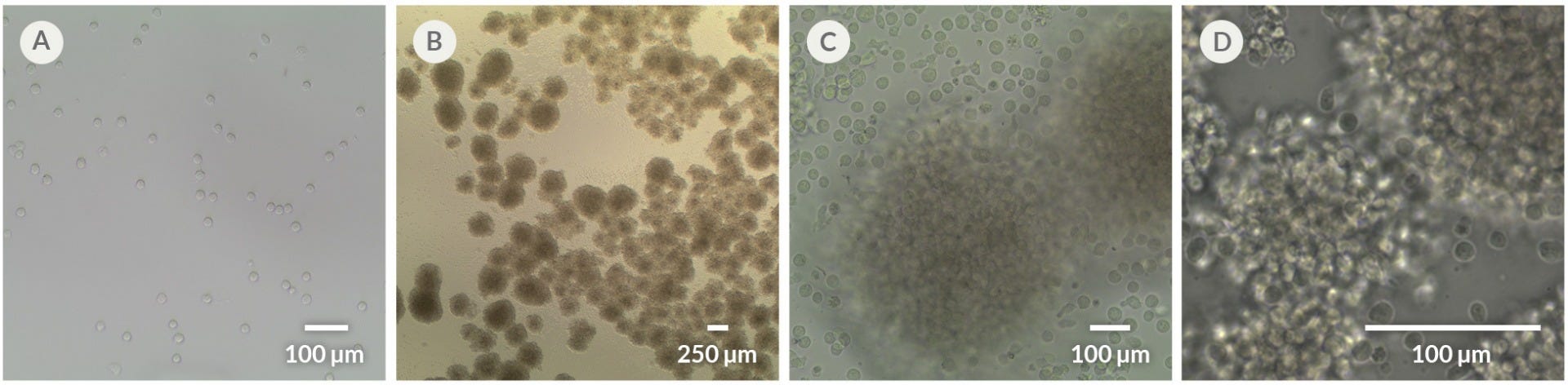
Figure 5. Human Pan-B Cells Cultured with ImmunoCult™ Human B Cell Expansion Kit Demonstrate Robust Growth
Pan-B cells isolated from human PBMCs (leukopaks) were seeded at 1 x 10⁵ cells/well in a 24-well tissue culture plate with ImmunoCult™ Human B Cell Expansion Kit. The cells were passaged on Day 4 after seeding and imaged at (A,C) 20X, (B) 2X, or (D) 40X objective, 6 days after seeding. At (A) Day 0, B cells appear small and not clumped together; however, at (B, C, D) Day 6, B cells form large colonies and increase in size, suggesting they are undergoing activation and maturation.
Key Parameters to Analyze
- Viability and functionality
- Surface proteins
- Cytokine secretion
- Antibody production and secretion
- Antigen presentation
- Cellular phenotyping
Assessing the Phenotype of Mature B Cells
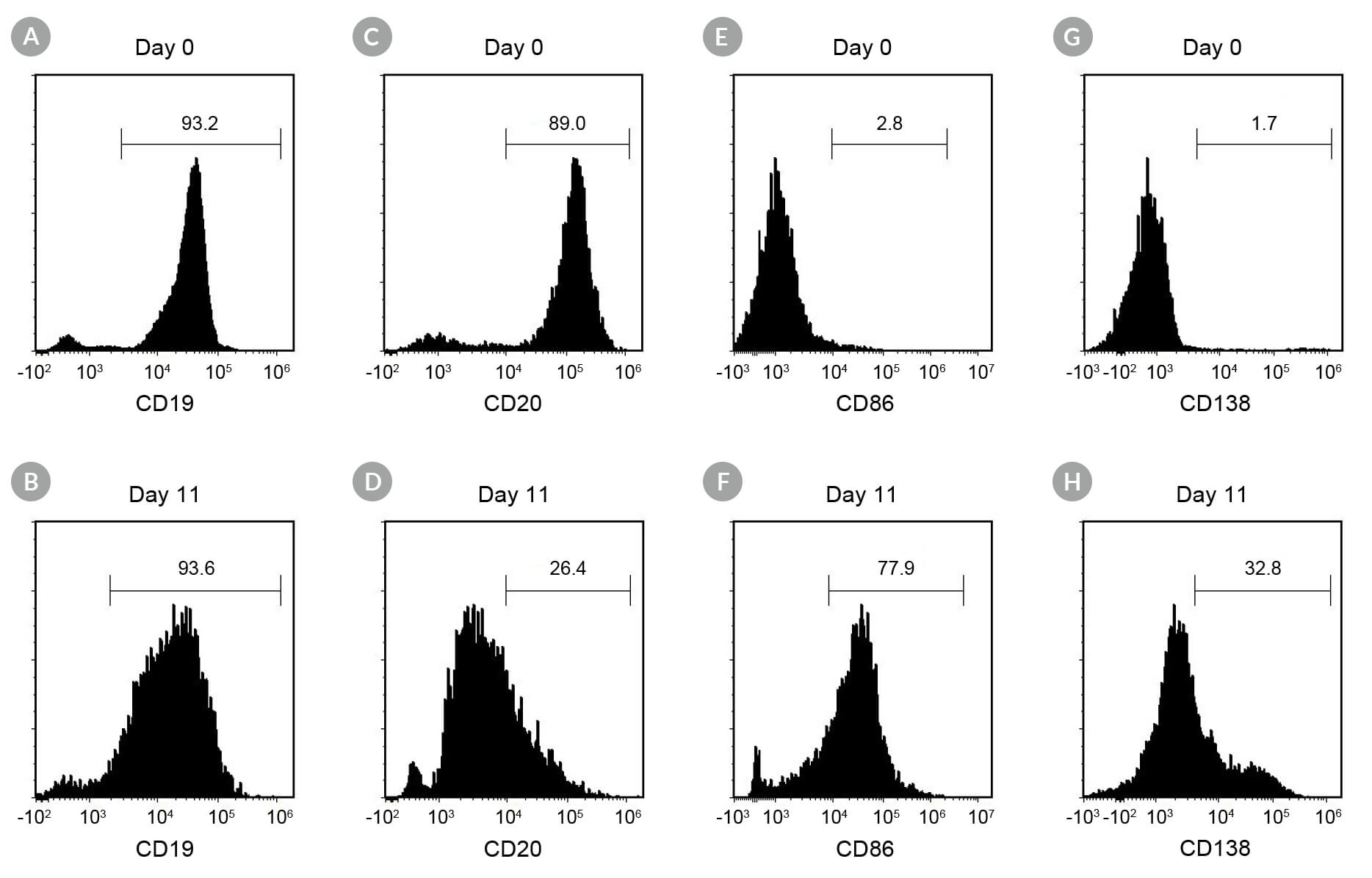
Figure 6. Expression of Activation and Maturation Markers on Human B Cells Cultured with ImmunoCult™ Human B Cell Expansion Kit
B cells isolated from human PBMCs (leukopak) using EasySep™ Human Pan-B Cell Enrichment Kit were seeded at 1 x 10⁵ cells/well in 24-well tissue culture plates and cultured using ImmunoCult™ Human B Cell Expansion Kit. The cells were passaged every 3 - 4 days. Expression of (A, B) CD19, (C, D) CD20, (E, F) CD86 and (G, H) CD138 was analyzed by flow cytometry, with profiles shown at Day 0 (upper panel) and Day 11 (lower panel). The observed changes indicate activation (CD86) and maturation (CD20, CD138) of B cells to plasma cells/blasts.
Pro Tips from the Research and Development team, STEMCELL Technologies
To ensure success when you characterize your B cells using flow cytometry, there are a number of factors to consider and incorporate into your staining and gating strategy:
- Compensate for spectral overlap
- Use appropriate gating controls
- Exclude debris and non-viable cells
- Exclude doublets or multiplets
- Stain with a pan-leukocyte marker (e.g. CD45)
If you need antibodies for your B cell characterization, you can view our inventory via the link below:
Need help with setting up your experiments or want to chat with one of our experts? Get in contact with us here via LiveChat or send us an email at techsupport@stemcell.com.

 沪公网安备31010102008431号